

Podcast Ep #3: Extending the Horizons of Our Hearts
The story invites us to feel triumph and its opposite, compassion, at the same time. And it’s reminding us that we can feel those things. It’s an incredible story and it’s part of a thread that runs throughout Torah, of ambiguity, that is always telling us we can triumph and we can feel compassion. We are human beings with both those capacities.
– Alicia Ostriker
In this week’s essay, Sharon Cohen Anisfeld, President of Hebrew College, through her Dvar Torah, goes deep into the story of the Binding of Isaac, and invites us to think about the thicket of our own lives; the possibilities that we haven’t seen and the impacts of the stories that we tell ourselves.
Reading Sharon’s Dvar Torah we have Alicia Ostriker. Alicia writes Jewish feminist poetry and was one of the first women poets in America to write and publish poems discussing the topic of motherhood. In 2015, she was elected a chancellor at the Academy of American Poets. And in 2018, she was named the New York State Poet Laureate.
Join us as Alicia Ostriker takes us through Sharon’s work and what it means to her. Sharon takes us on a journey of conflicting emotion, and shows us what’s possible when we extend our hearts and consider all sides – our friends and our enemies – of what Torah has to teach us about compassion and our role in repairing the world.
What You’ll Discover from this Episode:
- Where, like the ram, we get stuck in the thicket in our lives.
- How the stories we tell ourselves keep us stuck in the thicket.
- What the sound of the shofar can teach us about opening ourselves up and extending our hearts to endless possibilities.
- How Sharon invokes simultaneous feelings of triumph and compassion and why, as human beings, we are capable of expressing both.
Listen to the Full Episode:
Listen on Apple Podcasts | Stitcher | Spotify
Featured on this Episode:
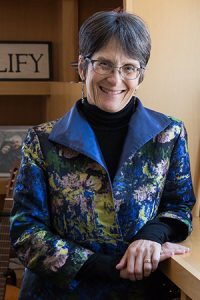 Rabbi Sharon Cohen Anisfeld (writer) became President of Hebrew College in July 2018. Rabbi Anisfeld first came to Hebrew College in 2003 as an adjunct faculty member of the Rabbinical School and then served as Dean of Students from 2005-2006. She went on to serve as Dean of the Rabbinical School from 2006-2017. Rabbi Anisfeld graduated from the Reconstructionist Rabbinical College in 1990, and subsequently spent 15 years working in pluralistic settings as a Hillel rabbi at Tufts, Yale and Harvard universities. She has been a regular summer faculty member for the Bronfman Youth Fellowships in Israel since 1993 and is co-editor of two volumes of women’s writings on Passover.
 Alicia Ostriker (reader) Known for her intelligence and passionate appraisal of women’s place in literature, Ostriker’s poetry and criticism investigates themes of family, social justice, Jewish identity, and personal growth. Ostriker’s books of criticism include For the Love of God: The Bible as an Open Book (2009), Dancing at the Devil’s Party: Essays on Poetry, Politics, and the Erotic (2000), and Stealing the Language: The Emergence of Women’s Poetry in America (1983). Of her place in American letters, the writer Joyce Carol Oates noted: “Alicia Ostriker has become one of those brilliantly provocative and imaginatively gifted contemporaries whose iconoclastic expression, whether in prose or poetry, is essential to our understanding of our American selves.” – Excerpt from PoetryFoundation.org
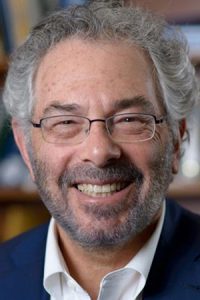 Rabbi Jeffrey Summit, PhD (host) is Director of the Hebrew College Innovation Lab. He is Research Professor in the Department of Music & Judaic Studies at Tufts University and Senior Consultant for Hillel International. The author of several books, among his many awards are a 2018 Hebrew College honorary degree, a GRAMMY nomination for his CD Abayudaya: Music from the Jewish People of Uganda, the Edgar M. Bronfman Award for Lifetime Accomplishment in Hillel Professional Leadership, and the Tufts Hosea Ballou Medal.
A special thank you for this episode’s musical contributions:
Intro by: Jackson Mercer
Jackson is an Ordination Candidate at the Rabbinical School of Hebrew College in Newton, MA. He grew up at Congregation Rodef Sholom in San Rafael, CA where he cultivated a love of Judaism, embolden with music, spirituality and justice.
Esa Einai (Psalm 121:1)
Music by Jackson Mercer
Guitar and Melody by Jackson Mercer
Harmonies by Cantor Rosalie Will, Ilana Sandberg, Rabbi Micah Shapiro, Rabbi Josh Warshawsky, Noah Diamondstein, Ryan Leszner, Eliana Light.
Outro by: Rabbi David Fainsilber
Rabbi, Jewish Community of Greater Stowe, VT
Rabbinic Ordination: Rabbinical School of Hebrew College 2014
DDD from the album Galeh: Tenth-Anniversary Celebration of the Rabbinical School of Hebrew College
Full Episode Transcript:

Welcome to Speaking Torah. I’m your host Rabbi Jeffrey Summit, Director of the Innovation Lab at Hebrew College. In this podcast, leaders from Jewish communities around the country read essays by Hebrew College Rabbis. These essays tackle the pressing issues of our world, so in need to healing and hope, and do so with Hebrew College’s signature compassion, creativity, and relevancy.
In this week’s essay, Sharon Cohen Anisfeld goes deep into the story of the Binding of Isaac, and invites us to think about the thicket of our own lives; the possibilities that we haven’t seen and the stories that we tell ourselves.
We asked Alicia Ostriker, American poet and scholar to read Sharon’s essay. Alicia writes Jewish feminist poetry and was one of the first women poets in America to write and publish poems discussing the topic of motherhood. In 2015, she was elected a chancellor at the Academy of American Poets. And in 2018, she was named the New York State Poet Laureate. Here’s Alicia reading Extending the Horizon of Our Hearts.
Alicia Ostriker: Although it’s not Yom Kippur yet, I’ll begin with a confession. My natural tendency during this season of Teshuva, is to swing rather dramatically between the poles of self-judgment and compassion. I zealously take on the role of prosecuting attorney – enumerating my failings, flushing as I recall moments of regret and shame. Okay, “moments” may be a bit of an understatement.
After I’ve had about as much of that as I can bear, I begin to rally, first hesitantly and then with growing resolve, coming to my own defense. While this process can be riveting, and can hold my own rapt attention indefinitely, I have the nagging feeling that it’s not exactly what the Kadosh Baruch Hu has in mind for us.
To quote Adin Steinsaltz: “Teshuva is not just a psychological phenomenon, a storm within a human teacup. It is a process that can effect real change in the world, in all the worlds.”
In our culture, which is so preoccupied with the drama, and illusion, of the sovereign self, it is easy to confuse the call to teshuva with the ubiquitous calls all around us to self-improvement. This can lead in two equally unhelpful directions.
First, there is the pabulum found, in one form or another, in countless volumes on the shelves of the self-help section in every major bookstore. “You can be better. You can be happier. You can be richer. You can be thinner. You can be more well-organized, more beautiful, more popular, more powerful, more successful. You can be more!”
Second, there is the trope that tends to have more traction in new age circles and is no doubt a reaction to the unforgiving demands of the dominant discourse. This one says, “You are enough. You are good enough. You are doing the best you can. Everyone is doing the best they can. More than that, you are already perfect the way you are. Everything is already perfect the way it is. Just breathe.”
Setting aside the problem that the latter perspective is just patently un-Jewish, the fact is that neither of these approaches helps me get, to use Steinsaltz’s metaphor, beyond the storm in my own teacup.
Neither helps me extend the horizon of my own heart. And that is what I’m longing for this year. In that spirit, as we prepare ourselves to hear the call of the ram’s horn this morning, I want to return for a moment to the ram. I want to return to this moment in the story we just read.
Vayisa Avraham et eynav vayar v’hinei ayil achar ne’echaz bas’vach b’karnav.
Translated, Abraham looked up, and his eye fell upon a ram, caught in the thicket by its horns.
Vayelech Avraham vayikach et ha’ayil vaya’alehu l’olah tachat b’no.
So, Abraham went and took the ram and offered it up as a burnt offering in place of his son. And Abraham named that site Adonai-yireh, whence the present saying, “On the mount of Adonai there is vision.”
A poem, on being caught in the thicket.
The ram’s horn is silent at first, as is the ram.
Caught in the thicket,
Waiting for Abraham to lift his head and see,
It appears at the last moment,
Out of nowhere,
When it’s almost too late.
Of course, it was there all along.
Since twilight, on the eve of the first Shabbat, we are told.
It was there before darkness fell.
We barely knew what darkness was then.
It was there all along.
Waiting for us to open our eyes.
Waiting for us to see another way.
It’s not just our stubbornness that blinds us.
Sometimes it’s the commanding voice of faith.
Sometimes it’s the commanding voice of despair.
And sometimes it’s the thicket itself.
The thorny, tangled overgrowth of our lives.
It’s not that we’re blind,
We’re just busy.
Schlepping the wood,
Tending the fire,
Building the altar,
Trying to quiet the children,
Trying to answer their questions,
Even though God knows
We can’t answer our own.
Up until this point in the story, up until the angel calls out, and Abraham looks up, and the ram suddenly appears, caught in the thicket, the trajectory of the story, the tragic momentum of the story, seems irresistible, irreversible, inevitable.
The sacrifice has to be offered. The child will have to die. This is the power of the ram’s horn. It beckons us back to this moment in the story. No longer silent, it calls us back to the ram from which it came and asks us.
Think about the thicket of your own life. What possibilities have you not seen? Think about a story you are telling yourself whose outcome you think you already know. What alternatives have you not noticed? And think about the path we are all on together, the altars at the end of the road, the children we love but seem prepared to sacrifice.
Look up. Listen. Incline your heart, your ear to the hollow ram’s horn through which human breath becomes a summons and a blast. What might we hear? How might we respond?
The rabbis of the Talmud debate about the nature of the teruah we are commanded to hear on this day. And now we’re back to this great prose voice. The poem ends with, what might we hear, how might we respond. And now, we’re asked, for the rabbis asking us what the shofar blast is actually supposed to sound like.
For them, it is at least on one level, a technical problem. The Torah tells us this is Yom Teruah, but what’s a teruah?
Their not entirely obvious answer… It is the sound of a woman weeping.
They get there in a somewhat round-about way, based on a linguistic connection in the targum between the word teruah and the word yebavah – crying or sobbing – that appears in a story in the Book of Judges. It’s the story of a battle led by Deborah and Barak against Sisera and the Canaanite army. The Israelites win the battle, the Canaanite army disperses in fear, and Sisera is killed rather brutally by the heroine Yael.
The story is told twice in the Book of Judges, once in narrative form and once in verse. Shirat Devorah, the Song of Deborah, is a triumphant account of the Israelite’s military victory, but there is an unexpected and poignant image just before the end of the poem.
Suddenly, Deborah offers us a glimpse into the experience of Sisera’s mother on the day Sisera dies. “Through the window peered Sisera’s mother, behind the lattice she cried.”
All that day, we are told, Sisera’s mother stood at the window of her home, crying, watching and waiting for her son to return. “Why is his chariot so long in coming,” she asks. “Why so late the clatter of his wheels?” The Talmud tells us that Sisera’s mother let out 100 cries on that day, corresponding to the 100 blasts of the shofar service.
There is some further discussion about whether the sound of her cries was more of a low, aching moan, or a frantic, breathless sob, hence the different sounds of the shofar service; to make sure, of course, we cover all the bases.
But there it is. Incline your heart, your ear to the hollow, bent ram’s horn, through which human breath becomes a summons and a blast.
And what you will hear is the sound of Sisera’s mother weeping for her child. The sound of a mother weeping. We can conjure a thousand reasons not to hear this woman’s cries. We do it every day, and not only with people we consider our enemies. Some days we don’t even bother coming up with reasons. But the shofar calls us up short.
This is the cry of every mother whose child isn’t spared. For whom no angel calls out. For whom no ram appears.
There is another midrashic explanation offered for the sound of the shofar. And here, too, it is the sound of a woman weeping, but this time closer to home. In Pirke de Rebbe Eliezer, we are told that the blasts of the shofar echo the cries of Sarah after the binding of Isaac, when she heard what happened – or almost happened – to her son. What she heard, of course, is the story we just heard this morning.
The midrash describes the conversation that took place between Isaac and his mother Sarah when he returned from Mount Moriah.
“Isaac returned to his mother and she said to him, ‘Where have you been, my son?’ He answered, ‘My father took me and led me up hill and down dale.’ And when he had told her the whole story she cried out, ‘You mean, were it not for the angel, you would already be slaughtered?’
He said, ‘Yes.’ At that, she screamed six times, corresponding to the six tekiah notes of the shofar. She had not finished doing this when she died.”
Once again, incline your heart, your ear to the hollow, bent ram’s horn, through which human breath becomes a summons and a blast.
And what you will hear is the sound of a mother weeping. This time, the sound of Sarah weeping for her child.
Here the shofar blasts become a kind of epilogue to the Akeidah. The ram calling out, “You need to hear the rest of the story. There was a sacrifice. This story was not without a victim. I could spare the child’s life, but the mother’s heart was broken.”
And now, a break. Another break.
The Psalmist proclaims:
Ashrei Ha’am yod’ei Teruah. Adonai b’or panekha y’halekhun
Happy is the people that knows the sound of Teruah. They walk in the light of Your divine presence.
The Hasidic Master known as Degel Machaneh Ephraim teaches that knowing the sound of teruah means allowing our hearts to be shattered, in order to open ourselves to the light of the divine presence.
Here is how I am understanding his words this year.
To hear the sound of the shofar, is to stop what we’re doing, to lift our eyes from the path, to see what possibilities might be there, caught in the thicket, waiting for us to take note. To hear the sound of the shofar is to open ourselves to the cry of mothers weeping for their children, and to the cry of the Shechina weeping for all of us.
To hear the sound of the shofar is to extend the horizon of our heart, until it aches, even until it breaks.
To hear the sound of the shofar is to incline ourselves to the hollow, bent horn, and allow the human breath to become for us a summons and a blast.
As I try to keep my own heart open to this summons, I have been carrying with me lately the beautiful words of the writer and trauma therapist, Clarissa Pinkola Estes, from an essay called, “You Were Made for This.”
“My friends,” she writes, “Do not lose heart. I have heard from so many recently who are deeply and properly bewildered. They are concerned about the state of affairs in our world now. Ours is a time of almost daily astonishment over the latest degradations of what matters most to civilized, visionary people. You are right in your assessments. The luster and hubris some have aspired to while endorsing acts so heinous against children, elders, everyday people, the poor, the unguarded, the helpless, is breathtaking.
Yet, I urge you, I ask you, do not lose hope. Look out over the prow; there are millions of boats of righteous souls on the waters with you.
In any dark time, there is a tendency to veer toward fainting over how much is wrong or unmended in the world. Do not focus on that. There is a tendency, too, to fall into being weakened by dwelling on what is outside your reach, by what cannot yet be. Do not focus there. That is spending the wind without raising the sails.
Ours is not the task of fixing the entire world all at once, but of stretching out to mend the part of the world that is within our reach. Any small, calm thing that one soul can do to help another soul, to assist some portion of this poor suffering world, will help immensely. One of the most calming and powerful actions you can do to intervene in a stormy world is to stand up and show your soul. Soul on deck shines like gold in dark times.”
On this day, may the ram and the ram’s horn be a summons and a blast opening our hearts to the divine light that is present within us, and all around us, waiting for us to see.
Rabbi Jeffrey Summit: We asked Alicia what she liked about this Dvar Torah.
Alicia Ostriker: I love many things about this Dvar Torah of Rabbi Sharon’s. She is not only brilliant. She has a deep mind and a deep heart. And it’s not so often you see a mind and a heart working together.
Rabbi Jeffrey Summit: Here’s what Alicia had to say about what spoke to her most in this piece.
Alicia Ostriker: For me, it speaks to my own personal situation in a way that is very powerful. The whole thing does. But there are two parts of it that are particularly strong for me. And one is the idea that, like the ram, I am caught in the thicket of my own circumstances and the thicket of the story that I tell myself, telling myself this is how it is, it is what it is, it will always be like this. Whatever feels unbearable to me will just go on forever and there’s nothing I can do about it.
And Sharon is saying, just think about how else you could be telling the story. What other possibilities are there? That really struck me very much, in a very personal way. And, of course, that is what Yom Kippur is about. How can you change?
The other thing that struck me is the whole story of teruah being the sound of a mother weeping. I never thought of that. I didn’t know it. Thanks for that piece of learning because, for me, it intersects with something that I’ve thought about for a long time, that part of the story that tells us of Sisera’s mother crying, and that it’s a very powerful story, but we can emotionally understand it in two opposite ways.
One is, here is a story of our triumph. They are attacking us. They lose, we win. The philistines, their army disperses, Sisera is killed, we win. It’s a triumphant story of us versus our enemies and we win. And then, this astonishing interruption to the military story, the triumphant military story. Suddenly we break and we have the scene of Sisera’s mother, the dead general.
We know he’s dead and we hear Sisera’s mother crying, “Where’s my son? Why is he so late coming home?” We know he’s just been killed. Jael has just put a tent peg through his head. And here is his mother crying. And we can experience that as triumphant, we as listeners, as readers, we can experience that as triumphant. She says, “When is he coming home?” “He’s never coming home because we killed him.”
Or, we can experience that as, “Oh my god, here is a mother waiting for her son to come home. Why is he not coming home? And we know he’s never coming home. She’s going to be weeping forever, and we can feel compassion for her.
So, the story invites us to feel triumph and its opposite, compassion, at the same time. And it’s reminding us that we can feel those things. It’s an incredible story and it’s part of a thread that runs throughout Torah, of ambiguity, that is always telling us we can triumph and we can feel compassion. We are human beings with both those capacities.
We feel it for the first time when Esau cries to his father, “My father, my father, do you only have one blessing? Don’t you have a blessing for me too?” And we feel it when Hagar moves away from the child she thinks is dying in order not to see him die.
She’s supposed to be the mother of our eternal enemies. But we feel compassion for her. And this kind of compassion for them, the aliens, the enemies is a thread that runs all through Torah. It keeps popping up again and again, when God keeps reminding us how we’re supposed to care for our enemies, feel for them the way we feel for ourselves, love them as we love ourselves. It’s astonishing.
They are the not-us. They are the enemy. We are supposed to love them as we love ourselves. And when God says this, he says, “You must love the stranger because you were strangers in the land of Egypt.” And it’s like telling us of our foundational story, “That’s why I put you there. I made you slaves in Egypt for 400 years just so that you would have it driven home that you’re supposed to love those who are oppressed.”
And that story is so important in this little bit about teruah being the sound of a mother weeping. It’s telling us, as part of our change of heart on this day, on Yom Kippur, when we are commanded to feel for all those who are powerless.
Rabbi Jeffrey Summit: We asked Sharon what inspired this Dvar.
Rabi Sharon Cohen Anisfeld: So, I think one of the things that originally inspired me to write this piece is that I have been taken for a long time with the fact that the rabbis connect the sound of the shofar to the sound of a woman crying.
And in particular, the fact that the rabbis in both the Talmud and the midrash connect the sound of the shofar to the sound of different women crying. And this, I think, becomes very poignant and powerful in the context of Rosh Hashanah in particular. And I’ll say a little bit about what that means to me.
One of the explanations in the Talmud, as I say in the piece, links the sound of the shofar to the cry of Sisera’s mother, the cry of the mother of our enemy.
Another reading links the sound of the shofar to the cry of our own mother, to the cry of Sarah after the Binding of Isaac, when she learns what almost happened at the top of the mountain.
And what I find particularly poignant about that, in Rosh Hashanah is that we are asked somehow to listen to the call of the shofar and open our hearts to the sound of a mother crying for her child and we are asked, in that moment, to live with not knowing, whether it’s the cry of our own mother, or the cry of our enemy’s mother.
That’s actually a very hard place to be. It’s a very hard place to sit with an open heart. And most of the time, we can’t do that. But the way that I understand what’s being asked of us on Rash Hashanah is that on this day that’s the anniversary that is the birth of the world, on this day that is one of the most really universal days on the Jewish calendar, we’re asked to keep our hearts open to that cry without knowing exactly where it’s coming from. So, that’s been just a very powerful summons to me, for a long time.
I think the other thing that inspired this piece is that I often find myself, as I’m approaching this season, feeling a little bit tired of the old familiar tapes that run through my own head. Rabbi Adin Steinsaltz’s zikhrono livrakha, blessed memory, who just passed away recently, once wrote that Teshuva is not just meant to be a tempest in a teacup and that it is really not meant to be just another rehearsal of our own failings and resolutions and disappointments, but somehow is an invitation and a summons to move beyond ourselves, to stretch beyond ourselves and to really think about our role in the repair of the world, even the repair of the cosmos from his perspective.
And so, when I wrote this piece, I found myself really feeling caught in those old familiar tropes, those old familiar tapes, and really connecting to the call of the shofar, that wordless call with the echoes of these mothers’ cries as that kind of a summons to get past my own stuff and really pay attention to what struck me for the first time as this human breath that is inside the call of the shofar. That’s what the shofar is. It is amplified human breath.
And we are not always so good about paying attention to and listening for the call of that breath, of our own breath, of another person’s breath, and really asking, what does this demand of us? So, I think that’s some of what was going on for me as I was working with these sources and trying to think about the summons of the shofar in my own life.
Rabbi Jeffrey Summit: Here’s what Sharon had to say about Alicia reading her Dvar.
Rabbi Sharon Cohen Anisfeld: I honestly feel a little bit speechless. It is such an honor for me, such a deep honor for me to have this piece read by Alicia. I have been reading her work for decades. I think I first was introduced to her work when I was a rabbinical student in the mid to late-80s.
And I still remember, quite vividly, encountering her writing and feeling that I was in the presence of living midrash, that this was really someone who had the capacity to make Torah come alive, to hear Torah in our own time in a way that felt both fresh and profoundly authentic, both new and old at the same time, new and utterly timeless.
I carry with me, actually, something she said about the process of reading the Bible, reading Torah, something she wrote in the introduction to her book The Nakedness of the Fathers. And I really carry this and hold this closely. She says, “Rabbinic tradition itself tells us to expect that the process of understanding the Bible’s meaning will and should continue throughout history. According the sages, all commentary on Torah past, present, and future was implicitly part of the revelation at Sinai.”
And then she says, “As the scholar Gerald Bruns has argued, if the text does not apply to us, it is an empty text. We take the text in relation to ourselves, understanding ourselves in its light, even as our situation throws its light upon the text, allowing it to disclose itself differently, perhaps in unheard-of ways.”
So, I think that is both such a beautiful description of the Midrashic process itself and it’s exactly how I feel when I’m reading Alicia’s own commentaries on biblical texts.
Thank you for joining us for this episode of Speaking Torah. We want to thank Emily Hoadley for our logo, and Hebrew College Rabbinical student and composer Jackson Mercer for our theme music Esa Einai. To learn more about Hebrew College, please visit hebrewcollege.edu/podcast. And remember to subscribe, like, and rate Speaking Torah on Apple Podcasts, Spotify, or wherever you listen to podcasts.
We’ll leave you this week with DDD, composed and performed by Rabbi David Fainsilber and featured on the Hebrew College 10th Rabbinical School CD Galeh. I’m your host, Rabbi Jeffrey Summit. See you next time for Speaking Torah.
Enjoy the Show?
- Don’t miss an episode, follow the podcast on Spotify and subscribe via Apple Podcasts, Stitcher or RSS.
- Leave us a review in Apple Podcasts.