

Numbers Where Are You?
Parashat Bamidbar Numbers 1:1-4:20
Last week I found myself driving around my neighborhood after putting my kids to bed narrating what I was seeing through my car windows.
“I’m driving towards the Forest Hills train station.”
“There are a lot of people out walking right now.”
“There is the cow face on the facade of our local (original!) JP Licks.
Earlier that day the news had broken that the U.S. Department of Education had opened a Title IX investigation into Smith College for admitting trans women. Agitated by the ongoing onslaught of attacks targeting the trans community and our allies and further agitated by the fact that the target of this attack had been my undergraduate home, I had lost my ability to contain the well of sadness and grief I had been carrying. The drive was a way to find some physical space; the narration was a strategy of naming what was real as a way to reconnect to the present moment and calm down enough to function. I had been reminded of it at a training for local folks preparing to encounter ICE that I had attended a few weeks earlier.
The opening of the book of Bemidbar has a similar ring to it: “On the first day of the second month, in the second year after the exodus from the land of Egypt, GOD spoke to Moses in the wilderness of Sinai, in the Tent of Meeting…(Numbers 1:1).” The text offers us placement in time and space, orienting the Israelites and the reader to the recent experiences of redemption and revelation.
Commenting on the invoking of both the Exodus and Sinai in this verse, Midrash Aggadah, an anonymous midrash first published in the late 19th century, comments:
וידבר ה’ אל משה במדבר סיני וגו’. למה סמך אהל מועד ליציאת מצרים לומר לך בזכות שהיו ישראל עתידים לעשות אהל מועד יצאו ממצרים, כמה דהוא אמר בהוציאך את העם ממצרים תעבדון את האלהים על ההר הזה (שמות ג יב). תעבדון זו עבודת אהל מועד
Why does the text join the Tent of the Meeting to the Exodus from Egypt? To teach you that it was because of the merit that the future Israelites would build the Tent of Meeting that they were brought out of Egypt, as it says “… when you have brought out the people from Egypt you will worship Gd at this mountain (Exodus 3:12).
על ההר הזה. זה מתן תורה, ולמה נאמר אנכי ה’ אלהיך אשר הוצאתיך מארץ מצרים (שם כ ב). הא למדנו שבזכות אהל מועד ובזכות התורה יצאו ישראל ממצרים
Why does it say “at this mountain (in Exodus 3:12)?”… this teaches that the Israelites were brought out of Egypt because of the merit of the Tent of Meeting and the Giving of Torah.
The opening of the book of Numbers offers grounding in place, time, and purpose. In the wilderness, between the receiving of the Torah and reaching the promised land, the Israelites are reminded of what their journey is all about. They, and we, were given freedom not for its own sake but for a purpose — to serve Gd and live Torah. To be vessels of kedusha/holiness in the world and to embody a moral, spiritual, and legal framework that centers the inherent dignity of each person.
This larger framing is immediately connected to the act of taking a census. The next verse instructs Moses to “שְׂא֗וּ אֶת־רֹאשׁ֙ כׇּל־עֲדַ֣ת בְּנֵֽי־יִשְׂרָאֵ֔ל / Take a census of the entire assembly of Israel.” It is notable that although the verse states that “all” of the people should be counted, what follows are instructions to count only males aged 20 and over. Nonetheless, commenting on the word “עֵדָה / assembly,” Rabbi Samson Raphael Hirsch teaches that this particular word for the collective is a calling to connect to a community. Going further, Hirsch charges us to find “a shared concern that calls them from within [our] own hearts.” We are required not only to live out the purposes we are oriented to in the first verse but to do them as part of a community.
The details provided in Numbers 1:1 might be the answer to a question raised earlier in the Torah. As Gd is moving through Gan Eden, Gd calls out to to first human “where are you?” (Gen 3:9). Generations later, the text tells us where we are — in the wilderness, on a journey, working to live out our greater purpose. Commenting on this question, Martin Buber teaches:
When Gd asks ‘Where art thou?’, whether the question be addressed to Adam or to some other man. In so asking, God does not expect to learn something he does not know; what he wants is to produce an effect in man which can only be produced by just such a question, provided that it reaches man’s heart-that man allows it to reach his heart.
Adam hides himself to avoid rendering accounts, to escape responsibility for his way of living. Every man hides for this purpose, for every man is Adam and finds himself in Adam’s situation… This question is designed to awaken man and destroy his system of hideouts; it is to show man to what pass he has come and to awake in him the great will to get out of it.
Everything now depends on whether man faces the question. (Buber, The Way of Man: According to the Teaching of Hasidism, The Citadel Press, 1966, pg 12)
Buber is addressing the internal spiritual questions that form the basis of how each of us moves through the world and brings the question that Hashem asks the first human to all of us. Where are you? What is your purpose? Will (or how will) you face these questions?
Here we are, in the Torah and in our current contexts, in a wilderness. Our challenge is to locate our sense of greater purpose and to do so in such a way that emerges from within our hearts or our greater sense of self, to join with others from that emergence. Toni Morrison once said while speaking at Barnard, another women’s college, that “the function of freedom is to free someone else.” May we find our way to freedom and bring others along with us.
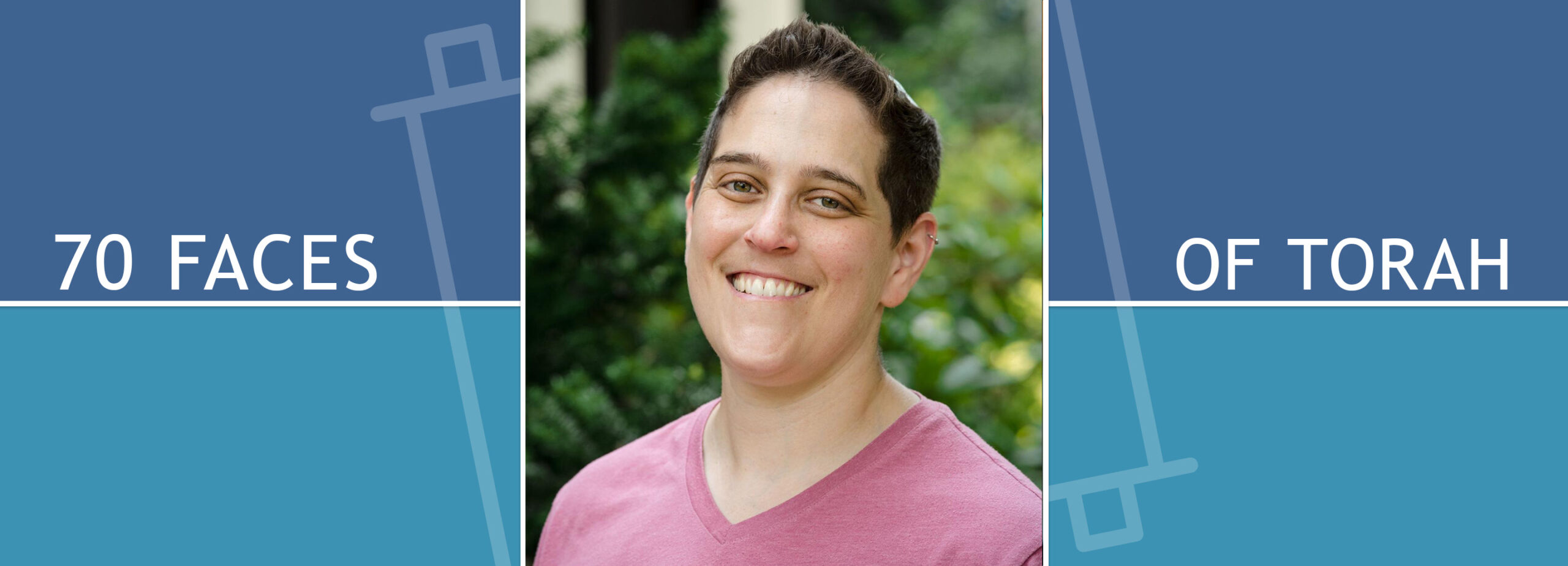
Rabbi Becky Silverstein (he/him) believes in the power of community, Torah, and compassion in transforming the world. He strives to build a Jewish community and world that encourages and allows everyone to live a life that reflects their inherent divinity / dignity. Becky is a principal at both Horizon Philanthropy and Sobelstein Giving, as well as co-chair of a donor table comprised of parents with trans children.
Explore Graduate Programs Support Our Work Tamid Adult Learning Classes