

Partners in Revelation
Last Wednesday, my chavrusa and I were learning Talmud together when a hush fell over the Hebrew College beit midrash. The quiet–an interruption from the usual ambient chatter of the space–was so curious that it caused an interruption in our own back-and-forth dialogue. The privacy of our own conversation is usually protected by the expressive dialogue of our peers; we were not ready for our own conversation to fill the space.
The moment reminds me of a pasuk from our Shavuos Torah reading:
וַֽיְהִי֙ ק֣וֹל הַשֹּׁפָ֔ר הוֹלֵ֖ךְ וְחָזֵ֣ק מְאֹ֑ד מֹשֶׁ֣ה יְדַבֵּ֔ר וְהָאֱלֹהִ֖ים יַעֲנֶ֥נּוּ בְקֽוֹל׃
And when the voice of the shofar grows very loud, Moshe will speak, and G-d will answer him in a voice. (Exodus 19:19)
The change in verb tense from the first part of the verse to the second creates the possibility of a causal relationship between the verse’s two parts: Moshe will speak, and G-d will answer, only when the background noise of the shofar is loud enough to keep their conversation private. Moshe and G-d are posited as chavrusa in a beit midrash: their learning is too new, too private, too fragile to be shown fully naked. The sound of the shofar clothes their dialogue in garments of sound to keep it boundaried and safe.
The Talmud, in tractate Brachos, comments on the conversational tone of Moshe and G-d’s dialogue at this moment:
אָמַר רַבִּי שִׁמְעוֹן בֶּן פַּזִּי: מִנַּיִן שֶׁאֵין הַמְתַרְגֵּם רַשַּׁאי לְהַגְבִּיהַּ קוֹלוֹ יוֹתֵר מִן הַקּוֹרֵא, שֶׁנֶּאֱמַר: ״מֹשֶׁה יְדַבֵּר וְהָאֱלֹהִים יַעֲנֶנּוּ בְקוֹל״, שֶׁאֵין תַּלְמוּד לוֹמַר ״בְקוֹל״, וּמָה תַּלְמוּד לוֹמַר ״בְקוֹל״ — בְּקוֹלוֹ שֶׁל מֹשֶׁה
Rabbi Shimon ben Pazi said, “from where is it derived that it is not proper for a translator to raise his voice louder than the reader? When it says, “Moshe will speak and G-d will answer in a voice,” it is not necessary for the verse to state “in a voice.” But why does the verse state “in a voice”? [to teach that G-d responded] in the voice of Moshe. (BT Brachos 45a)1
In this context, the phrase “in a voice” refers to an understanding that Moses and G-d were speaking at the same volume: Moses spoke and G-d matched his volume. For the Talmud, this has legal implications: the public must hear both the reader and the interpreter at the same volume, so as not to privilege one over the other. The Talmud’s interpretation maps Moshe onto the person reading Torah, and G-d as the translator. In doing so, the Talmud tells a cyclical story of revelation: Moshe tells the Torah to G-d who translates it back to Moshe in an understandable way. The relationship is one of chavrusa in its best form, where the two parties bounce translations and interpretations back-and-forth with such fluidity that their voices join together to become mirrors of one another, building together an interpretation that is more pliable and understandable than what existed before.
Svara faculty Bronwen Mullin writes as follows about the beauty of chavrusa study:
Chevruta is where we come to understand more about our intentions, our instincts, our strengths, and our weaknesses. It’s where we learn that we should be whole and seen in our wholeness. It might start with a text, but maybe the work of chevruta can impact the farthest reaches of our world, and maybe even Heaven… The Talmud will often say “Come and see” as an invitation into the learning. I want to say, “Come and meet”—yourself and others, through the richness and revelation of chevruta.
Mullin uses the phrase “revelation of chavruta” to describe what happens when two imperfect, broken beings come together and see one another as whole. To Mullin, revelation is a product of deep mutual trust and care. Thus, the revelation of Moshe and G-d’s chavrusa comes about not because they are perfect but because they find, in one another, wholeness in their imperfection. And when the sound of the shofar drops away, and they find the sounds of their voices naked and bare, they watch the reverberations of their revelation ripple outwards, leaving imprints of their shared learning on the souls of all who are near.
(1This passage from the Talmud is based on a practice in many communities at the time of reading Torah alongside its translation into the vernacular. A reader would read a passage of Torah text, and afterwards a translator would translate that passage into the vernacular. The practice was done in communities where not everyone understood Hebrew, in order that everyone would understand the biblical text.)
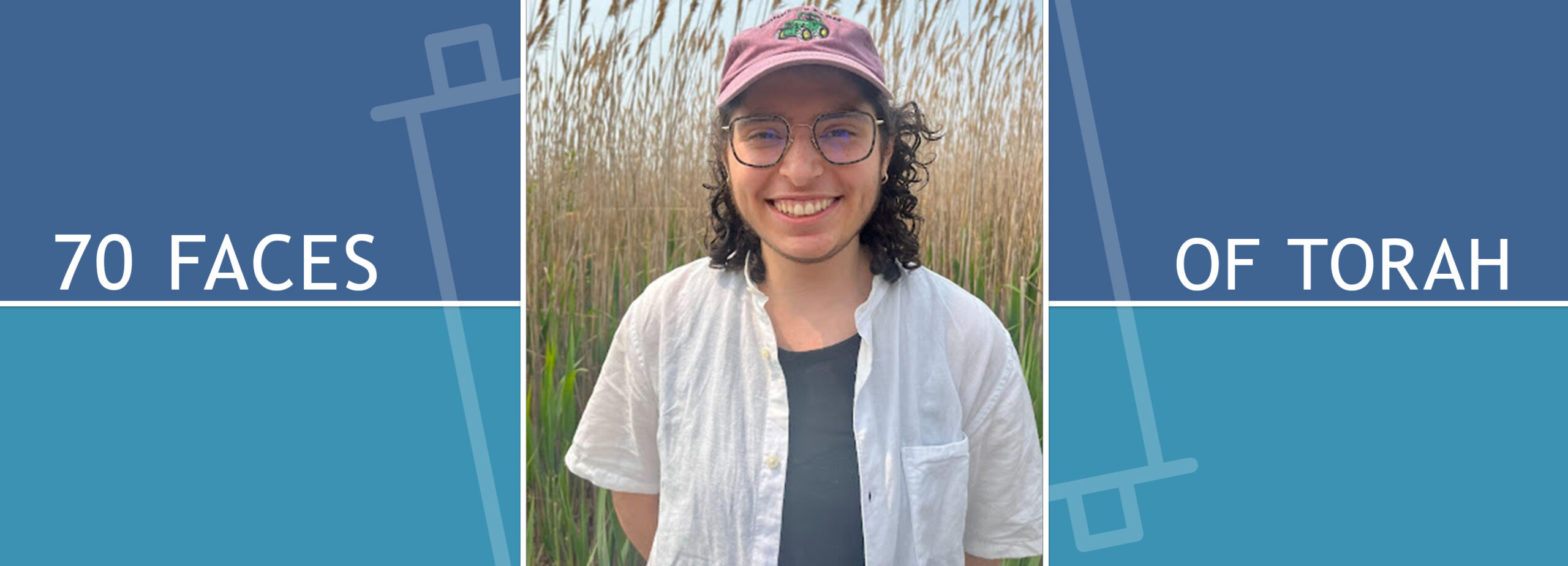
Rivka Nechemya Thrope (he/him, ze/hir) a rising fourth year Hebrew College rabbinical student. He received his BA in Comparative Religion from Harvard College. Currently, Rivka Nechemya works as a Jewish educator at Lehrhaus and Dorshei Tzedek Religious School. His past experience includes work in day schools, summer camp farms, and senior communities. Ze enjoys writing poetry, spending time with hir calico cat, Chickpea, and dancing whenever the opportunity presents itself. This fall, ze will begin a rabbinic internship at Mayyim Hayyim.
Explore Graduate Programs Support Our Work Tamid Adult Learning Classes