

Genesis Coming Together for Greater Purpose
Parashat Miketz Genesis 41:1-44:17
The opening paragraph of Havdalah begins “Gd is my salvation, I have faith and will not be afraid.” This is the framing for letting go of Shabbat and returning to the work of the world. This week, the work of the world came fast and furious: News of a shooter at Brown University. An email from colleagues about the possibilities of upcoming Health and Human Services guidelines regarding gender affirming healthcare. A shooting at a Hanukkah celebration on Bondi Beach.
Given our different proximities to different events, we feel different tugs of connection and resonance. When confronted with a tragedy like the one in Sydney, we might ask ourselves — did I know anyone on that beach? Would I have been on the beach? Could it happen here, to me and my community?
Underlying these questions are even bigger questions: Who are my people? To whom do I belong, and who belongs with me? To whom am I accountable?
Questions of belonging and accountability exist on systemic levels, on communal and institutional axes, and within individual families and relationships. Parshet Miketz raises a question of belonging at this level. Joseph rises to power in Egypt, a result of his skill for dream interpretation. Pharaoh elevates Joseph to a position all but equal to himself, overseeing the distribution of grain as a famine spreads through Egypt and beyond. Joseph’s brothers are living with their father, Jacob, in Canaan.
We read in Genesis 42:1-3:
וַיַּרְא יַעֲקֹב כִּי יֶשׁ־שֶׁבֶר בְּמִצְרָיִם וַיֹּאמֶר יַעֲקֹב לְבָנָיו לָמָּה תִּתְרָאוּ׃
וַיֹּאמֶר הִנֵּה שָׁמַעְתִּי כִּי יֶשׁ־שֶׁבֶר בְּמִצְרָיִם רְדוּ־שָׁמָּה וְשִׁבְרוּ־לָנוּ מִשָּׁם וְנִחְיֶה וְלֹא נָמוּת׃
וַיֵּרְדוּ אֲחֵי־יוֹסֵף עֲשָׂרָה לִשְׁבֹּר בָּר מִמִּצְרָיִם׃
Jacob saw that there were rations in Egypt, he said to his sons, “Why do you keep looking at one another? Now I hear,” he went on, “that there are rations in Egypt. Go down and procure rations for us there, that we may live and not die.” So ten of Joseph’s brothers went down to get grain rations in Egypt.
Why does the text say Joseph’s brothers? In the immediate context, a reader might have expected it to say “Jacob’s sons.”
Being “brothers of Joseph” brings with it the deep relationship of siblinghood and all that means, generally and in this particular family. Perhaps the text wants to connect this moment to earlier in the story where Joseph dreams that eleven sheaves of wheat would bow down to him, linking this moment to a broader story. Rashi, quoting Midrash Tanchuma, teaches that this association suggests that “they regretted having sold him and that they had made up their mind to behave towards him in a brotherly manner and to redeem him at whatever price people might fix for them to pay.” The phrase calls attention to the harm of the past and creates opportunity for repair in the moment.
And why ten? Why a minyan of brothers? The next verse clarifies that Benjamin stayed behind, so it would have been obvious that only ten went down to Egypt. Several commentaries teach that the Holy Blessed One resides amongst a minyan, affording divine presence and protection. Yet, the rabbis open up the “ten” to denote disagreement (Genesis Rabbah 91:2):
What is the mention of this number intended to tell us? … it means to suggest that so far as their feeling of brotherhood towards Joseph was concerned they were divided into ten, because the love and hatred that all of them bore him were not alike, whereas in regard to buying corn, they were at one and united.
They are all Joseph’s brothers, but they didn’t all agree. This is a model of relationship that our world could use more of — being in community or relationship with each other, offering a sense of belonging, without demanding agreement.
The latest edition of Sources: A Journal of Jewish Ideas, titled “Two Years Since 10/7” offers several reflections on these ideas.
In his essay, “Our Fragile Tents: Community, Consent, and Care”, Yehuda Kurzter, President of the Shalom Hartman Institute, addresses both communal histories of Jewish affiliation and belonging, as well as how we might think about our community today. Kurtzer suggests a new framework for understanding communal affiliation and belonging, including communities of participation, communities of interest, and “American Jews,” a community of nationality. Kurtzer states:
“The category of ‘American Jews’ is big enough and diverse enough—this is by design, a feature not a bug, as seen in biblical tribalism, Second Temple sectarianism, and modern denominationalism—that we should not use political loyalties to question who is ‘Jewish enough,’ or mark the people we disagree with as “un-Jews.”
When it comes to affiliation on a national level, we can all be Jews, and we can disagree.
In her essay, “Rebuilding Coalitions Toward a Just Future for All”, Abigail Levine, CEO of the Jewish Social Justice Roundtable, addresses what it means to be part of a broader set of communities and coalitions. Levine shares her own Jewish foundations for participation in broader social justice movements, and then calls us to coalition-building for the sake of democracy. Levine writes:
Stepping into a room of other faith leaders, usually convened around a shared justice goal, I understand that each person is bringing with them an entire theological, emotional, and personal world that motivates them to show up in this way. … There isn’t enough time in the day (or on the day’s agenda) for us all to discuss the different backgrounds we bring. And so, we do the best we can, offer each other grace, and manage expectations of what’s possible to achieve together.
Levine goes on to share what we might expect in coalition spaces as Jews, including that they be places of connection and learning, including learning about antisemitism and Jews in America. Levine highlights the individual experience of coalition members and connects it to a shared goal. While she is speaking in the context of interreligious coalitions, her point also resonates on a Jewish communal level.
Joseph’s brothers have a shared goal — to bring back grain for their families. In doing so, in ensuring that their families are able to sustain themselves, they are also part of keeping the promise of a shared future alive.
Many of us have moved through this week carrying the grief and shock of the collective. As a community, we are practiced in this particular mode. Acts such as the shooting at Bondi Beach connect us. In moments such as these, lines of affiliation and belonging are made clear. Yet, as humans, we crave other avenues to community, to be defined as part of a community based on something other than an external threat.
Like Joseph’s brothers, we may not agree. Yet we can move forward with a shared purpose — to bring the light of Torah and each other into the world. This Hanukkah season, may it be so.
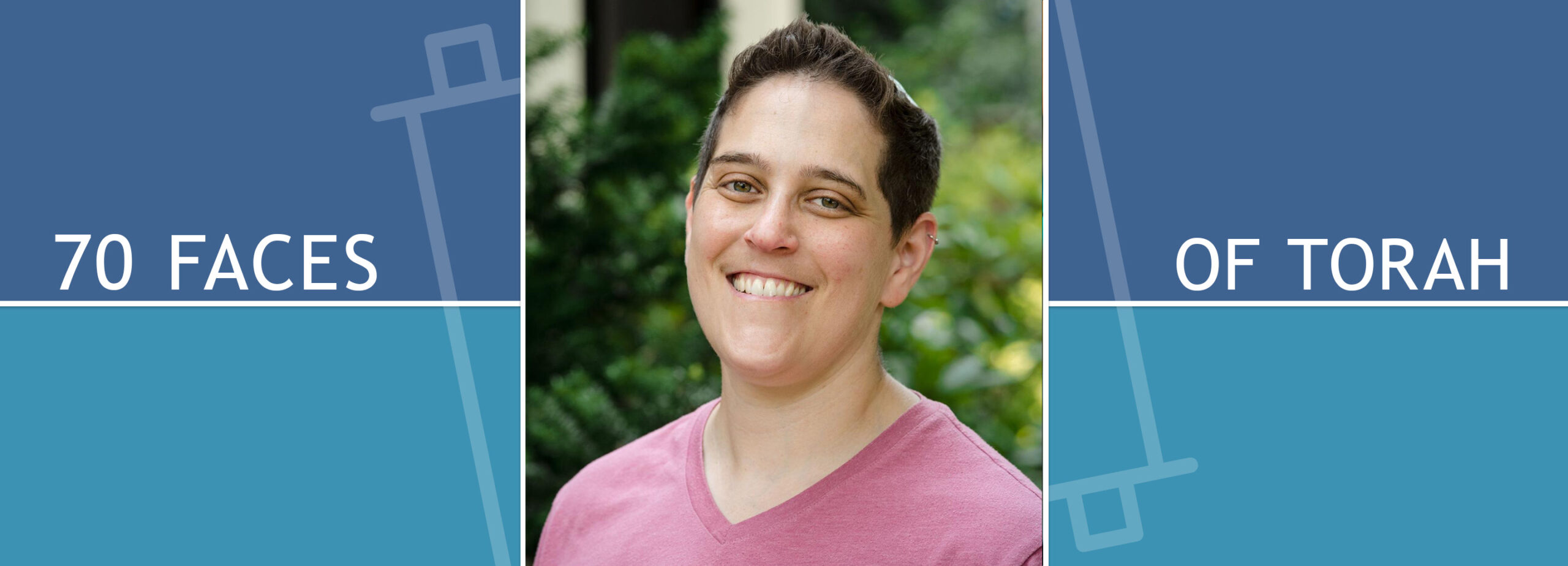
Rabbi Becky Silverstein `14 believes in the power of community, Torah, and compassion to transform the world. He strives to build a Jewish community and world that encourages and allows everyone to live a life that reflects their inherent dignity.