

Jewish learning Author Tova Mirvis on Hosting the Nu Reads Book Club

To mark the 100th anniversary of Jewish Book Month, the Jewish Book Council launched Nu Reads, a bimonthly subscription series featuring contemporary Jewish fiction. Curated in partnership with acclaimed novelist Tova Mirvis, writer-in-residence at Nu Reads, the program invites readers into a shared literary experience of lively discussion and creative community-building.
Hebrew College is partnering with Mirvis and our friends at Hummingbird Books in Newton to host a Nu Reads book club facilitated by the author. We spoke with Mirvis about how Nu Reads began, the joys of reading communally, and what she loves, as a reader and a writer, about Jewish fiction. This conversation has been edited for clarity and length.
Q: How did the idea for the Nu Reads club come about?
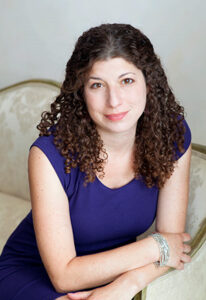 TM: It really began by chance. I was in conversation with someone at my synagogue, talking about the literary world and the Jewish world, and I jokingly said, “I wish there were a PJ Library for grown-up books.”
I meant it half as a joke, but PJ Library has changed the landscape in so many ways by bringing Jewish children’s books into homes and making stories part of family life. I kept thinking: what would the adult version of that look like?
For me, books are often the way I make sense of the world. Especially in difficult moments, fiction gives us a way into complexity through story. Around the same time, the Jewish Book Council was preparing to celebrate 100 years of Jewish Book Month, which actually began in Boston. It felt like the right moment to create something that would center stories in people’s lives and use fiction to spark conversation across communities and backgrounds.
Q: What, for you, are the particular benefits of reading-in-community, book club style?
TM: Writing is such a solitary act. So much of being a writer is sitting alone in a room, quietly, with your thoughts. A book club is the opposite experience. It’s where a book leaves that private space and becomes something shared.
What I love is the way readers bring themselves to a book. They respond through the lens of their own lives, their own memories, their own questions. That creates a kind of conversation you wouldn’t have otherwise.
I saw this recently when I led a discussion with parents at Gann Academy, about Philip Roth’s short story “Eli, the Fanatic.” We began by talking about Roth and the story itself. But before long, the conversation became about what it means to be visibly Jewish right now—when people feel proud, when they feel vulnerable, when they feel the urge to hide or to stand taller.
If we had started by saying, “Let’s talk about our feelings,” I don’t think people would have opened up in the same way. But the story gave everyone a way in. That’s what books do. They create deeper conversations by approaching them from a different vantage point.
Q: How are you choosing your selections?
TM: Right now, we’re focusing mostly on new books and trying to align selections as closely as we can with publication dates. We like to joke that we’re interested in books that are “new and new-ish.”
But beyond that, the real criteria is emotional. We’re looking for that feeling you get when you finish something and immediately want to press it into someone else’s hands and say, “You have to read this.”
We want a range of voices and styles. We think about how one selection speaks to the next, and how the list as a whole feels. But ultimately it comes down to love. Does this book move us? Surprise us? Open something up? Does it feel urgent, necessary, unforgettable?
It’s a subjective process, of course. But reading itself is subjective. That excitement is part of what we’re trying to share.
Q: What do you love about reading Jewish fiction?
TM: When I look at my bookshelves, I always joke that there’s a “Jewish neighborhood”—a place where so many of the Jewish writers I love are gathered together.
I think I love those books because they map my own evolution as a reader and as a Jew. I grew up in an Orthodox community in Memphis and didn’t really read much secular Jewish fiction when I was young. Discovering Philip Roth in college was electrifying. Later there were periods when I read everything by Rebecca Goldstein, or returned to Chaim Potok with fresh eyes.
What those books gave me was the sense that the questions I was wrestling with—about identity, belonging, faith, distance, closeness, where we fit and where we don’t—had all been asked before. They were already alive in literature.
That can be deeply comforting. These stories are not about me, and yet they are about me.
Q: What do you love about writing Jewish fiction?
TM: I absolutely think of myself as a Jewish writer, but not in any limiting sense. To me, it simply names the world I come from and the traditions and questions that shaped me.
What I’ve always found moving is how stories rooted in specifically Jewish settings can resonate far beyond those settings. My first novel, The Ladies Auxiliary, takes place in the Orthodox Jewish community of Memphis. It’s filled with very particular details of that world. And yet I remember someone once telling me, “This is just like my mother’s Methodist church.”
That’s the magic of fiction. The more particular a story is, the more universal it can become. Questions of community, loyalty, rebellion, faith, family, and individuality belong to everyone.
As a writer, I’m interested in the gap between our public selves and our private selves—what we think but don’t say, what gets tucked away, what we struggle to admit even to ourselves. Fiction lets us enter those hidden places. And when readers from entirely different backgrounds recognize themselves there, it feels like the deepest kind of connection.
–
Learn more about Nu Reads and join the subscription service through the Jewish Book Council. Boston area readers are also invited to join Tova Mirvis’s in-person Nu Reads book club, meeting every other month at Hummingbird Books in Newton. They will meet next month on the 19th to discuss the May selection, Porcupines by Fran Fabriczki.