

Jewish learning Zionism on the Periphery

In 1951, the Prime Minister of the new country of Israel, David Ben Gurion, toured America raising money for Israel Bonds. Before speaking to a sold out Boston Garden, he visited a small college in Roxbury. Of all the places in America he was visiting, he said, the place he had most looked forward to speaking was Hebrew College, whose commitment to Hebrew culture and life was known in Israel. Ben Gurion brief speech was met by a standing ovation followed by dancing in the streets in front of the College.
To say we are in a different moment in our understanding of Israel would be an understatement. The feelings of unabashed pride, renewal, and joy that must have flowed through Hebrew College on that day in 1951 seem impossible to access given where we are now—the trauma of Oct. 7, the subsequent war, and the world condemnations of the Jewish state.
But I am just back from having spent 10 days in Israel, where I felt a small sense of something deeply unexpected: hope and inspiration. I met Israelis who are committed to an old-new vision of a Zionism that is both deeply humanistic and deeply concerned with Jewish safety and security.
I visited Israel under the auspices of Dror Israel—a movement of teachers in Israel who live collectively in what are known as “urban kibbutzim.” The organization oversees three different activities including: operating schools across Israel with a progressive educational philosophy; overseeing one of Israel’s largest youth movements, with Jewish, Arab and Druze branches; and providing informal educational opportunities to Israelis throughout the country with a particular focus on peripheral communities, cities, and towns on the country’s borders.
We toured Kiryat Shmona, a city in the northern most part of Israel near the Lebanese border, and Sderot, a city which is near the Gaza border which was devastatingly and briefly overrun on October 7. Not surprisingly, both of these cities were evacuated after October 7th and both of these cities have struggled in their recovery. It was reported to us that Kiryat Shmona has lost more than 20% of its population from before the war.
And yet we met remarkable Israelis who have moved to these cities davka (precisely) after October 7th for the purpose of rehabilitating them. When many have understandably left these cities feeling unsafe, some are choosing this moment to move there. They are committed to the old Zionist vision of an Israel full of vibrant places on the margins as well as in Tel Aviv and Jerusalem. These are not settlers building in disputed territories, these are mostly young people moving into cities that have been part of Israel since 1948, but are getting left behind demographically and economically. And they want to bring with them a humane vision of Zionism. They embrace the great Jewish philosopher Martin Buber’s commitment to dialogue and relationship.
While it may be difficult to access from our perch here in Boston, there are Israelis doing profound work who are fundamentally committed to a vision of hope and inspiration.
When Ben Gurion spoke at Hebrew College in 1951 he ended his speech with an exhortation. “We need you, we need you!” he exclaimed to the Hebrew College crowd. The new country of Israel needed American Jewish spiritual and material support. That has not changed. We are needed. One of the ways that we are needed now more than ever is to uphold those folks who are doing the work of creating an Israel we can be inspired by. This has been the work of Hebrew College as an institution since its inception. Hebrew College was founded to carry out the Zionist ideas of Ahad Ha’am who envisioned diaspora and Israeli communities working collectively and promoting Hebrew culture (hence the name “Hebrew College”, originally “Hebrew Teachers College”). We are called to carry a vision of a humane, hopeful Zionism forward.
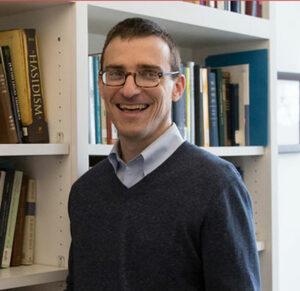 Rabbi Dan Judson is Provost of Hebrew College in Newton, MA. He also teaches in the College’s Rabbinical School and Tamid Adult Learning Programs.
Explore Graduate Programs Tamid Adult Learning Classes Support Our Work