

Jewish learning Tamid Faculty Spotlight:
Jacob Meskin
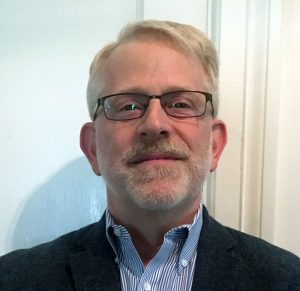
As part of our new Tamid of Hebrew College faculty spotlight series, we recently spoke to Jacob Meskin, PhD, Tamid’s Academic Advisor and an instructor for our Me’ah Classic and intensive courses, about his teaching journey and how he approaches teaching adult learners of all ages about Judaism.
 Q. What do you like best about teaching at Hebrew College?
JM: I started teaching part-time at Hebrew College in the spring of 1999 as an instructor in the Me’ah Program. I have been with the College full-time ever since and have held a number of different positions, but most of my work has been in adult Jewish education. It was a very unusual move, to leave being a full-time academic to become a full-time adult Jewish educator. Indeed, my academic colleagues doubted (and still doubt) that there is any such job as “full-time adult Jewish educator”.
It has been an extraordinarily positive experience for me. I have come to feel that helping people — in whatever way they wished — to connect or re-connect to Judaism, is much more important than studying Judaism academically. Indeed, one of the many great things about my job is that now I am challenged to use all of that academic training and knowledge in the service of something I find both deeper, and humanly richer. Of course, at the same time, I continue to read academic research and hope to publish more of my own. But the context and perspective are different.
Q. How have Hebrew College students inspired you?
JM: I have met so many fascinating students at Hebrew College. They range from younger folks in their late twenties, through new parents pondering the role of Judaism in the lives of their families, all the way through octogenarians and nonagenarians. Most striking for me has been to realize that these people, in little and big ways, have been on their own quests. I feel honored that I have been able to be of some assistance to them in some stage of that quest. To see this dedication to searching for growth on the part of all of these very different learners, and to see also the kindness and mutual respect with which they were pursuing it, has often left me humbled, inspired, and energized.
Q. What is a text you love to teach and why?
JM: I approach my teaching about Judaism the same way, I suppose, that I approach Judaism. I have learned that Judaism “contains multitudes.” That is, Judaism is certainly a religion, a way to live, a set of values, a directive to change the world, a way of trying to meet God, a community, a set of rituals and calendars, and so on. But at the very same time, Judaism is also a vast symphony, with many distinct themes and instruments all, somehow, elegantly “playing” simultaneously, their many differences generating a dynamic harmony out of various contrasts and tensions.
So, when it comes to teaching Jewish texts, I always want students to see the richness, the multiplicity, the disagreements, that can be found either in one text, or by comparing two related texts. This is not at all because I think Judaism prizes dissonance or chaos! Quite the contrary: it is because Judaism is a profoundly challenging religion, one that believes we are mature adults, who must constantly grow through the work of learning to hold different points of view together in our minds. We need to act with unity, but at the same time we need to think with encompassing multiplicity.
As an example, when I teach the Modern semester of Me’ah I very much enjoy teaching two back-to-back units. In the first, we read meditations on the meaning of prayer, and the religious life more generally, by early Hasidic masters. These tend to praise earnest emotion and direct religious experience. But in the second unit the following week, we go on to read a powerful critique of Hasidism, which extolls, rather, the wide-ranging importance of fulfilling one’s responsibilities (without reference to one’s personal feelings about them or the religious experiences they may engender).
Thus, the students are plunged into one of the many debates that animate our tradition: which takes priority, my responsibilities (for my family, for others, for the Jewish people, for God) or my own life of personally felt fulfillment and lived spiritual experience? Aren’t both points of view valid? Can we really live with only one, or with only the other? We always have a good discussion about this fundamental “symphonic” moment in Jewish tradition. The message seems to be: Judaism teaches you to value both, and now you must incorporate that unsettled contradiction into your mind and use the energy its remaining unresolved can generate.
Join us for our Tamid Adult Learning Celebration year-end celebration at Hebrew College (and Zoom) of April 9 at 7 pm, when we will celebrate faculty and learner milestones.
Tamid Adult Learning Classes Explore Graduate Programs Support Our Work