

Alumni Pluralism in Norway with a Hebrew College Alum
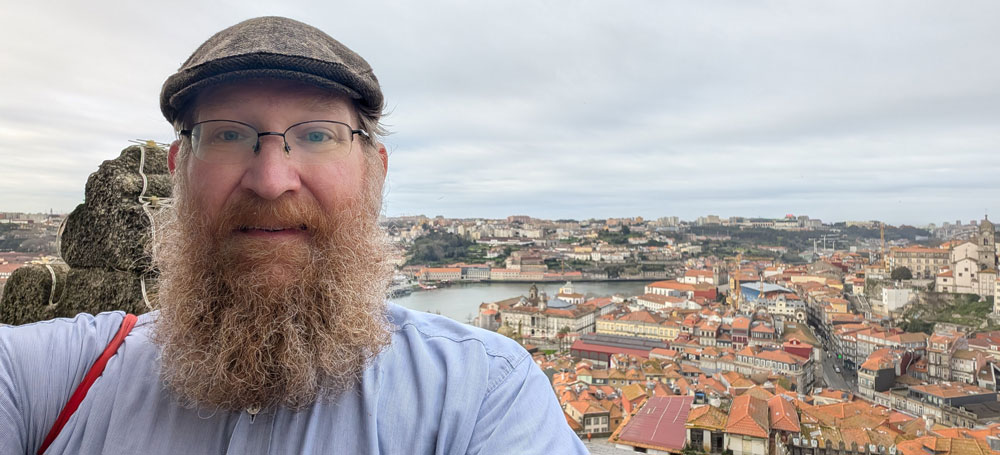
When he decided to pursue a career in Jewish education, Norway-based rabbi and academic Hebrew College 2006 MJED alumnus Tyson Herberger might not have predicted his professional life would take him on a tour of international Jewish communities and into the field of religious education in Oslo. A scholar and educator committed to celebrating Jewish diversity, Tyson’s career attests to the values that guide Hebrew College’s mission: passion for learning, commitment to pluralism, respect for human dignity in all people. We are proud his journey included a stop at Hebrew College.
Born in America, Tyson made aliyah and settled in Jerusalem in the early 2000s. After a stint as a journalist, he felt drawn to community leadership and Jewish education. He enrolled in a joint education program that Hebrew College operated at that time in conjunction with Pardes, a pluralistic yeshiva based in Jerusalem. After completing his studies with Pardes-Hebrew College, Tyson worked toward rabbinic ordination in Jerusalem. From there, his career has taken him on a journey through the international Jewish community. His early rabbinic experience was truly global, providing spiritual guidance across continents while serving as a remote rabbi for a the Port Elizabeth Hebrew Congregation in South Africa. When bureaucratic hurdles made that post unsustainable, Tyson relocated to Poland, where he served as assistant rabbi at Warsaw’s historic Nożyk Synagogue—the only pre-war synagogue still standing in the city. Later, he became the Chief Rabbi of Wrocław (Breslau) and Lower Silesia, deepening his understanding of Jewish resilience and adaptability.
Each stop reinforced Tyson’s appreciation for the unique character of Jewish life beyond the well-known population centers in America and Israel. “My experiences abroad showed me how fluid and multifaceted Jewish identity really is,” Tyson recalls, referring both to his years abroad as a journalist and his subsequent rabbinic career. “Communities are often smaller, more diverse, and shaped by local culture and history in ways you can’t predict from afar.” In Norway, where Tyson eventually settled with his family, he found a Jewish community whose breadth extended far beyond official membership rolls. “The official numbers may say there are 1,500–2,000 Jews, but I see thousands more with Jewish heritage. Many express this identity in unique, sometimes unexpected ways. That diversity is an asset—not a challenge.”
With the move to Norway also came a shift from congregational life to academia. Tyson embraced new roles as a PhD student in religious education at Inland Norway University and as an educator and eventually Associate Professor of Religion and Religious Education at the University of Southeastern Norway, teaching both future religion teachers and a wider range of students in education programs. Many of his students come from rural Norwegian backgrounds, and Tyson is often the first Jew they have ever met. He sees this as a major opportunity to forge connections across lines of difference: “My goal is to open students’ perspectives—not just about Judaism, but about Norway itself, and what it means to be Norwegian. I want them to see that diversity has always been part of their society, and that there are many valid ways to belong to any community, religious or otherwise.”
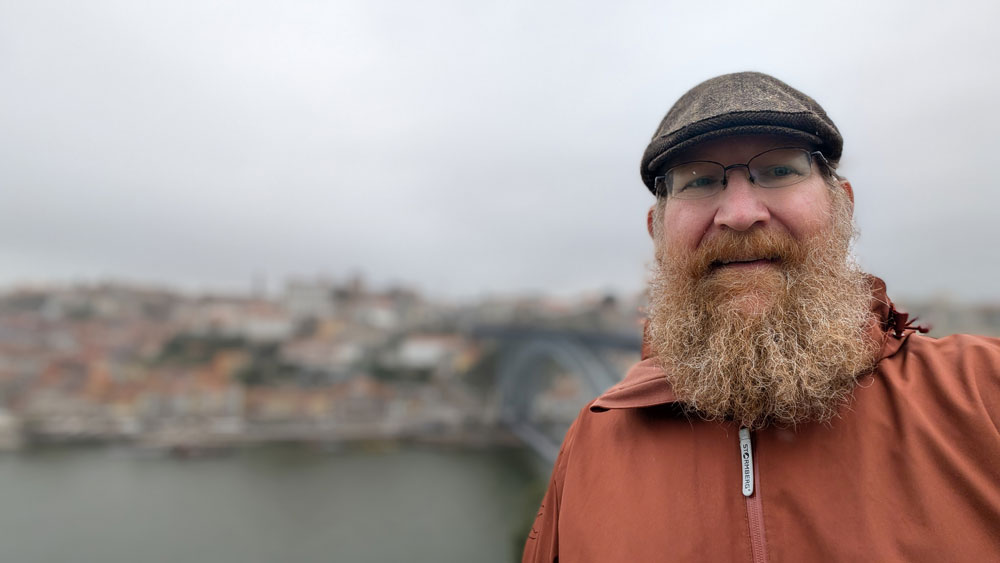
Tyson’s research deepens these commitments. His work explores how Norwegian educational materials present Judaism, often simplifying a rich tradition into a single narrative and largely omitting the lives and contributions of Jews who might fall outside the assumed ‘norm’. He strives to underscore the complexity, diversity, and evolving nature of Jewish identity, both in his scholarship and in the classroom. Beyond the university, Tyson’s pluralistic approach extends to interfaith and community engagement. As a senior research fellow at the Ohr Torah Interfaith Center, he collaborates with Muslim and Christian leaders—locally and internationally—to promote honest, respectful dialogue. He also guest lectures at other European institutions, including the University of Innsbruck’s Faculty of Catholic Theology.
Tyson’s perspective was shaped by his days at Hebrew College, where he learned not only the importance of pluralistic Jewish education, but also how to live that pluralism in the world. “Hebrew College reinforced the idea that disagreement isn’t a problem—it’s a resource,” says Tyson. “That’s something I carry into every community and every classroom. True acceptance means making room for difference, and recognizing we are all richer for it.” From Jerusalem to Norway, from rabbinic leadership to the front lines of teacher education, Tyson continues to champion the values of pluralism and acceptance—demonstrating how far our mission can travel across the globe.
Learn about Hebrew College’s MJED and graduate certificate programs for Jewish educators.
Explore Graduate Programs Support Our Work Professional Development