

Alumni Meeting an Unknown Climate Future with Jewish Wisdom
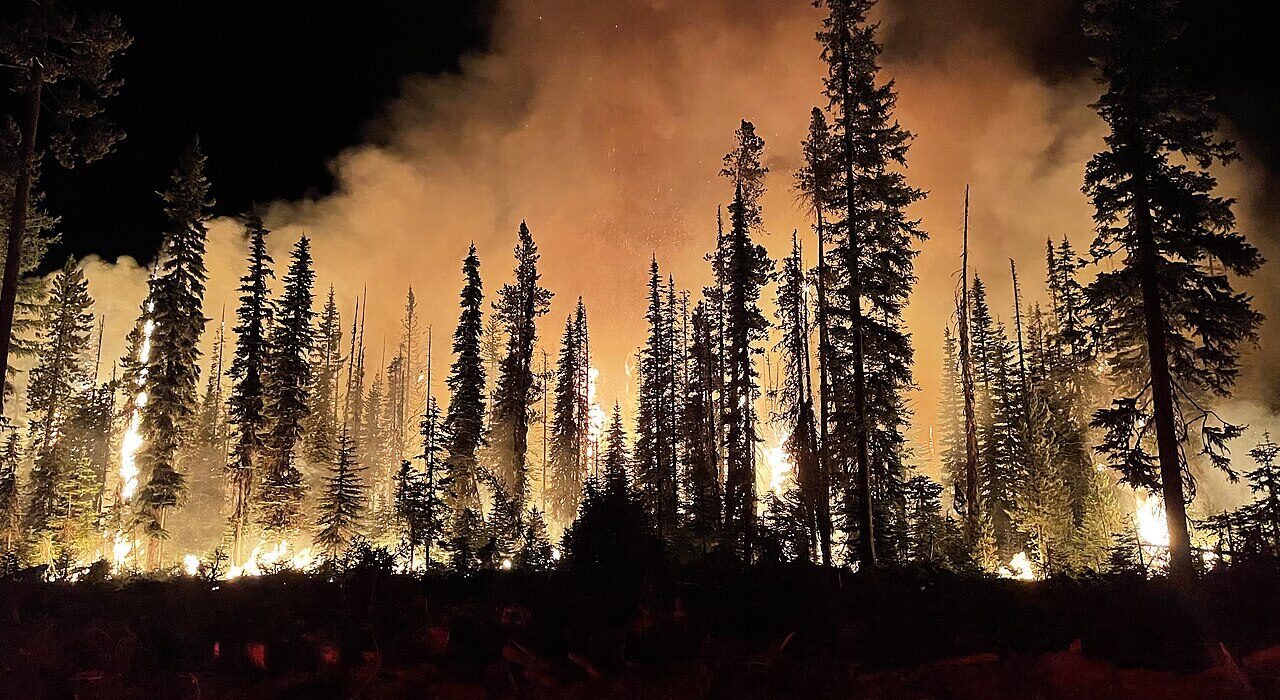
When wildfires devastated neighborhoods in Los Angeles last year, local rabbis found themselves facing questions that extended well beyond emergency response. While congregants needed food, shelter, and practical support, they also needed to gather again as a community, make sense of loss, and imagine what it would mean to heal.
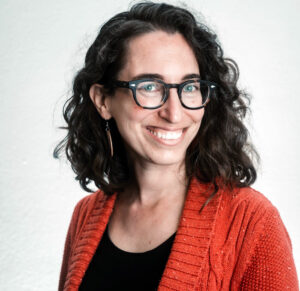 As Director of Spiritual Activism and Education at Dayenu: A Jewish Call to Climate Action, Rabbi Laura Bellows, HCRS `18, works at the intersection of Jewish wisdom and climate action. When a rabbi in Southern California reached out after the fires asking whether Dayenu had resources to help her community navigate the aftermath of devastation, Bellows and her colleagues identified a gap that needed filling.
The result is Jewish Spiritual Care After Extreme Weather, a new collection of resources designed to help rabbis, educators, and Jewish communal leaders accompany their communities through the aftermath of catastrophic weather events. Drawing on interviews with rabbis and cantors who shepherded their communities after wildfires, hurricanes, floods, and other disasters, Dayenu’s Spiritual Adaption team, led by Bellows, assembled resources that help clergy and individuals respond not only to immediate needs, but also to the emotional and spiritual questions that emerge long after the news cameras leave, when communities begin the slower work of grief, healing, and rebuilding. The guide includes Torah sources, prayers, rituals, pastoral practices, and reflections designed to accompany communities through recovery.
For Bellows, creating the guide was not simply an exercise in applying Jewish tradition to a contemporary issue. It reflects a way of thinking she traces to her years at Hebrew College. “When I was considering rabbinical school, I was already working in Jewish environmental education,” she says. “I was using a lot of sound bites. I wanted to go deeper.” This impulse became one of the defining experiences of her rabbinic education: “I could not have anticipated how much I would come to love being in the depths of a text,” she says. “At Hebrew College, I learned what it really means to draw from a full and challenging well of Torah – that the best learning doesn’t simply affirm what you already believe, but pushes you to engage in the key questions more deeply.”
While learning to wrestle with Jewish texts, Bellows found at Hebrew College a community of students and teachers whose creativity continues to shape her work. “One incredible gift of my rabbinic education at Hebrew College is colleagues and teachers who are helping change the Jewish landscape in ways that make me feel really deeply hopeful.”
This way of learning shapes Bellows’ work at Dayenu, where she leads what the organization calls its “Spiritual Adaptation” initiative. Alongside other programming, her team (which has included many rabbinic interns from the Hebrew College) explores what it means to accompany individuals and communities confronting an increasingly unpredictable world through ritual, pastoral care, and Jewish spiritual practice.
One distinction Bellows returns to is the difference between an uncertain future and an unknown one. “We know that the world our students and grandchildren will inherit will be shaped profoundly and directly by the actions of our policy-makers and leaders today – and by those mobilizing for action now. We know what we need to do, as a society and country, to ‘avert the worst of the decree’ and avoid catastrophic climate impacts. But it is still uncertain what we will do with that great responsibility.” Rather than allowing fear to define that uncertainty, she draws on the rabbinic practice of midrash as a model for imagining what has not yet been written. “The work of imagination is really geared toward helping people tell the story of the world that we want, so that we can work toward getting there.”
In many ways, Bellows says, the work reflects an enduring understanding of the rabbi’s role: “There’s a longstanding idea that a rabbi’s job is to both comfort and agitate,” she says. “Congregational rabbis constantly have to figure this out: Is this an agitational moment, or is this a comfort moment?” Today, as Jewish communities confront the realities of climate change, Rabbi Bellows navigates that tension, helping communities discover wisdom, resilience, and belonging amid an uncertain future.
Meet students and faculty at one of our fall open houses, Ta Sh’ma (Come & Hear) November 16 (in-person) or online (Dec. 6). Learn more and register.