

Jewish learning Hiddush Fellowship:
Emerging Jewish Leaders Gather on Campus
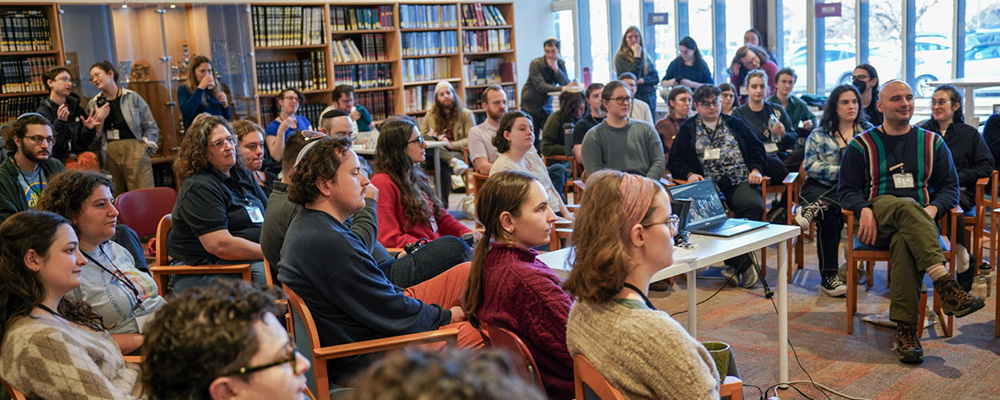
Last weekend, Hebrew College welcomed a cohort of 40 emerging Jewish leaders to campus for an immersive retreat and shabbaton. Operating for the first time this year, Hebrew College’s Hiddush Fellowship seeks to cultivate the curiosity, creativity, and spirit that define effective Jewish leadership in the 21st century through sustained learning, mentorship with experienced rabbis, and encounters with the intellectual and spiritual life of the rabbinical school. While participants entered the fellowship from many backgrounds and professional paths, the program’s broader aim is to nurture a rising generation of Jewish leaders grounded in Torah, committed to service, and passionate about guiding communities through the complexities of contemporary Jewish life. The fellows’ time on campus served as the centerpiece of a program that will continue online for the duration of the calendar year.
“This retreat was a powerful reminder of how hungry people are for spirited, immersive, and intellectually rigorous Jewish community and learning.”
— Rabbi Gita Karasov, Fellowship Director & Hebrew College Director of Graduate Admissions
The Hiddush Fellowship was drawn from an applicant pool generated by congregational and campus rabbis, camp directors and community organizers who were invited to nominate a promising young leader from their community. An outstanding cohort of fellows emerged from the nomination and selection process. Many work for Hillels and other Jewish organizations, while others majored in religion or Jewish studies. One way or another, their demonstrated commitment to Jewish life afforded them this opportunity to join a community of like-minded peers. After meeting online in January and February, fellows traveled from across the country to experience a holistic taste of rabbinical school life—beit midrash learning, soulful tefillah, shared meals, and conversation with faculty, students, and alumni. The retreat was structured around the theme “Rupture and Belonging in the Jewish Community,” inviting fellows to grapple with enduring questions about leadership, tradition, and community in moments of uncertainty.
“This retreat was a powerful reminder of how hungry people are for spirited, immersive, and intellectually rigorous Jewish community and learning,” says fellowship director Rabbi Gita Karasov, Hebrew College’s Director of Graduate Admissions. “What a gift to host this incredible cohort at Hebrew College!”
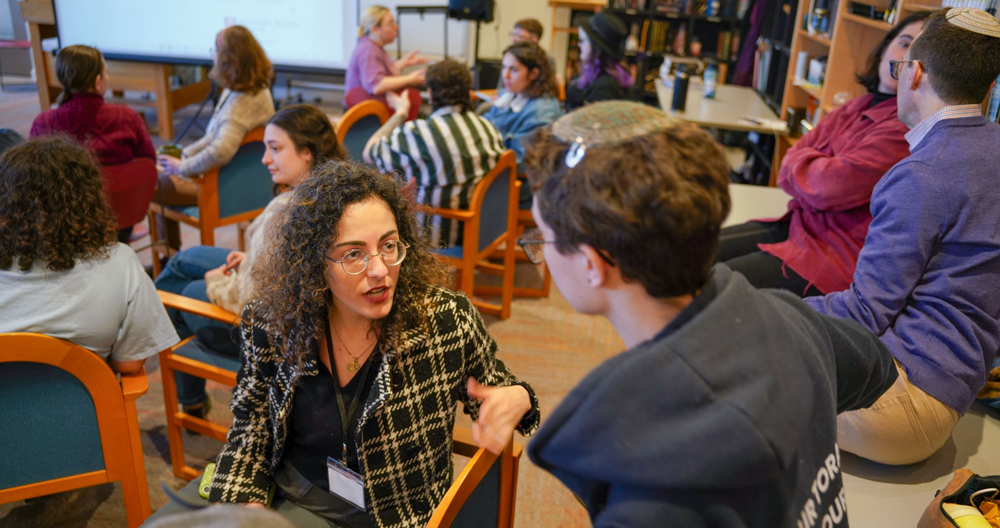
The weekend opened with an introductory session about compassionate and resilient leadership in turbulent times with President Rabbi Sharon Cohen Anisfeld. Hebrew College Rosh Tefillah and Artist-in-Residence Rabbi Jessica Kate Meyer, along with rabbinical student Marni Loffman and others, led Shabbat davening. After Havdalah, the fellows traveled to Lehrhaus, the Jewish tavern of learning on the edge of Cambridge for a nosh and conversation with founder Rabbi Charlie Schwartz about Jewish cultural entrepreneurship. Throughout the weekend, learning sessions offered by leading educators and practitioners modeled the kind of interdisciplinary, creative, and reflective practices that emerge from Hebrew College’s pluralistic approach to Jewish learning and rabbinic education.
Rabbi Adina Allen ’14, co-founder and creative director of shared-campus partner the Jewish Studio Project, which opened its first east coast studio on Hebrew College’s shared campus last year, led a two-part seminar exploring creativity as a spiritual and communal resource in times of rupture. Through art-based inquiry, writing, and reflection, fellows considered how moments of fracture can become sites of revelation and renewal. Rabbi Allen’s sessions encouraged participants to think of creative practice not as enrichment but as an essential leadership capacity for remaining present with uncertainty and imagining new forms of belonging.
Dr. Evan Parks, Educational Director of the Bronfman Youth Fellowship, offered a complementary exploration of how “shadow” in Jewish and modern thought function as an invitation to dwell with irreducible complexity. Drawing on texts from the Tanach alongside philosophical and poetic writings, Parks invited fellows to consider how individuals and communities confront unresolved tensions of history and identity.
Rabbi Jason Rubenstein, Executive Director of Harvard Hillel, taught a session about communal division across political and generational divides, exploring thinkers and ideas that complicate—but ultimately strengthen—what it means to practice pluralism in a community buffeted by forces outside its ultimate control. By placing talmudic ethical inquiry in conversation with modern moral psychology and philosophy, Rabbi Rubenstein identified a long running debate about the role of conflict and redemption in Jewish ethics.
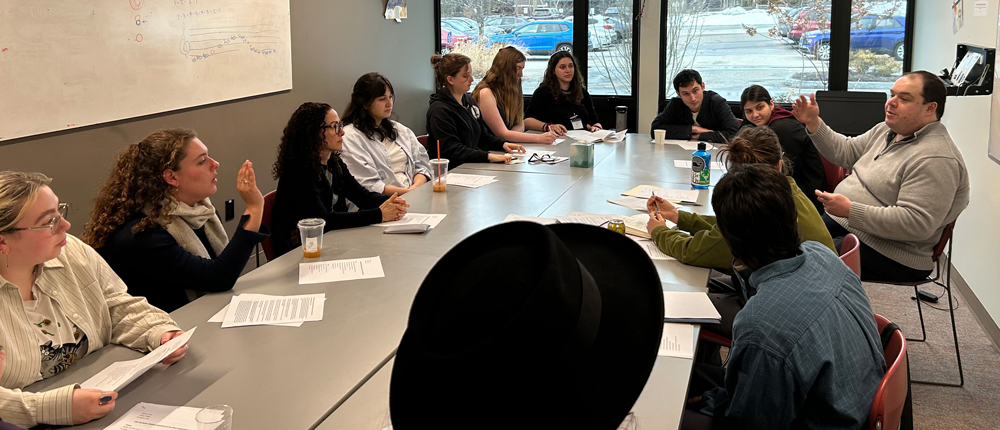
Sessions offered by Hebrew College faculty expanded the theme of rupture and belonging across Jewish sources and traditions. Dr. Susie Tanchel examined biblical responses to national crisis, exploring how the Jewish people reimagined communal life after the destruction of the First Temple. Dr. Matthew Hass (above) led a study of rabbinic debates in the Mishnah about authority and community in the aftermath of catastrophe, asking what these texts might teach about belonging today. Rabbi Or Rose explored the legacy of Rabbi Abraham Joshua Heschel, inviting fellows to reflect on the 20th century rabbi’s vision of moral responsibility and spiritual courage in moments of social upheaval.
“We didn’t shy away from the real challenges facing the Jewish world today, and yet, the prevailing mood across all our sessions was one of joy, hope, and vitality,” says Rabbi Karasov. “Fellows arrived eager to learn and connect — and left with a renewed commitment to centering Jewish learning and leadership in their lives.”
The retreat also provided opportunities for fellows to connect with the broader Hebrew College community. An alumni panel featuring rabbis working in diverse settings offered candid reflections on the possibilities and challenges of rabbinic leadership today. Conversations with current students and faculty gave fellows a window into the learning environment and values that animate the college’s rabbinical program.
“The immersive program surpassed all of our expectations. Throughout our four days together the fellows reflected on how the intellectual, spiritual and emotional content of their time at Hebrew College was both a source of deep comfort and joy as well as a challenge.”
— Rabbi Dan Judson, PhD, Hebrew College Provost
“The Hiddush fellows were extraordinary and inspiring — each of them thoughtful, creative, passionate, and deeply dedicated to the Jewish people and leadership,” said Rabbinical School Dean Rabbi Daniel Klein `10. “And they were a stunning group: from the very first session, they brought energy and engagement to every aspect of the program. The participants, group, and retreat gave me hope for the future.”
The Hiddush Fellowship will continue through the year with monthly cohort learning, havruta study, and one-on-one mentorship with experienced rabbis. Hebrew College is enormously grateful to the H&F Baker Foundation for their lead gift to make this pilot fellowship possible, as well as to the Dorot Foundation, for their generous supporting grant. The College is also deeply grateful to the fellows whose curiosity and passion animate this community of learning.
“The immersive program surpassed all of our expectations. Throughout our four days together the fellows reflected on how the intellectual, spiritual and emotional content of their time at Hebrew College was both a source of deep comfort and joy as well as a challenge,” said Hebrew College Provost Rabbi Dan Judson, PhD. “As one student remarked to me, ‘I feel like my brain and soul were turned on for the first time in such a long time.’ We believe in this group we have found some of the next leaders of American Judaism, and this weekend was a significant step in encouraging these talented young people to take another step on their professional journey.”