

Podcast Ep #28: Heart of a Stranger

Our lives, at the end of the day, will be a sum of what we have paid attention to. Do you want to pay attention to all of that ugliness and make that the sum of your life? Where do you want to place your heart? Really, that is the question.
– Rabbi Angela Warnick Buchdahl
What does it mean to be a boundary crosser, to leave what is familiar and find your truest home? In this episode of Speaking Torah, we share a powerful conversation from Hebrew College’s event celebrating the release of Rabbi Angela Buchdahl’s new memoir, Heart of a Stranger.
Rabbi Buchdahl describes her book as part memoir and part spiritual guidebook, weaving together her personal journey as a biracial Korean American Jew with the deeper stories of Torah. She traces how her mother’s Buddhism shaped her understanding of Jewish spirituality, how the Abraham and Sarah narrative mirrors her own experience of crossing boundaries, and why being an outsider became her superpower of connection.
You’ll discover how Angela cultivates joy through music and intentional attention, and why she believes that feeling like a stranger is not unique to her story but something that connects us all. Her message offers a vision of community where we can tell each other why we feel we don’t belong and create a home together.
What You’ll Discover from this Episode:
- How torah stories can help us understand our own experiences of crossing boundaries and finding home.
- What it takes to break through the stained glass ceiling as a woman in rabbinic leadership and make systemic changes.
- A framework for holding complexity when beloved leaders cause harm.
- The value of t’sumet lev, placing your heart where you want your attention and your life to be.
- How feeling like an outsider can become a catalyst for Angela in creating belonging in community.
Featured on this Episode:
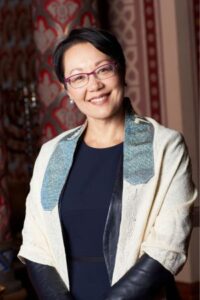 Rabbi Angela Warnick Buchdahl serves as the Senior Rabbi of Central Synagogue in New York City, the first woman to lead this flagship congregation in its 185-year history. Under her leadership, Central Synagogue has grown to become one of the largest synagogues in the world, including congregants attending via livestream in more than one hundred countries. Born in Korea to a Jewish American father and a Korean Buddhist mother, she is the first Asian-American to be ordained as a rabbi in North America. She has been featured in dozens of news outlets including the Today Show, NPR, Wall Street Journal, PBS, and Newsweek’s Most Influential Rabbis. She received Hebrew College’s Rabbi David Ellenson Award Honoring Leadership in Pluralism and Ahavat Yisrael at the College’s Spring 2025 Gala.
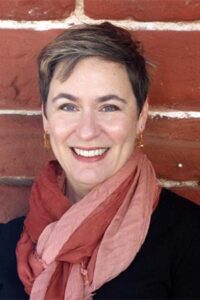 Judith Rosenbaum is CEO of Hebrew College shared-campus partner the Jewish Women’s Archive, a pioneering digital archive that documents Jewish women’s stories, elevates their voices, and inspires them to be agents of change. Judith earned a PhD in American Studies from Brown University, with a focus on women, gender, and social movements. As a Fulbright Fellow, she studied women’s collective communities in Israel. An educator, historian, and writer, she teaches, lectures, and publishes widely on Jewish studies and women’s studies. She received the Hebrew College 2025 Esther Award for Courageous Women’s Leadership in May 2025.
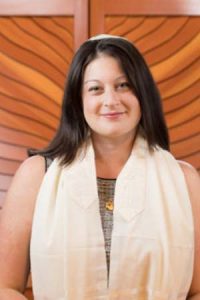 Rabbi Jessica Lowenthal `19 (Host) is the spiritual leader and Education Director at Temple Beth Shalom in Melrose, MA. She was ordained in 2019 at Hebrew College. Before attending rabbinical school, Rabbi Jessica was Assistant Regional Director at the Anti-Defamation League in Boston, working with partners like MIRA (Massachusetts Immigrant and Refugee Advocacy Coalition) and MassEquality. She holds an MBA in non-profit management and MA in Jewish Leadership from the Hornstein program at Brandeis University and a BA from George Washington University in Religion and Judaic Studies.
A special thank you for this episode’s musical contributions:
 Intro by: Rabbi Jackson Mercer `23
Jackson is the Base Rabbi for Boston. Collaboration and creativity are at the core of his desire to cultivate meaningful Jewish experiences. Through his work, Jackson built singing prayer communities across the country in California, New York, and Boston. He also founded and built a Judaica brand, Hiddur Mitzvah, with his partner and fellow artist Rachel Jackson and sings with R’ Josh Warshawsky in the Chaverai Nevarech Band.
Esa Einai (Psalm 121:1)
Music by Jackson Mercer
Guitar and Melody by Jackson Mercer
Harmonies by Cantor Rosalie Will, Ilana Sandberg, Rabbi Micah Shapiro, Rabbi Josh Warshawsky, Noah Diamondstein, Ryan Leszner, Eliana Light.
Oseh ShalomPerformed by Central Synagogue, Dan Mutlu, Jenna Pearsall, and Angela Buchdahl, from the album Sing a Little More.
Full Episode Transcript:

Jessica: Welcome to Speaking Torah. I’m your host, Rabbi Jessica Lowenthal, spiritual leader of Temple Beth Shalom in Melrose, Massachusetts, and 2019 graduate of Hebrew College.
In this podcast, Jewish leaders from around the world, Hebrew College faculty, alumni, and students discuss how Torah could help us navigate the most pressing issues of our time. Together, we explore the ways Torah can help us approach the world with creativity, healing, and hope.
We are excited to offer another new episode focusing on this season’s theme of new Jewish literature.
On October 26th, Hebrew College and shared campus partner, the Jewish Women’s Archive, celebrated the release of Rabbi Angela Buchdahl’s new memoir, Heart of a Stranger, with nearly 400 people in attendance. Rabbi Buchdahl, who is the spiritual leader of Central Synagogue in New York City, was joined in conversation by longtime friend and JWA CEO, Dr. Judith Rosenbaum.
Together, they discussed themes and events from the memoir, including the power of music, gender, and ambition in the workplace, leading institutions during the MeToo movement, and the early childhood memories of her Korean mother’s Buddhism shaping her understanding of Jewish spirituality. We are pleased to share that conversation in this week’s episode. Let’s listen together.
Judith: Thank you all for being here, but most of all, thank you, Angela, for being here tonight with us.
Angela: I’m so I’m touched to be back at Hebrew College. I was so honored, I think maybe of anything that I’ve ever received, the honor of having the David Ellenson Award is really at the very top of the list. And so it’s such a joy to be here. And it feels a little bit like the high holidays. I can’t believe that we had to open the door. So thank you for coming out. I’m really very touched to see so many people here.
Judith: Well, I will say I’m not Stephen Colbert, but I have known you since you had a perm.
Angela: That’s right. Yes, you have so much more dirt on me than he did. We’ve known each other since we were in high school. I did the Bronfman fellowship and Judith did it a year after me, but because of the way that network works, we met before we even got to college, but then knew each other very well in college and then lived together my first year in Israel for rabbinical school and Judith was working, I mean, was learning at Hebrew University at that point. So I was just going to say that it’s very rare that I get to have a book talk with someone who actually lived some of these chapters with me. So it’s quite amazing and so fun to be here with you.
Judith: And so fun for me too. And it was so fun to read your book and not just fun, but moving, really just wonderful to both revisit things that we live through and also just to put it in a new light of who you are now and your perspective on things. And I wanted to start with a question actually about the book, which is you describe it as kind of part memoir and part spiritual guidebook. It’s a really innovative way to tell your story and also use your rabbinic voice. And I’d love to hear a little bit how you came to that approach for telling your story.
Angela: So I didn’t actually want to write a memoir. That’s the short answer. I will give you a little bit of background that I would say that my family was a family that really revered books. My grandmother in Korea, in a tiny town called Yangpung, had the only bookstore in Yangpung. My mother was 11 years old when her father died. Her youngest sibling was an infant. So my grandmother had seven children to raise without a husband, and my mother at age 11 started working in the bookstore. And so she just started devouring books and translations of English literature in particular. And this opened up her world in a way. And so books have always been a portal to something much bigger. She ended up being the first of her family to go to college, and I’m sure it was because of her voracious reading.
My father was the one who always read to me before bedtime, not my mother, because I think reading English was harder for her. And my father always read to me, and I kind of joke that as a latchkey kid in the growing up in the 70s that I was raised in the public library because my mom was like, “Go to the library, I’ll pick you up at 5:00.” And so it was just like books were, they were opening worlds and they were ways of understanding things that I didn’t know. And I particularly love Jewish books that weren’t actually at my public library but were on the bookmobile of my Sunday school, which was like a little cart that went through all the rooms, and I got to pick a book, a Jewish book off of it. So I would like read Carp in the Bathtub or like All of a Kind Family, which I loved. And so these were things that helped open up a Jewish world that didn’t exist in Tacoma, Washington. And so all of this is to say I wanted to read all these books, but I never saw my story depicted in a book, certainly not a Jewish book, except the book, which is the Torah. Very on brand as a rabbi for me to say that, but I would say that the stories of the Torah, because they have some kind of deeper truth to them, they didn’t have to be about being an immigrant biracial Asian Korean Jew, it was actually there was some deeper message that resonated.
And I would start with the very first story that I put in the introduction, which is the origin story of the Jewish people, Abraham and Sarah. It also happens to be this upcoming week’s Torah portion. Lech Lecha, God says to Abraham, the first Hebrew, “You need to leave your home, your birthplace, your native land. You need to go to this place that’s you don’t know, that’s uncertain. And you’ll be a blessing.” So there’s this promise, but there’s this sense that you’re going to have to leave what is familiar and go to a place where you feel actually some discomfort and as a stranger. And in the Hebrew, when you cross over, when he crosses over the river Euphrates, ya’avor is where that word Ivri comes from. To be an Ivri, a Hebrew, is literally to be a boundary crosser.
So I was thinking to myself, “Wow, that is kind of my story.” I’m like, I had to leave my birthplace and my and go to this land that felt very different. And in some way, it felt very uncertain, but I couldn’t be who I am as a person or as a Jew or as a rabbi if I hadn’t been able to do that. And so, and of course, what is the story? Abraham and Sarah have to leave their original home. Where did they end up ultimately? In Canaan, in Israel, in our homeland. So what is it about leaving one home so that you could ultimately find your truest home? So this is the kind of uber story of the Jewish people. And it’s kind of where the beginning of this title comes from, Heart of a Stranger, that God didn’t let us begin the Hebrew people from the security and safety and comfort of home. We actually had to be Hebrews only when we crossed over and knew what it was like to be a stranger.
So that story resonated. And I felt like I kept reading all the stories of the Torah in this way that felt so resonant for me. And I thought to myself, “That’s the book I want to write.” Originally, I wanted to write a Jewish spiritual teachings book that was all the ways that the Torah stories spoke to me. And I was really lucky that I was on sabbatical in 2020, and this is when I started to think, “Could I write a book?” And I found an agent kind of quickly, which was a gift. And I told her this idea, and I was going to try to do like little divrei Torah, like little sermons. And she said, “That sounds very nice, Angela.” She goes, “You’ll never sell that book. Not to any mainstream publisher.” And she said, “There’s not a lot of Jewish press left. So if you really want to sell a book like this, you’re going to have to figure out a different way to do it.” She said, “You’ve got this really weird story. You were born in Korea, and you’re a rabbi of this big congregation. How about you make it a memoir and then you can slip in the Jewish teachings?”
So that is essentially how I ended up at this format. Now, it felt a little bit like I was embarrassed to tell my story and I was like, “Who wants to read this?” But I will say that I quote the person that I got the honor of being given this award, Rabbi David Ellenson, and he has this line. He says, “All theology is autobiographical.” So how about that? I was like, “Wow, that was almost like the invitation to say, ‘Of course, Angela, the way you read the Abraham and Sarah story is through the lens of our own lives.'” But every one of us does that. We are all going to understand God and these stories through the experiences of our own lives. Or I want to at least give you the invitation to do that. And so it made me feel less apologetic for the fact that I was going to tell you my story as a way of understanding the Jewish story. And the hope is, in the same way that I saw myself in those stories and felt a little less alone, a little more understood, that maybe I was part of this epic story somehow. I’m hoping that when you read this, that’s the goal. I want everyone to feel that they can see their story in our epic story.
Judith: I love that you started that answer with talking about your mother’s family, because your mother is such an important character. Character, is that the right word? Makes it sound like she’s not real, but she’s very real. She’s a very important influence in your story. And it was beautiful to see how I’ve met your mother, I know what a strong and incredible person she is, and obviously I’d heard stories over the years, but to hear about the ways in which specifically, even as your non-Jewish parent, she really shaped your understanding of spirituality and of Judaism. And I wonder if that, the fact that you were able to kind of craft your own Jewish identity so much through her teachings, how that shaped your understanding of spirituality and how that can come from some place that is not necessarily Jewish but be very Jewish.
Angela: Yeah, that’s a great question. So it’s obvious that this book is a memoir of a rabbi, but I very intentionally started the first chapter with a way of expressing my mother’s spirituality. I begin with a trip to the mountain. And if you live in Tacoma, there’s only one mountain that is the mountain. It is Mount Rainier, which towers at 14,000 feet. There are lots of mountains in the Pacific Northwest, but this one is kind of the mountain. And I remember a pilgrimage that we made to the mountain for the first time. And my mom kind of announced, “We’re going to go to the mountain.” And it was, I say pilgrimage because she saw it as a sacred experience, and she also packed the kinds of foods that would make it feel like it was a special experience. She made me drag up a portable barbecue grill so that we could make Korean bulgogi up there. And I was like, “Mom, Americans don’t do this.” I was so embarrassed. I was like, “Are we literally bringing a charcoal grill up the mountain?” She’s like, “Yes, that is what we’re doing.”
So anyway, all of this, I expressed that in some ways when we got up to that mountain, she actually made me sit before we did anything else, me and my sister, and she said, “Okay, before we eat anything, I want you to be one with the mountain.” My sister and I were like 10 and eight, and we just started like rolling our eyes like, “One with the mountain.” But it was when we had to sit and pause for a moment and I saw these trees in front of me, and I thought, “Okay, those are trees. They’re not a mountain, but the trees are inseparable from this mountain.” And then I looked up at the snowcap behind me and I said, “Okay, snow is snow, it’s not a mountain, but the snow and the mountain are all one.” And then I thought to myself, “Every day I look up at Mount Rainier, and today someone is looking at Mount Rainier, and I am part of this mountain when they look. They might not know I’m here, but I am part of this picture right now.” It’s hard to explain exactly what that was. But then it’s interesting because in many ways that was my mother’s sort of spiritual outlook, but then I immediately translated as like, “Oh, Shema, Adonai Echad, we are one.” It helped me understand the idea of oneness through the sort of lens of my mother’s understanding of the interconnectedness of the world.
And part of what I guess I understood is that I think that Jews do not believe we have a monopoly on truth, on religious truth. And I guess part of what she helped me understand is that there are certain questions that all religious traditions are trying to answer. They come at it from different directions. They might have different vocabulary, different rituals. I’m not saying that all expressions are equal or and sometimes they can get very extreme. But the point is that I was able to kind of take her spiritual questioning, which was much deeper in some ways than my father’s spiritual questioning, but then I had the vocabulary of a Jewish background and that is a way that got all got translated. So I put that as the first chapter because I wanted you to know this is a rabbi’s memoir, I’m teaching Judaism, but there is some way that I can’t fully explain that my mother’s Buddhism is threaded through it and has influenced me and there’s no question that is the case.
Judith: Did you learn or come to understand new things about your mother and her impact as you were writing this?
Angela: For sure. There’s something about the weird self-reflective process of writing a memoir that made me understand things I hadn’t thought before. Both things like I finally asked my mother about why we left Korea when I was five, and I didn’t really fully appreciate the story kind of always was like, “Well, my mother died, and so we kind of thought you couldn’t be really Jewish in Korea, so we were going to move.” But I think it was more than that. And she finally told me also that she said, “You don’t understand what it was like to be a biracial Korean in Korea at the time.” And I talk a little bit about this in the book too, but because there was a long history of American military presence in Korea, and one of the ways that the government decided to deal with keeping American soldiers happy is they actually had like kind of state-sanctioned prostitution at all these military bases. And then the children that were inevitably born of these unions were considered such a shame on Korea that biracial children were essentially the first sort of transnational adoptions that were like shipped out of Korea.
So to be a biracial child, especially of an American military man and a Korean woman, was sort of seen as like more than a second-class citizen, some kind of like lowest caste. And so my mother said, “I couldn’t bear thinking about the way life would be for you in America.” This is stuff that I never knew when I was younger. When you write a memoir, you start asking different questions. And I also started looking at historical things. I didn’t even think about the fact, I knew that I was born the year that the first female rabbi was born, but I didn’t think about the fact that my parents were married just a few months after Loving versus Virginia was passed, which meant that their interracial marriage, few months before wasn’t even legal in some states in America. So just the timing of like massive social movements that shifted what it was for women’s opportunities, for interracial marriages, for certainly also in the reform movement, patrilineal descent, which basically got changed right as I came to America. These were things that I didn’t recognize, shaped my life in massive ways. But when I was writing this book, I thought to myself, “Oh my gosh, I realized how much I was a beneficiary of social movements that people pushed forward, including people like your mother on feminist issues in Judaism that enabled the life that I’m able to have today.”
Judith: That’s a great transition to thinking about feminism, actually. You write in the book that you did not set out to be a pioneer, which I will say as a historian is true of almost all pioneers. It’s a really interesting thing that I think that people who often are the ones to break a glass ceiling, it’s really hard to do that and you don’t do it unless you actually want to do the thing. You don’t do it just to be like, “Oh, I want to be the first, so I’m going to do this incredibly hard thing.”
Angela: You only do it if you can’t think of anything else you can do. You know people say that about like musicians are like, “Don’t be a musician unless you can’t think of anything else you want to do but be a musician.” I would say the same thing.
Judith: Exactly. So it is I was not at all surprised to hear you say that. I think there that’s a very common story. But so you say that you know you talk about having been a pioneer even though that wasn’t what you set out to do. And then you also talk about being, I don’t know what the right words, I wouldn’t say a latecomer to feminism, but it wasn’t like it wasn’t you know, I think of our generation, I was a weirdo because I grew up with this very feminist mom, but I think most of our generation felt like many of the cracks in the ceiling at least had already been made and there was a sort of sense of like maybe we’ve made progress and things are going to be better. It turns out patriarchy is way more intractable than we realized and in fact our daughters are growing up with fewer rights than we had. But we came of age in this moment when it wasn’t such a piece. But so tell us a little bit about sort of what it’s like to grapple with the feminist pioneer, coming to that unintentionally and learning more about what that struggle is going to entail that you might not have had in mind at the beginning.
Angela: I think because I grew up with such a very strong mother, she was clearly the boss in the house, and because I grew up with two parents who always said, “Angela, you can do anything that a boy can do,” like I was student body president. I really saw myself as like, “I’m a woman and I can be a leader and I can do anything a boy can do.” And so I got to college and I remember that one of my roommates worked in the women’s center and I remember thinking to myself, “Huh, why does Yale even need a women’s center anymore anyway? Like we’re done. Like it’s like, come on.” And I am I’m really embarrassed to say that’s what I thought when I got there. But I guess that was like that naivete of just like, “Haven’t we solved everything?” This is again one of those things that I learned as I was writing this book and I actually did a little research about Yale.
Yale only started admitting women in 1969. When they admitted them, the conversation in the corporation was not that they wanted to admit women, but that they realized they could no longer attract the best men if they didn’t have women on campus. So they literally were like, “We’re going to have to admit women as basically accessories to attract the best men.” Now, they didn’t say it that way, but they said, “We still want to train the thousand American leaders.” So what they did was they decided they would take women, but they would only take one woman for every seven men. And that was their policy for a while. ‘Til 1972, Title IX, and the government said, “Guess what? This doesn’t work. We’re going to give you seven years to get to 50-50 male-female male ratio.” So when you think about that, that means that basically about 10 years before I landed, that’s when it became actually 50-50. And when we landed, it was still only 5% tenured women faculty. Your mother was one of only 5% of women who were tenured faculty at Yale when we got there. So I was naive to all of this. I was just sort of like, “Ah, why do we need to do this?”
So I didn’t quite get it, and I would say that I never thought it was an impediment to getting my first job as an assistant rabbi or an associate cantor or getting my job even as senior cantor when I moved to Central Synagogue, because my first job at Central was senior cantor. But it’s very interesting, when you want to do a job that no woman has ever done before, well then you really feel what it feels like to hit your head up against the stained glass ceiling. I never had experienced as much pushback around my gender as I did when I was applying to be senior rabbi. Nobody thinks that they’re sexist though, so they don’t say you can’t do that job. What they say is, “You’re so spiritual. Do you want to do management and development work?” Or they say, “You know you’re such a good mother. How are you going to do this job with your three children?” And I said, “Did you ever ask that question of my male colleagues ever?” And while I was honestly a little bit resentful of those questions, on the inside I was like, “How am I going to do this job with my three children?” Because the model didn’t work.
I was like, “I’m looking at my predecessor who has grown children and a wife whose job was rebbetzin.” And she was an amazing rebbetzin and really devoted to supporting him. My husband’s job is full-time lawyer. And I just thought to myself, “How does this work?” So even though I was thinking to myself, “Don’t tell me I can’t do it,” on the inside I was stirring about it. And actually when someone first suggested I should think about it, my immediate response was, “I’m honored that you think I should think about that job.” Someone said, “You know Peter’s going to retire at some point. You should think, do you want that job?” Because I was ordained as a rabbi.
And I remember thinking, I said, “You know, I just don’t think this is the right timing. I’ve got three young kids and it’s such a big job and I just don’t think it’s the right timing.” And my past president who I was having lunch with at the time, he’s the one who asked the question. He said to me, “Angela, I just want you to know it’s never perfect timing. And second of all, I want you to just imagine that the next person who comes in is going to take this job and be in it for 25 years and you will have missed your shot. And I just want you to be comfortable with that being the case. Like are you going to be okay just not trying for this job even though it’s not perfect timing?” And I think that was a pivotal conversation for me. So I tried, but I would say that even though I had been in the congregation for eight years and I had lots of relationships, it was not at all a given that I was going to get that job.
And it was actually very challenging and I hit up against even many of my friends who are women in some ways had trouble imagining it because I think so often and it’s hard sometimes not to see someone else’s choices as a judgment on the choices you’ve made sometimes. And so each one of us, you know it’s like a Rorschach test of like you know how you feel about things. So I would say that was challenging.
I’ll share one quick story that’s in the book and I won’t give you all the details, but I will say that my predecessor, who was a tremendous mentor to me and a magnificent rabbi and championed me at every stage in my eight years as cantor. When I asked him, did he think I could possibly be his successor? He asked some of these questions of me of like, “Do I really want to do this job and everything else?” But then he also had this funny litmus test of like, “You know the thing about women professionals is if their child has to go to the emergency room, the mom feels like she has to go.” And I remember thinking to myself, “Why is that the litmus test?” And I pushed back. I said, “Peter, I don’t think that’s true. I think like I hope that if my child was in the emergency room, I could go. But if for some reason I couldn’t and my husband was there, I think I could live with that.” And he brought it up more than once.
Anyway, I will say that on the day that the synagogue sent out a congregational letter announcing his retirement, they wanted to be transparent that they were going to do a national search but that I was going to throw my hat in the ring because I didn’t want there to be rumors. They just wanted to be clear. So this letter goes out saying, “Peter’s retiring, Angela’s going to put her hat in the ring, but there’s going to be a national search.”
It turns out that day, I didn’t have this planned, but coincidentally, that night I was supposed to be speaking at a salon, this fancy salon for women, where Anne-Marie Slaughter, who had just written an article as a rejoinder to Sheryl Sandberg’s book called Lean In, which was all about how women should lean more into leadership roles, and Anne-Marie Slaughter wrote an Atlantic article which got a lot of traction that said, “Why women can’t have it all.” So she and I were supposed to be talking on a panel about work-life balance and can women have it all or not have it all working in these professions. This was 2013. It just ironically that when the day it was announced, that was my evening program.
Okay, 3:00, my daughter, I get a call from the from the from the school. You can’t make this up. It feels like fiction, but Heschel School calls me, says, “Your daughter fell on the roof and she might have broken her arm. I think you need to take her to the emergency room.” I was like, “What?” And I know this doesn’t sound very nice, I talked to my daughter. She wasn’t crying, so I said, “Rose, your nanny’s going to pick you up and take you to the emergency room.” I was really somehow committed to not proving on this day of all days that I couldn’t do this job because I was going to take my daughter to the emergency room. And she didn’t sound like she wasn’t like bleeding out, okay? I don’t want to sound like I’m a terrible mother, but I thought she would be okay. So of course they get to the emergency room and I have to come and sign her in. So I rush over there and I’m planning to like sign her in and give her a kiss and then go to my salon to talk about work-life balance and whether you can have it all. Anyway, the minute I opened the door of the emergency room, my daughter like sees me, she’s eight, and she starts to cry. And she just says because she was holding it together until she saw me. And then she said, “Mom, will you stay with me?” And it wasn’t even a hard question. Of course, I was like, “Of course I’m going to stay with you.” And it didn’t even feel like it was a choice.
And I remember thinking to myself, “Oh by the way, my husband who never has to travel for work was on a plane to California.” By the way because I would have of course had him go to the emergency room, but he wasn’t it wasn’t an issue. I literally felt like God was playing a joke on me that day. I was like, “What is going on?” I called Jacob and said, “Do you understand what’s happening today? I’m in the emergency room with Rose on this day.” Anyway, to make a long story short, she had her x-ray. She didn’t break her arm, just so you know, and she went home and I was able to rush to the salon. I missed the dinner, but I got there just in time to have this conversation with Anne-Marie Slaughter. And I started out by saying, “Let me tell you about my day.”
And I guess my conclusion was just that, do I think we can all have it all? I’m not sure we can, but I do think that if you’re willing to accept the messiness of it, to be compassionate with the ways that we will both sometimes succeed and sometimes fail, we can try to do our best in all of these areas. And I think that my daughter, I feel very grateful that very soon after this, she was able to very much say, “Mom, I’m so glad you’re a rabbi, and I’m so excited that you do this, and I’m so proud of what you do,” and all these things that like made me feel like a little less of the guilt, which also comes with the territory. But that’s just a little bit about what it is to be a woman in this kind of a role.
Judith: Well, you know I think one of the important things that you said there is that the model is…
Angela: It’s not set up for us.
Judith: It’s not set up for us, right? So one of the really amazing things that has happened in the last you know 50 years of having women in the rabbinate is that women’s presence and the questions we bring and the experiences that we have necessarily raised questions about, “Is this the best model?” Not only in terms of family balance, but also in terms of how much do we speak from our own lives on the pulpit for example, right? How much do we think about a rabbi’s job as making Shabbat, right? One of my favorite pieces that we have in the archive is in our women rabbi’s collection, it’s Rabbi Dianne Cohler-Esses talking about this question that she brought up in rabbinical school when she was being taught a class where the rabbi was kind of the teacher who was a rabbi was laying out all the different rabbinic tasks that a rabbi does in the week and here’s where you visit the sick and here’s when you can work on your D’var Torah and all these things. And she raised her hand and said, “When do you make Shabbat? When do you cook for Shabbat?” And it just that wasn’t part of his experience of what it is to be a rabbi, right? So to bring in that piece.
Angela: I really appreciate you bringing this up and I think that you think about the sort of systemic issues and I’ve started to think about that more too. And one of the things that I’m proud of that I think it took being a female senior rabbi to change this at Central and we were one of the first synagogues to do this, but I realized that it was never going to change if women got three months of maternity leave and male colleagues did not. And so I changed the policy at Central and I said every parent gets three months paid parental leave. And it doesn’t matter if you gave birth to the child. I recognized there are some issues that make it more physically you know there’s a reason that women might be breastfeeding or have physical issues after a pregnancy, but I was thinking to myself, the reason why this makes a difference is because like I watched three of my younger male clergy colleagues take paternity leave for three months.
And do you know what happened? When they first took paternity leave, they were like, “What do I do with this baby?” Because you know because it’s very easy to feel like you know they feel like they’re co-parents, but they’re not single parents. And but when they would do this for a while, I saw them gain not just confidence in their ability to be a parent or to be the parent with a child, but it literally has shifted the way they parent when they’re done with that three months. It shifts the partnership and the way they parent with their partner for the rest of their time, so that isn’t just about like those three months, which shifts everything.
It shifts the entire dynamic of parenting and the relationship they have with their child. So I realized, and not to mention, think about the difference of me hiring a bunch of young 30-something associate rabbis. I know all of them are in the childbearing years. Think of what it’s like to pick your female colleagues who you’re going to imagine are going to have two or three babies in the next five years and your male colleagues that you think are not going to take three maternity or paternity leaves in it even changes the calculus of who companies want to hire, synagogues want to hire because they’re not saying it out loud, but they’re thinking to themselves, “Oh, but she’s going to have a few babies and be gone for all of those months.” If we don’t start thinking of this in a systemic way, we’re never going to make the real change we need to make. And I’m proud to say that I think this has really shifted the dynamic for my clergy team at Central.
Judith: One of the other examples that I was thinking of is you’ve been rabbi during the MeToo movement and thinking about you know sort of how do we reckon with that. And I think having women in positions like yours has brought a different sensitivity and awareness to the responsibility to address issues of harm. Do you want to talk a little bit about how some of that has played out?
Angela: I mean, I think that’s also another one of those moments where I felt like, “Oh my gosh, I really appreciate how much work there’s still is for this movement and how much women have tolerated in terms of assault of our bodies and the kind of harassment that has happened that I in some ways grew up sort of accepting as like the kind of casual harassment that I just sort of accepted as like the way life works.” You know the number of comments about what I’m wearing or whatever, it was like I remember that Carlebach, I sang a lot of Carlebach music. I have for like the last 40 years of my life. And I remember that when the MeToo movement came and I knew because there was an article written after he died in Lilith magazine with over a dozen women coming forward about harm that he had caused and I remember reading that article and thinking, “Ugh, that’s a shame,” but I didn’t stop singing his music because I just was able to separate out the art from the artist. And I think a lot of people thought that. And so I was sort of like, “I didn’t I didn’t feel great about it,” but I also sort of felt like, “But this is his music is bigger than him,” which I think is fair. And in general, I think we should try to be able to still take the good of what someone offers even if they do bad things. That’s a too simplified statement, but that’s generally the approach I try to take.
And but I read articles during this time coming out of the MeToo movement where I remember reading one in particular where someone said, “Do you know what it’s like to walk into every Jewish space I go to, every Jewish camp, every synagogue, and to hear the music of my the person who harmed my mother and to feel,” she’s like, “It’s not like the Jewish community doesn’t know. It’s like they don’t care.” And there was something about that just hit me especially in this moment that I was like, “Okay, I’m not willing to say we can never sing Carlebach, but I need to say we care, we noticed, and this is not right.” And because it wasn’t my place to do teshuvah for him, and he unfortunately had passed away, and so I thought of it more as like a teaching moment to talk about this. And Central Synagogue decided after doing a study session with my board, we decided we were going to take a moratorium for one year of no Carlebach in any of our services.
We decided a year because it’s like a mourning period and it’s sort of a Jewish number. It’s not a magic number. That’s what we came up with. But it also meant that we go through a cycle of an entire year of holidays without Carlebach. And what was interesting is over the course of that year, we had to fill in a lot of gaps in our service and we discovered other young new musicians because we needed a new shir l’Adonai. We commissioned some new music. And in addition to that, we taught about this particular issue and the harm that is caused by this. And I taught it in my confirmation class and I said I taught it with my board. So we used it and we said, “We’re going to educate about this at the same time.”
I would say the one thing that was particularly painful about this, and I do write about this, is Neshama came to services, so I’m sharing a story that she gave us permission to talk about, but is that when this came out, I wrote about it in the forward. The next thing I knew, there were lots and lots of other synagogues that had chosen to do the same thing. The next thing I knew, Neshama Carlebach, Shlomo Carlebach’s daughter, all her invitations to play in Jewish spaces were being rescinded and taken away. And I thought to myself, “Oh no, the wrong Carlebach is paying the price here.” And it was a very difficult year for her, and you know she wasn’t at the biennial, which is a major gig and many others.
Interestingly, she came to me after this sort of period and she said, “I want you to know this was in this year where I didn’t have places to play, I wrote my own music and I want to share some of it with you.” And we cried together in this meeting and then I said, “I want to have you come to Central and I want to reintroduce you.” She’d been before, but I wanted to bring her back and like really make sure that people understood that this was not meant to be an indictment of her. So this was a very powerful thing. So when we brought back Carlebach’s music, we actually brought Neshama back, and it was one of the ways that we sort of marked this transition. And so I don’t know that this is a perfect way to deal with it, but part of what I wanted to say is we don’t just brush it under the rug and pretend like it didn’t happen.
Yeah, I can’t make the repair, but we can say we’re paying attention in a different way. And I had unfortunately another very terrible sort of sexual abuse scandal of a rabbi, a senior rabbi at my synagogue from 40 years prior. And that included sexual contact with a minor when she was in the youth group and the relationship lasted for a very, very long time. So these were things that like when this came to my attention, I think I handled it differently as a female rabbi and also given the time that we were in, because it came up 20 years earlier and he essentially you know was just asked to leave being the president of Hebrew Union College. He was the president of Hebrew Union College at the time. And he stepped down from that, but he didn’t stop being a rabbi and he took a couple other positions and it was like a slap on the wrist. And nobody really knew what he had done. So it became clear that we needed to do an independent investigation and do this. So there are ways that I think being a female rabbi in this gave me a very different sensitivity and a different sense that we had to actually be more accountable and we were not going to just let people get away with this in the same way.
Judith: Well, I really appreciate your sensitivity and your ability to listen and also to not whitewash the history or be very extreme about it, right? Like I feel like there’s often a tendency, which I think is very paralyzing in these kinds of moments to say there’s a right and a wrong and you have to it’s all one way or it’s all another way. And I think to be able to say we’re going to recognize the harm, we’re going to do something to acknowledge it, we’re not going to then never speak this person’s name again or pretend they never existed. We’re going to think about a process that is going to be a container for all of the complex emotions that are part of this.
Angela: Absolutely. And can I share a little bit about with this rabbi who was the rabbi of my synagogue, what was very, very difficult is he was an incredible rabbi to many, many, many people. And there were still 400 members of my congregation who 40 years later were members of my congregation that had him as a rabbi. And most of them could not accept that the conclusion of the report was that he was a sexual predator because he had multiple victims. And they said, “How can you do this to him?” And I had to have town halls with members who would for whom he had been a rabbi. It was like Shiva gatherings. They had to tell me their grief over what they lost hearing this about their rabbi.
And I was particularly want to share one story, one woman came to me and she said, “I want you to know when I was 13 years old, my brother was killed in a car accident and my parents were dealing with so much grief that they could not deal with my grief. And Rabbi Zimmerman, he saved my life.” She said, “I don’t want you to erase that.” And I said, “I don’t want to erase that either. He was really important to you. He did harm for other people too, but he was also important to you.” So we had this whole question because there were people who were demanding that we take down his picture off the wall of rabbis. And it’s about do you erase? Do you basically say he doesn’t get to exist as a rabbi in our congregation?
And I want to share that we did a couple of study sessions and Elana Stein Hain from Hartman came and did a study session with us and she taught this remarkable text, which I’ll teach you. It’s about King David. And King David, of course, as you know, did some grievous sins, adultery with Bathsheba, but then when he realized that he couldn’t kind of cover up that mistake, he ends up sending her husband to the front lines to be killed. So he’s an adulterer and a murderer. It doesn’t get much worse than that. And I remember that there’s a story in the Talmud in which he asked God, “God, will you forgive me for these sins?” And God says, he sees that he’s really repentant. So God says, “Yes, you’re forgiven.” He goes, “How about these other sins that I did that were on the inside? I can’t remember the exact lines of these text, but God says, “Yes, I’ll forgive you for those.” And he goes, “And how about these most grievous sins of murder?” God even says, “Yes, I will even forgive you for that.” And then King David pushes it a little too far and says, “Can you just not put this part in the Torah?” And God says, “Nope, that I cannot do.”
So part of what the lesson of that was which informed our decision was we actually have a very forgiving God and we actually do believe that people can make teshuvah and move forward. It doesn’t mean that they don’t pay consequences, but God forgave him for all those things. But then we don’t forget, we write it all. And so like we haven’t actually stopped singing David’s Psalms. We all sing all the Psalms. Like why don’t we just say, “No, we can’t do any of his music anymore?” We still sing King David’s Psalms, but the Torah records all of it in the complexity of it. And I actually have to say that when it came to one of the reasons why it was so important for us to tell the full story, which included all the good he did, is if you think one of the things that someone said to me was they’re like, “You can’t call him a sexual predator. He was this amazing charismatic rabbi.” I said, “You think that a predator is someone who like jumps out of the bushes and harasses you. The reason why we don’t understand that people like that can be predators is because we reduce them to only evil actors, but often times they’re these very complex figures. Sometimes the more complex and charismatic they are, the more they’re able to get away with doing these things.” So it became even more important.
So what did we do? We kept the picture up, but we put a little note underneath it that said, “After an investigation, it was found that he had sexual predatory behavior with congregants.” And so we just told the fuller story and then we had the longer story on our website. So this is again about like let’s not erase everything. I don’t want to say he didn’t exist as a rabbi or he didn’t do all the important things he did as a rabbi because he actually was a gifted teacher who brought a lot of people closer to Judaism and he was capable of great harm.
Judith: So I think one of the themes here is about holding complexity. I want to bring it back to your story and you know you mentioned the Bronfman fellowship, which was a really important experience for you and also a time when a very painful experience of encountering people who did not accept you as a Jew, which was sort of surprising because you had
Angela: I grew up in my bubble of Tacoma, Washington.
Judith: Right, your bubble of Tacoma where you were part of a reform congregation that did and where also you were you had multiple generations of family, you were very deeply rooted. You had a lot of yichus in that community and that experience of belonging. You know I think that is one of the dangers of pluralism, right? It’s one of my experiences on Bronfman was realizing that the feminist Judaism I’d been raised with was not was not normative at all. And in fact that pluralism wasn’t even a value of some of the people on the program. So I’m curious how you how you think about that question of sort of both holding both the importance of pluralism and the ways that it can be harmful and particularly you write about the concept of mashber, of crisis in that in that chapter. And I think that this question is a very live one now in our society around there’s a lot of fear of experiences that may cause harm and avoidance of experiences, encountering things that may be different or people may have different opinions. There’s a sense like that could be very painful for people and so sometimes that’s not allowed. So how do we kind of create spaces of pluralism where that experience is possible and also make it not harmful or harmful in a way that is bearable and not destructive.
Angela: That’s such a good question, Judith. Thank you. So I do want to say that the Bronfman summer, the overall takeaway I want to say is that it was the most powerful transformative summer of my 53 years of life. So I’m really glad I went on it and of course I ended that summer by saying I want to be a rabbi. So it wasn’t obviously wasn’t that it turned me away from Judaism, but it was also one of the most painful summers of my life because I came into that, I was like the Jew of Tacoma. And so you know like the one of the three Jews with my sister and you know and Hillary in my high school and I because I was sort of already very much in the public view, like you know it would be like we would we would play in the band’s Christmas assembly and then my band director would just be like, “And now Angela the Jew.” He didn’t have to say that, but it was like that. Angela the Jew’s going to light the menorah for us. And I did the kind of token Hanukkah moment in the Christmas assembly and I was already youth group president. So it was so integral to my identity of who I was. I was holding up Judaism in Tacoma to be told at that age, which is already an age of such vulnerable identity angst anyway, that actually you don’t understand, you don’t have a Jewish mother. That’s not that you don’t have the status of a Jew. It’s matrilineal descent, that’s the law. And it’s really hard to fight with the law. And I remember that it was so painful and destabilizing. It was like my entire identity was kind of being ripped out from underneath me and I think it set off an identity crisis that lasted over the next five years.
And it’s not like it was all bad. I was also very much in Jewish spaces and had lots of incredible Jewish friends. Although having a friend like Judith was so wonderful, but it was also challenging, not because she didn’t think I was Jewish, but because her life was so Jewish. Not just because your mom was a scholar and you were fluent in Hebrew and you already knew some Talmud and you spent your summers in Israel. I was just like, “That’s what a Jewish life looks like and my life was so not like that even internally I was like I’m not enough and I don’t know enough and I can’t play Jewish geography from Tacoma.” And there was all these ways that I didn’t really, you know, forget about the fact that I didn’t have a Jewish face, but there was all the things. And so it was really, really hard. Even then though, I remember thinking to myself, “I love that this tradition is forcing me to think about the biggest questions of like who I am and why I’m here.”
And I think that’s part of why at the end of it I was like, “I want to lean into this even more. I’m going to be a rabbi. You might not think I’m Jewish, but I’m going to be a rabbi.” And I never, ever talk about like why you do things as a trailblazer, like I couldn’t think of anything else I want to do with my life but be a rabbi once I decided at 16, like just didn’t want to do anything else. And so I stuck with it even when there were times I didn’t want to be Jewish anymore. And I think that interestingly, I want to share that you can tell where I get my perspective because my mother said this on the night that the book was launched. Yeah, she spoke on the bima after the Stephen Colbert part and someone asked her a question and my mom talked about the fact that she read this book and she said, “Angela, I read this book and like every chapter I just cried.” And that’s kind of what mothers do. Anyway, but she’s like, “I don’t think I understood how hard it was for you.” And she just said, “You know I just it just made me cry.” And then, but at that event, someone brought up something about this and my mom said, “You know it’s so painful for me to know that it was this hard for Angela, but if she didn’t go through this, she would never be the rabbi she is and we would probably not be here right now this day.” And I think all of that’s true.
I obviously think that people should never be cruel to each other, but I think that we have to be able to be more comfortable with the discomfort of challenges of like having to question who we are and why we are. I honestly think that often times it was when I was challenged that I was most able to kind of clarify, “Oh, no, this is who I am.” And it actually worked much better to be challenged for me than for someone to say, “No, don’t worry, you’re really Jewish.” Because that to me didn’t actually make me feel more affirmed most of the time. So I think pluralistic spaces are really important and it’s connected to having diverse spaces for politics and ideology. It’s not easy, but I actually think that it keeps us more intellectually honest. I think it actually challenges us to sharpen our views. It’s like very Jewish for us not to just surround ourselves with people that are exactly the same.
Judith: And I can say as somebody who, as you said, was there with you for some of those experiences, I remember how painful it was for you and I remember times when you were struggling and knowing that tension was there for you and witnessing that and feeling that pain as your friend and also feeling a sense that like it was so obvious that you were already a Jewish leader, right? That was it was just an essential part of you that kind of radiated. And so that you know feeling that kind of confidence on your behalf. And it made me think a lot actually about the title of your book because I was thinking about how I think probably in a lot of the conversations you’re having about it, the emphasis is more on Heart of the Stranger, on the stranger part. And I was like, “No, this is about heart.” I mean, not no, they’re both true obviously. I’m not saying one or the other, but the heart piece feels really, really important to me also and that relationship between leadership and authenticity and being able to kind of articulate who you are and speak and teach and lead from that.
Angela: I really appreciate you saying that. I will admit to this group that the original working title for the first four years until I had to finally land on the title was Soul of a Stranger because that’s actually the better, more literal translation of nefesh ha-ger, the soul of a stranger. So I was calling it soul of a stranger for almost all the time. When it finally came to the publisher having to decide, they were like, “You know soul.” They’re like, “That sounds so religious.” And I was like, “This is a memoir of a rabbi. We’re not hiding that part, right?” So no but they were like, “You know we think it should be Heart of a Stranger.” And I resisted it at first, but I’m actually really glad it is and for the same reason, because actually at the core of all of this is love. I mean, I think both a sense of love that I had for Judaism, but also a love I have for Jews and also love that Jews had for me. Because honestly while there were very many painful moments, I obviously wouldn’t be here today if I also didn’t feel that people embraced me and gave me tremendous love and a sense of belonging from my hometown Tacoma rabbi and that community, which really embraced my entire unusual family in Tacoma in the 1970s and to friends like Judith at Yale and to like the community that I get to serve today.
And I can’t tell you what it’s like I get choked up to go around the country and see all of you come out for this crazy rabbi that ended up doing this work and for you to say, “You’re my rabbi.” I couldn’t have ever dreamed it in my in my wildest rabbi dreams that this would sort of be where I was. And I think that I’ve said this but I think that I always used to feel very apologetic for feeling like I wasn’t an authentic enough or enough or I felt like such an outsider in the community in some way, but that’s been my superpower of connection and actually when you meet Jews and they don’t have to look like a Korean Jew and you get to know their story, you almost always hear their story of like, “Let me tell you about why I didn’t always feel like I fit in the Jewish community.” I just sat with 35 Brandeis students yesterday and each one of them told me their story and I and I felt like, “Oh my God, let’s create a place of belonging for each other. We don’t have to feel this way. Oh, I don’t know enough Hebrew, I can’t do this. I came to Brandeis, I thought I was a super Jew but I didn’t know what benching was.” I mean, I feel like we do these things to ourselves where we feel so inadequate somehow. Or I’m you know I’m gay and that made me feel like I couldn’t belong or I’m a feminist and I’m also Orthodox and how do I fit in? You can just fill in the blanks for all the ways.
So maybe actually, again, this is not just about me as a rabbi, maybe we are all feeling this way. And maybe it’s not even just Jews are feeling this way right now. Actually, I feel like almost every American is feeling this way right now. I know that the Asian community feels like they’re kind of outsiders right now with all this anti-Asian hate. I know that the African-American community still feeling this way, and I think that Jews are feeling particularly marginalized right now and feeling with rising antisemitism, but I don’t have to tell you that even white Christian men are feeling misunderstood in America today. It’s why we are where we are. So instead of just saying, “Who do you have a right to feel that way,” or whatever we feel or like dismissing people’s pain, maybe if we could start by saying, “Tell me why you feel that way and let’s create a home, a home where we can all belong,” couldn’t America be such a different place?
Judith: One of the things you wrote about in your book is that it also can be a choice to belong and that there’s the external conditions, but there’s also the internal work that we do to be able to open ourselves up in that way that makes that possible.
One of the, I think, obvious questions, you start the book with, you know, the totally surreal experience of being the answer on Jeopardy. And so much of the book is about, you know, sort of your journey of coming to a place of feeling that belonging. But you talk about being an outsider and a boundary crosser, and now in many ways you’re sort of the consummate insider. You’re literally the definition of rabbi. And the person who famously was called by the Colleyville hostage taker, or whatever you would call that person. How has that changed you, to go from being someone who saw yourself on the margins to being someone who is in the position that you’re in now, who brings out so many people to look to you as our leader?
Angela: In a certain way, it doesn’t still feel like I can accept that, which I think is okay. I often think, “Okay, if I’m in this position, for what purpose?” Like, why is it? It is part of the reason why I wanted to write a book like this, because I guess one of the things I keep hearing from people is like, “I resonate with this. I felt like this,” or “This has opened a way for me to feel like I can find a way into the Jewish community.”
So I think if this is where, I mean, I know this is going to sound crazy, if this is like where I’m supposed to end up, or this is why I became a rabbi, then maybe it is for this purpose of helping open the door for more people to feel a sense of home. It is funny though, because there’s a certain way that, you know, you never fully escape your own sense of who you are as a person. I don’t think I ever completely lose the sense of feeling like heart of a stranger.
I tell the story of when I was named rabbi, and I actually already had this huge honor of lighting the menorah at the White House. And I felt like, okay, you could kind of imagine saying, “Oh wow, she’s really reached some sort of pinnacle or something.” I don’t know, and I should feel secure that I was a rabbi, that I should feel okay.
I remember doing a panel. I was invited the first time that they had a Reform female rabbi on the bimah of KJ, which is Kehilath Jeshurun, an Orthodox flagship synagogue on the east side of Manhattan. And my new colleague there, Chaim Steinmetz, Rabbi Steinmetz invited me to come with Rabbi Elliot Cosgrove, and the three of us came on a panel. And I literally started to have a panic attack when I was on the bimah. Because I, for some reason, I looked out at this crowd of Orthodox Jews and I thought to myself, “I know this is crazy.” I started to have this nightmare that they were going to quiz me on some crazy Talmud question just to prove that I’m not a real rabbi.
And I started to think to myself, “If I asked them, do you think I’m actually a Jew?” Because I still don’t have a Jewish mother. And even though I went through a giyur, which is a chapter in the book that you can read, it was a beit din of three Reform rabbis, so it wouldn’t have been adequate for an Orthodox Jew. I suddenly looked at this entire room and I was like, “This entire room doesn’t think I’m actually a Jew.”
And it was like I could feel my heart racing, and I can’t tell you how nervous I was on that bimah, and I could barely answer the questions. So here I was already the senior rabbi of this big synagogue and had these honors, and all I could think was, “I’m not adequate in this moment,” or “I’m not a real rabbi in this room.” And I would say that maybe I want to never lose that understanding, because I know how many people feel it, maybe with different particulars, but still feel it for one reason or another.
And I think it is the way that when I lead, I don’t presume belonging, and so I have to more actively create it for people. And I think if we all could do that, we would have more people coming in our doors.
Judith: Yeah, I think that intentionality is really important. And that leads to the last question I want to ask you, because I think we, in these difficult times, need to end on a positive note. You write about joy being a kind of daily choice. And that has been something I’ve been thinking about a lot as we’re kind of facing the hard world that we’re facing every day. So how do you do that for yourself, and how do you cultivate that in your community?
Angela: I’ll give two answers for this. One is that I would say that music is my native spiritual language. And I actually think that pretty much every child is born with it as their native spiritual language and I sang my way through life and I kind of never stopped and I find joy in it and I find it an instant community and I find deep connection and I think it’s probably the place that I most easily feel God is when we’re singing together. And so I find great joy in that and I’m really lucky that every week, I like look forward to Shabbat because the idea that I get to sing with my community is like, it just lifts me up and it feels transcendent and no matter what kind of differences we are all feeling, when we are singing together, there’s something magical that happens. And so that’s very powerful.
The other thing is this has been a really, really difficult week. Though this book tour has been a total joy, but it’s also been like a week where things in New York around this mayoral election have really exploded in a way that’s been super painful. A lot of litmus tests about like how you have to speak and everything else. I’ve made a particular choice that I’m not looking at all the hateful posts that are that are being put up right now. And it’s because I want to decide where I am putting my attention. So this book, by the way, if I didn’t explain it already, I think I did, there are 31 narrative chapters and each chapter has a D’var Torah. One of the divrei torah, each one is thematically linked to the chapter in some way and I teach a concept.
So one of them is about the word attention, which in Hebrew is t’sumet lev. And I tell the story of like my daughter, who’s the third child and had to fight for attention with her two older brothers who were really taking up a lot of space. When she was young and she wanted to get my attention or say something to me, she would literally take her two hands and put them on my cheeks and force me like to and hold my face when she talked to me. It was the sweetest thing. And I was like, “She just like demanded that I would give her not just some attention, but my full attention.” And the word in Hebrew for attention is t’sumet lev. It literally means, “Where do you put your heart?” So attention is where you are putting your heart.
And I was thinking to myself, attention is our most precious commodity. We are putting so much attention on hate, on vitriol, on like garbage, on or maybe even just on like cat videos on Instagram. It’s just like on worthless things or maybe that makes you happy. That’s fine. I don’t want to judge, but I want to say that our lives at the end of the day will be a sum of what we have paid attention to. Do you want to pay attention to all of that ugliness and make that the sum of your life? Where do you want to place your heart? Really, that is the question. And so where do I find joy? I put my attention on this, on people who really want to make the world better, who want to like grow together, who want to learn, want to embrace Judaism and the joy of it. This is where I want to put my attention. And maybe especially when the hate is really strong. And so I’d encourage you to think about t’sumet lev. Put your attention, put your heart where you want your life to be. And I really appreciate that you all came out tonight. It really is so beautiful to be here.
Jessica: Thank you for joining us for this episode of Speaking Torah. We want to thank Emily Hoadley for our logo and Hebrew College rabbinical graduate and composer Rabbi Jackson Mercer for our theme music, Essa Einai. To learn more about Hebrew College, please visit hebrewcollege.edu/podcast. And remember to subscribe, like, and rate Speaking Torah wherever you listen to podcasts. We’ll leave you this week with Oseh Shalom from Central Synagogue’s album, Sing a Little More, featuring Rabbi Buchdahl, and Cantors Daniel Mutlu, and Jenna Pearsall. I’m your host, Rabbi Jessica Lowenthal. Thank you for joining us on Speaking Torah.
Enjoy the Show?
- Don’t miss an episode, follow the podcast on Spotify, Apple Podcasts, or RSS.
- Leave us a review in Apple Podcasts.