

Hebrew College Adult Learning Examining the Relationship between Judaism and Democracy
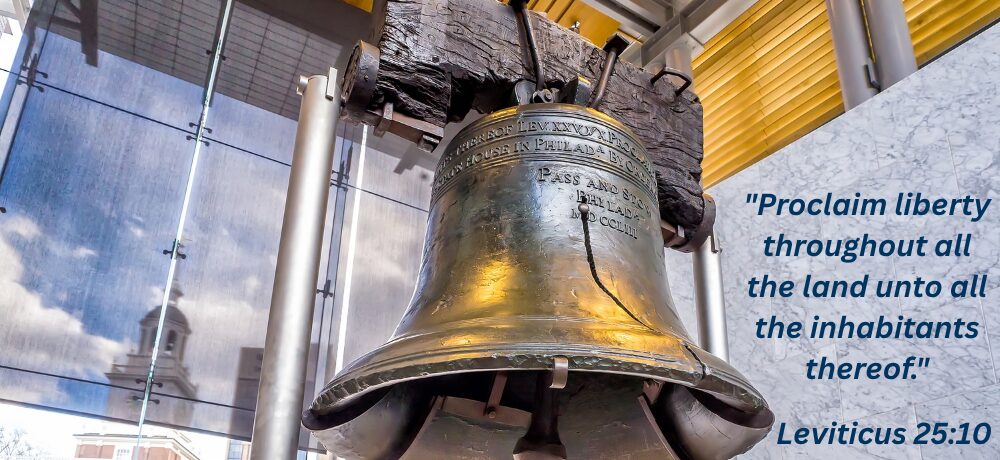
In many respects, as America marks 250 years and votes in the midterms, while Israel holds its first elections since October 7, the tensions of this moment over democracy and Zionism have reopened basic questions regarding Jewish and American values. To what extent do we as a Jewish community identify with American values? To what extent does a commitment to Zionism challenge those values? To what extent do we understand the challenge to long held democratic norms in America as a challenge to Jewish ideals?
These questions raise a conversation that is more complex than American Jews typically acknowledge. In a recent article in the journal Sources, Dr. Jonathan Sarna, the inaugural lecturer in our post-election series honoring the 250th anniversary of American independence, writes:
As we celebrate the 250th anniversary of American independence, and with our democracy currently under stress, the time is ripe to reexamine the relationship between Judaism and democracy…. As America struggles over how to celebrate its anniversary, and strongmen rulers threaten democracies around the world, it is perhaps worth recalling that majority rule and equality were not characteristic of Jewish life prior to the modern period. It was instead the American Revolution that played a large part in introducing democratic ideas into Judaism and translating them, however imperfectly, into American Jewish communal norms. Rather than crediting the Torah with these principles, we should add them to the list of what historian and former Chancellor of the Jewish Theological Seminary Gerson Cohen once famously called “the blessings of assimilation.”
Professor Sarna argues that for many American Jews there is a presumption that Judaism and American values are synonymous when it comes to the basic principles of democracy: majority rule and egalitarianism. But Professor Sarna suggests this is a misreading of history. It was by encountering America that Jews in America embraced democracy. Just after the Revolution, he notes, congregations began writing synagogue constitutions which extolled democratic values, an innovation in Jewish life. In fact, some Jewish immigrants from Eastern Europe saw in American democracy a danger: the American ethos of egalitarianism devalued the role of learning and expertise in Jewish law. In America, they worried, even dullards could rise to power within the Jewish community as opposed to the truly learned.
Dr. Sarna situates American Jewry’s embrace of democracy as one of the “blessings of assimilation,” noting the phrase is from a speech by Dr. Gerson Cohen, former chancellor of JTS. That speech by Dr. Cohen is widely considered by historians as one of the most important speeches of 20th century American Jewish life. In it Dr. Cohen attempts to upend the idea that Jewish longevity is a result of our having been pure and steadfast in clinging to Jewish traditions. Rather, he suggests, that it is precisely a degree of flexibility and assimilation which has kept the Jewish people alive for thousands of years. What is rarely noted about the speech is that it was delivered at Hebrew College in 1962, when Dr. Gerson was the guest speaker at graduation. In many respects, being the site of that speech is one of Hebrew College’s historic “claims to fame” (maybe not as important as Ben Gurion’s visit to the campus ten years earlier, but still important).
In recognition of this important speech in American Jewish history, and in honor of the American Jewish community’s 250 years of participation in American democracy, Hebrew College is hosting a lecture and conversation series featuring five public intellectuals. Each lecturer will reflect on a text or texts from the Jewish American experience which shed light on the present tensions within American Judaism and democracy. Dr. Sarna will inaugurate this series with his scholarly reexamination of Washington’s letter to the Jews of Newport Rhode Island, and we will study our way through 250 years of history from that point.
Join us as we reach back through our American Jewish history to explore and interrogate some of the most urgent questions of our era.
American Jews and Democracy: A Civic Text Study
Program: Hebrew College Adult Learning
Instructor: Rabbi Dan Judson, Dr. Jonathan Sarna, Rabbi Sharon Kleinbaum, Rabbi Sharon Cohen Anisfeld, Professor Noah Feldman
Dates: 5 Wednesdays: 11/11, 11/18, 12/2, 12/9, 12/16
Time: 4:30-6:00 p.m. ET
Course fee: Ner $180* financial aid is available – Or $360 – Ma’or – $540,
Location: In person at Hebrew College, 1860 Washington Street, Newton, MA 02466
Rabbi Dan Judson is Provost of Hebrew College
 Meet students and faculty at one of our fall open houses, Ta Sh’ma (Come & Hear) November 16 (in-person) or online (Dec. 6).
Learn more and register.