

Podcast Ep #27: My Legs Were Praying

For Heschel, prayer and protest are not separate realms. They are deeply interconnected expressions of awe and compassion and responsibility toward the divine in the world and toward the divine in other people.
– Risa Dunbar
Who was Abraham Joshua Heschel, and why does his life story matter to young Jews today? In this episode, Rabbi Or Rose and Hebrew College rabbinical student Risa Dunbar explore these questions through the lens of Or’s new young adult biography, My Legs Were Praying. Their conversation reveals how a boy from Warsaw who grew up in a Hasidic dynasty became one of the most influential Jewish thinkers and activists of the 20th century.
Or shares how Heschel’s journey can speak directly to teenagers navigating their own paths. Tune in to explore how Heschel made bold decisions as a young person, choosing to expand his education beyond his traditional upbringing while maintaining deep connections to his spiritual roots.
Or emphasizes how Heschel dedicated his life to articulating the beauty and profundity of Judaism while working across religious and secular lines for justice and peace. And Risa discusses the comprehensive educational resources she developed to accompany the book, including discussion guides and lesson plans that help readers explore themes of wonder, responsibility, and the integration of prayer and social action.
What You’ll Discover from this Episode:
- The connection between Heschel’s understanding of prayer and his civil rights activism.
- Why Or chose to write about Heschel for middle grade and high school readers at this particular moment.
- How Heschel’s teenage decision to leave Warsaw for broader educational experiences demonstrates youth agency.
- What Heschel meant when he said “my legs were praying” during the march from Selma to Montgomery.
- How Risa’s educational resources help explore themes of wonder, responsibility, and compassion.
- Why Heschel insisted that God actually needs human beings as partners in creating a just world.
- The relationship between cultivating personal authenticity and living a life of service.
Featured on this Episode:
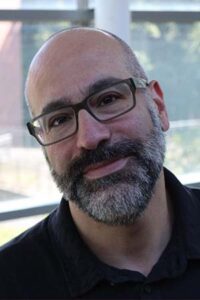 Rabbi Or Rose is the founding director of the Betty Ann Greenbaum Miller Center for Interreligious Learning & Leadership of Hebrew College. In addition to his work at Hebrew College, Rose has taught for the Bronfman Youth Fellowships, The Wexner Graduate Fellowship, is the senior publisher of The Journal of Interreligious Studies, a consultant to Interfaith America, and the author of numerous books and articles.
 Risa Dunbar is a fifth-year rabbinical student at Hebrew College. She has served in a variety of Jewish education, ritual, justice, and leadership roles at places such as the Hebrew College Teen Beit Midrash, Camp Ramah in Northern California, Lehrhaus: A Jewish Tavern and House of Learning, BBYO, The New Israel Fund, Congregation Beth Israel Ner Tamid of Milwaukee, Wisconsin, The Southwest Orlando Jewish Center, and Ohav Shalom in Albany, NY. She holds a BA from Brandeis University with a major in Anthropology, and minors in Near Eastern and Jewish Studies and Creative Writing.
 Rabbi Jessica Lowenthal `19 (Host) is the spiritual leader and Education Director at Temple Beth Shalom in Melrose, MA. She was ordained in 2019 at Hebrew College. Before attending rabbinical school, Rabbi Jessica was Assistant Regional Director at the Anti-Defamation League in Boston, working with partners like MIRA (Massachusetts Immigrant and Refugee Advocacy Coalition) and MassEquality. She holds an MBA in non-profit management and MA in Jewish Leadership from the Hornstein program at Brandeis University and a BA from George Washington University in Religion and Judaic Studies.
A special thank you for this episode’s musical contributions:
 Intro by: Rabbi Jackson Mercer `23
Jackson is the Base Rabbi for Boston. Collaboration and creativity are at the core of his desire to cultivate meaningful Jewish experiences. Through his work, Jackson built singing prayer communities across the country in California, New York, and Boston. He also founded and built a Judaica brand, Hiddur Mitzvah, with his partner and fellow artist Rachel Jackson and sings with R’ Josh Warshawsky in the Chaverai Nevarech Band.
Esa Einai (Psalm 121:1)
Music by Jackson Mercer
Guitar and Melody by Jackson Mercer
Harmonies by Cantor Rosalie Will, Ilana Sandberg, Rabbi Micah Shapiro, Rabbi Josh Warshawsky, Noah Diamondstein, Ryan Leszner, Eliana Light.
ev’tachWritten and performed by Marni Loffman from the album The Long Short Path.
Full Episode Transcript:

Jessica: Welcome to Speaking Torah. I’m your host, Rabbi Jessica Lowenthal, spiritual leader of Temple Beth Shalom in Melrose, Massachusetts, and 2019 graduate of Hebrew College.
In this podcast, Jewish leaders from around the world, Hebrew College faculty, alumni, and students discuss how Torah can help us navigate the most pressing issues of our time. Together, we explore the ways Torah can help us approach the world with creativity, healing, and hope.
In our second episode this season, we are pleased to share a conversation with Rabbi Or Rose, founder and director of Hebrew College’s Miller Center for Interreligious Learning and Leadership, and Hebrew College rabbinical student Risa Dunbar about Or’s new, young adult book, My Legs Were Praying, a biography of Abraham Joshua Heschel. Together, Or and Risa discuss why Or chose to write about Heschel in this moment, and how Heschel’s work speaks to social justice work, and why it’s valuable for younger Jews to study and read about Heschel’s ideas and actions. We’ll also hear about the accompanying resources Or asked Risa to develop to help guide and support readers. These include a reading guide that goes chapter by chapter and a set of discussion guides based on different themes from the book and Heschel’s life. Now let’s listen together.
Or Rose: Hi everyone. Thank you for joining us for this conversation. I’m honored to be here with you to explore the life and work of one of my heroes, Rabbi by Dr. Abraham Joshua Heschel of blessed memory. And as you heard, I had the privilege of being able to write a book on Heschel called My Legs Were Praying, a biography of Abraham Joshua Heschel, which is designed for teen readers, for middle grade and high school readers. And the reason why I chose to write on Heschel, broadly speaking, is because he was a person that dedicated his life to articulating the beauty and the profundity of Judaism, and at the same time working across religious and secular lines for justice and peace for as many people as possible. When I neared the completion of the manuscript, and I’m very thankful to my publisher, Monkfish, and specifically to my editor, John Sweeney at Monkfish for their help and support, I thought that the book would be enriched and that the experience of the intended audience would be deepened if we could provide educators, parents, and teen readers themselves with a set of resources.
And so, I reached out to one of my graduating students last year who was… He was then simply known as Raffi Ellenson. Now he’s known as Rabbi Raffi Ellenson, who had done a good deal of work with me through the Miller Center on a number of projects. And he began to create the framework or the scaffolding for this body of resources. And then as he took leave of Hebrew College, recommended a close friend and colleague of his, Risa Dunbar. And as he said that, I immediately responded, yes, of course, given Risa’s interests in Hasidism, in Neo-Hasidism, in activism, in justice, in prayer and embodied spirituality, and her experience as an educator working in our teen Beit Midrash and in other settings, it was obvious. Of course, only after somebody else says something, oftentimes is it obvious. I want to say one other thing before I introduce Risa, that the book is dedicated to Raffi’s late father, Rabbi Dr. David Ellenson. And David was a tremendously loving, caring, bright, and passionate person. And so it feels to me like there are many important voices and hands present in this project. And Risa, I’m just so thankful to you for agreeing to take on this project and invite you to say a few initial words about why you said yes. I know it wasn’t for fortune or fame. And then we’ll continue our conversation about Heschel himself, his legacy, and the book and the resources. Risa.
Risa: Thanks, Orr. Yeah, a brief introduction. Firstly, that I also want to say that Rabbi David Ellenson was also my teacher at Brandeis and had a deep influence on me, a very kind and generous person whose memory lives in all of his students and friends and family. So I feel very grateful to get to be a part of this project, bringing the voice of such a foundational thinker and such a foundational role model for me into the lives of folks who may be asking questions that I feel he addresses in very big ways. You know, the question of who am I to the world? Who do I wanna be? How do I want to be in a relationship? What is my understanding of suffering? And just small things like that. There’s a real magnetism that I think his words convey and an approach to cultivating a sense of responsibility and action in the world that continues to urge me, and that I was really excited to bring into resource form that could be made available to independent learners, to book clubs, and also to classroom settings. And I’m really grateful to get to delve more deeply into the life and the teachings of Rabbi Heschel, or would love to hear you introduce this profound teacher and icon.
Or Rose: The name Abraham Joshua Heschel is known to many, however, his life story in its full detail is lesser known. And so I wanted to begin our conversation today by just providing a thumbnail sketch of his life journey. I think that will help us frame or contextualize the conversation about his writings and his activism. Heschel was born in 1907 in Warsaw, Poland. He was the offspring of several generations of Hasidic masters on both sides of his family. From an early age, he was identified as a gifted learner and a very sensitive child, and there were hopes he might become the next great Hasidic master in his family. He decided as a teenager that he wanted to broaden his horizons and to attend a modern Jewish high school several hours away by train in Vilna. He wanted to attend a modern Jewish gymnasium, which would then prepare him to study academically, and he did so. He went to Vilna in 1925, and then in 1927 to Berlin, where he undertook a doctoral degree and also studied for a second time for rabbinic ordination. Given his learning and thick Jewish religious experience, Heschel was actually ordained for the first time shortly after his bar mitzvah.
But in Berlin, he received different kinds of Jewish and rabbinic education that included the historical critical study of the tradition. He published his first book in 1933. It may surprise some people to know that that was a book of poetry, not of philosophy or theology. And I’ll return to that book and its title in a few minutes. Heschel tragically came of age and was a graduate student at the same time as when Adolf Hitler came to power. And so his years in Berlin were very difficult. And in fact, he was deported from Frankfurt, Germany in 1938 back to Poland, and then spent a year or so trying desperately to find positions, now as a newly minted PhD, as far as possible from the brutality of the Nazis. And that itself was a harrowing experience because he escaped only six weeks before the Blitzkrieg before the great bombardment by the Germans of Poland. And he emigrated to the United States via London, England in 1939 and 1940.
He taught for several years at Hebrew Union College in Cincinnati, Ohio, the flagship center for Reform Judaism in the United States, which was the institution that actually provided him with a scholar’s visa, which was a rare and very precious commodity because it provided him with safe passage to the U.S. Very tragically, many members of Heschel’s immediate and extended family were murdered in the Shoah, in the Holocaust, and he learned of those deaths while he was so far away, just beginning his life in the United States. In 1945, he moved to the Jewish Theological Seminary in New York City, the flagship center for conservative Judaism. And he taught there until the end of his life in 1972. In 1946, he married. His wife was a concert pianist. Her name was Sylvia Strauss Heschel. And then beginning in 1950, he began to publish various works in English and other languages.
And apropos of what I said a moment ago about his early years in the United States and the terrible fate of his family members, his first book published in English is a slim volume called The Earth is the Lord’s, and it’s an adaptation of a lecture that he originally gave in New York City in Yiddish, his Mamaloshin, the language of his culture from Eastern Europe, and in it he describes in loving and appreciative terms the cultures in which he grew up. In some ways it was a kind of literary Kaddish to the Jews of Eastern Europe, and in fact according to eyewitnesses, people stood at the end of his presentation, many of them secular in their orientation and practice, but recited the Mourner’s Kaddish after his very moving presentation. In 1952, his one and only child, Susanna Heschel, was born. She is, as some of you may know, a distinguished scholar and activist herself. And as I said, Heschel went on to pen a number of beautiful, influential, philosophical, and theological works that included God in Search of Man, The Prophets in 1962, which was his expansion of his doctoral dissertation from his years in Berlin. And then in those same years, in the 1960s, he became increasingly active in various social justice and inter-religious bridge-building efforts. And of course, he’s most well-known from the now-famous photograph of Heschel walking arm-in-arm with other leaders. from the Civil Rights Movement, from Selma to Montgomery, with Dr. King, with Ralph Abernathy and Ralph Bunch, and that was 1965.
In 1966, he was actively involved in creating another organization that was called Clergy and Laity Concerned About the War in Vietnam, and that was another of his major concerns at the time. And between 1962 and 1965, he also served as an advisor to the historic Second Vatican Council, which was a monumental period in the unfolding of the Catholic Church in which, after the Second World War and the Holocaust, it began to rethink its understanding the relationship between the Catholic Church, Judaism, Islam, and other traditions. And Heschel died in 1972. He was only 65 years old, but as you can tell even from this brief overview, he lived a very full life, a life that contained experiences and periods of great pain and sorrow, but also of joy and exaltation.
Risa, I want to ask at the outset how Rabbi Heschel has influenced your understanding of what it means to be a rabbi in this liminal moment in your studies as you emerge and will enter the field.
Risa: Thanks Or, I’m grateful to be here and to get to continue to work in conversation with this transformative thinker and And really just the gift that keeps on giving is his Torah, in a big way, and appreciate all of what we’ve been able to do in collaboration around his life and work. My relationship to Rabbi Heschel goes back many years to the first time I read the Sabbath, which fundamentally changed my relationship to how I understood time and because of how I understood time, how I understood what it means to live a life, which is really the sum of time in many ways. There’s a distinct piece of writing wherein he says that the only image of God is really the image of a person living their life in all of humanity, living their lives to the fullest. And that’s because the multiplicity of what it means to live a human experience is a reflection of the divinity in our lives and in the world, and what it means to be B’Tzelem Elohim and the image of God.
And I think that Heschel’s enduring way of connecting both a theological system that sees divinity as extraordinarily relational, as a generous and generative force in the world, wherein which God may be hiding, but human’s task is to let the divine emerge from how we behave. And this goes back to not only his work with the prophets, but also his experience of Chassidut, of the Jewish mystical revival that he is, his family was so deeply ingrained and a part of. That there are both aspects of searching and yearning, but there’s also ways in which the searching and the yearning and our lives demand things of us and the responsibility that it places upon us. And I think that as I’m emerging at this stage in my, in my rabbinical studies, which I feel already a little bit of grief over leaving the Beit Midrash, but also like great joy at the way that I get to be in the world and that my deeds get to be such a part of how I continue to build connection and Jewish meaning, that that’s really sticking with me. What does it mean to be balancing the seeking and the responsibility? Or, I know that, as I’ve mentioned, Heschel’s work and voice goes back to a particular time in my life as a young college student, but I’m curious about what for you felt like an opportunity to write a book for young seekers, young people who might be in middle school or high school, and why that particular age group felt compelling for you to reach towards.
Or Rose: Thank you for that generous question. Like you, Heschel has been a guide and a companion in my life for many years. In fact, I was first introduced to him through my father and my uncle, both of whom were Heschel students at the Jewish Theological Seminary many decades ago. And so as a teenager and as a young adult, I began to read him carefully and was deeply inspired by some of the same things that you said. Heschel’s attentiveness to the grandeur, the beauty, and the mystery of creation in its totality, and his sensitivity to promoting the possibility for as many people as possible to flourish and to live their richest and fullest lives.
And so when I was a young teacher at the Abraham Joshua Heschel School in New York City, I actually wrote a book for elementary school students. And that was 25 plus years ago. And so when I had a sabbatical from my teaching and administrative responsibilities at Hebrew College, I decided that I would revisit that manuscript, revise, expand, and try and speak to teens, to middle grade and high school students. And the reason for that is at least twofold.
One is, as we said, Heschel was a person of great intelligence, great learnedness, but especially of great sensitivity. And he attempted to fashion a life of service. He felt that he was a person that was living in service of God, of the Jewish people, of humanity, and of the world as a whole. And so I feel like we all need role models, and Heschel, to me, serves as a very important and enduring role model. No human being is perfect, of course, But this was a person that, throughout his life, really understood that he was a work in progress and that as a work in progress, he was working for the betterment of others.
I also pitched this, if you will, for teenagers, because Heschel made some important and bold decisions about the direction of his life as a teenager. And I wanted to communicate that teens have agency. He didn’t make these decisions alone. He turned to his family and to certain of his teachers and mentors, but still he made the decision as a teenager that as much as he loved Warsaw and the Hasidic community of Warsaw, that he also wanted to travel and gain other kinds of educational experience. And so that takes a certain kind of confidence and also a trust in one’s own inner compass, if you will. And in fact, one of the things I think about Heschel that remains important to communicate is that he insisted that all of us, each of us cultivate our own personal authenticity.
He was famous for saying, no one is a duplicate. No one is a substitute. And so part of the work of crafting a life of meaning of responsibility is to try and discern where, how, and through which vehicles or vessels you can contribute. And so that was very important to me because I think there is great pressure, particularly on teens, to conform to what is popular or to the latest trend. And Heschel had a different message, a countercultural message in that regard, which is we are all needed. We all have gifts, we all have strengths, we all have passions, and we are here to serve. The word avodah, as you know, Risa in Hebrew, is a very important one, particularly in Hasidic contexts. It’s an ancient term, of course, for prayer. In modern Hebrew, it’s usually used colloquially for work. In Hasidic parlance, it often is a term that’s described as devotion. And Heschel’s question throughout his life was how to live a life in service, or how to shape a life that is devotional. I’ll pause there, but those are some of the reasons that motivated me to undertake the writing of this book.
Risa: Yeah, it strikes me. First of all, it’s so lovely to hear that this has been such an enduring project for you, and feels like the revisiting to a text and the revisiting to a figure feels really powerful to me, especially as you’re mentioning, you know, introducing this into teens’ lives in a moment where maybe the questions that are emerging are like, who am I and where am I looking? As a learner, as I’m developing my identity, to who am I looking? And it strikes me that this book is both a character study and a relationship for you, which I think is a really special thing to have and inspires me to ask this question.
Teens, in my experience of teaching, are trying to figure out also their relationship to their parents, their relationships to each other, their relationships romantically maybe even, and friendships and perhaps also to God. And this question about how do you both sort of look at and feel amazed by the person in front of you, but also how are you figuring out how you are interacting with them feels like a really apt question, both for developmentally, like the age group that we’re talking about, but also as an enduring question of life is like, what do I want my relationships to look like? Who do I want to be in them? I’m curious if you have anything that you discovered about your relationship to this person or to yourself as you’ve revisited this material and as you’ve crafted this work to show others. Is there anything that you’ve learned anew in that process?
Or Rose: Thank you. It’s a wonderful question. And as you said so beautifully, this experience for me was both a study of the life and work of Heschel, and I also felt like I was, again, journeying with him, learning from him as I researched and wrote and edited. One of the things that I discovered for myself and I think is important to communicate to readers, especially young people, is that Heschel was profound. He was bold. And of course, he didn’t have it all worked out in advance. He was a person that was searching. He was a person that at times stumbled. He was a person that was growing. And so it’s important to remind ourselves and others that when we encounter these great figures, a figure like Heschel or the Reverend Dr. Martin Luther King Jr., that they too had models, heroes, et cetera, and that they were putting one foot in front of the other and trying to do their best… because it’s easy to look back nostalgically or romantically and imagine that this was easy or simple for them. In fact, I wanna say something else which I think is important as it relates to Heschel and I think relates to anyone that seeks to make change, which is that can be a difficult, painful, and sometimes lonely experience.
And Heschel was masterful at weaving together different life experiences, different interests and passions and commitments. But there are also times and places where he had to stand over against. And that’s not easy to do. And it led me to think again about a famous Midrash from Genesis Rabbah, in which the rabbis ask, why was the very first Abraham called an Ivri, a Hebrew? And using a pun, they say, because the entire world stood on one side, and Avram, then Avraham, stood me’ever, on the other side. So he was an Ivri because he stood across and over against when necessary. And that can be painful, that can be lonely. And so I want to communicate that, I hope and pray in an age-appropriate way, as I tell Heschel’s life story, he could have remained in Hasidic Warsaw and that would have been a different choice. He didn’t eventually have the choice to stay there as an adult, but he left as a teen. And even in Berlin, it’s fascinating that he was studying at not one, not two, but three different institutions, at the university and at two different Jewish schools for higher learning.
Not everyone or most people were willing or able to do that. And in the United States, just as another example, he was a person who was both a very fine scholar, but also insisted that he needed to share his learning much more broadly, and so wrote these eloquent, more popular religious books. That isn’t necessarily a common choice among scholars. And then further, he became involved in a series of social and political issues. And some people agreed with him and others did not. And to put it in one phrase, iconoclasm has consequences. And Heschel was a kind of iconoclastic person. You couldn’t categorize him easily. And that’s something that I wanted to share with folks. And I’ll also say that hand in hand with that, I think it’s important to think about cultivating relationships with key people in your life, whether family, friends, or colleagues.
And I see in Heschel a person that also did that too. And so there were people that he could turn to in good times and bad. And that was especially important for him, of course, because he had lost so many of the people that he loved earlier in life. And then the last thing I’ll say on this score is that for all of Heschel’s passion, for all of his fervor, for all of the ways in which he advocated for a particular vision of Judaism, he also said repeatedly, to remember that faith is not the clinging to a shrine, but it’s an endless pilgrimage of the heart, which is to say we all need to remember that we are pilgrims on the way, that none of us has hold of absolute truth, and that we do need to advocate passionately for what we think is good and right, but also always maintain a certain degree of humility and to understand that life is a journey and to be surprised, which he insisted we should be, by what unfolds and to allow God to speak however quietly or gently and then to respond accordingly.
Risa: The theme of humility was coming up for me continuously as you were speaking, and what comes to mind is a particular quote from him that within our experience of awe, that we know that all we own we owe to something beyond us, that we’re orienting everything that exists for us, the qualities we may embrace or struggle with, the aspirations, the realities of where we are, that actually what it does is ask something of us.
Or Rose: Yes.
Risa: And that it’s never without that as a second call, which I think is a very special way of thinking about a person, not just as, of course, a human being who is imperfect, but that in noticing and self-reflecting both on what is going well for us and what is difficult, that actually there’s still always a second question, which is what is this asking of me? And that’s hard to remember.
Or Rose: Absolutely, you said it so beautifully and I’m reminded of the fact that Heschel repeatedly had this notion that, again, was bold in heart and mind as he spoke and wrote, which is that God actually needs us, that we are needed in some ultimate sense because God invites to be shutafim, partners, if you will, in the creation of a just and compassionate world. And I suppose my question to you, reflecting back what you just said and given your role in creating these resources, was how you attempted to articulate that and invite in younger people to think as they took in the content of the book and to do that in conversation with their peers with their educators.
Risa: The theme of both quality of character and values I think animated a lot of what I sought to do in these resources and the kinds of questions that we’re asking. Folks will notice in the resource guide that on almost every chapter the discussion guide includes the question about what is something you notice and what is something you’re wondering about, both of which I think are a posture towards trying to encourage awe, which is an enduring practice, which is a way of living. It’s not just a state that we’re in, a state of awe, but rather like an actual relationship of figuring out how to do that.
And I think this theme of humility was an enduring backbone for many of the questions thought came up in the discussion guide as well, considering, you know, what values are at play for Heschel? What values do you share with him? What is something that surprised you? All of these questions are actually just, they can be both spiritual questions, and they can be textual questions. So I think that, say, something that comes up, for instance, in particularly the moment that you mentioned is when Heschel starts to look towards a different type of education. So in chapter five, for instance, we ask the question, as Heschel’s education began to expand, what seems to remain the same about his character or his concerns? What’s changing, but what’s staying? And I think that those are questions that actually, like, endure throughout Jewish history?
Or Rose: Absolutely.
Risa: That’s not, like, particular just to Heschel, but in the discussion guide, we were prompting those kinds of questions, which serve not just in the context of the particular of this book, but actually is like training young readers, training minds to look at a piece of text or to look at a relationship or a person and ask, you know, how are they embodying? How can I read this person to like, quote Heschel again, how is this person the text that I’m remembering? How am I reading them? What are they changing and what is staying the same for them?
Or Rose: There’s a wonderful example in the book of Heschel as a teenager in Vilna, apropos of what you just spoke about. And in this episode, which was reported on by a friend of his from those years, a man named Shlomo Baylis, who himself became a well-known writer, and he describes how they were walking, and as they approached the edge of the forest, Heschel made sure that his head was covered and that he was prepared, as it were, to enter the forest. And Shlomo Baylis asked him, why are you adjusting your clothing and preparing to enter the forest with a certain kind of kavanah or intentionality? And Heschel said, because I’ve learned from my forebears, from my Hasidic teachers and mentors, that the forest is a makom kodesh, that the forest is a holy place. And so I can’t enter a holy place unless my head is properly covered and that I’ve prepared the rest of myself, body and spirit, to enter it.
And I love that story, Risa, because I think it’s a part of what you just described. And then most famously, though perhaps little known, When Selma to Montgomery came calling, when Heschel was called to participate in that historic march, he understood it based on his diary and his communications with Dr. King after the march as an embodied holy experience, which is why I named the book My Legs Were Praying because Heschel felt as if he was engaged in an act of spiritual and ethical action, that prayer was coursing through him as he walked from Selma to Montgomery. And he also commented quite beautifully that as he walked with the leaders of the civil rights movement, he felt that they had a kind of spiritual nobility about them, which reminded him of the Rebbe’s, of the Hasidic masters, of his youth, of walking, for example, with his uncle, the Novominsk Rebbe, through the streets of Warsaw, or with his own father, who was also a rebbe. So I wanted to just bring those two examples because I think the questions you’re asking of people, which you so aptly described as enduring, were ones that he was not only writing about or speaking about, but also embodying.
Do you wanna share with us, Risa, how you organized the lesson plans and the discussion guides, what the relationship is to the books, the chronology, et cetera? And then I would like to reciprocate and ask you, too, about what you may have learned or learned anew from your piece of the work. But first, if you could just walk us through.
Risa: Yeah, I’d be delighted. But there are two main modalities that I’ve developed and that we will be setting out on the website. One is a discussion guide which goes through comprehensively each chapter of the book with essential questions to facilitate an exploration and each of these can be used for personal reflection and writing or as an educational tool to accompany an engagement with the book on a more group level, in a book club, in the classroom setting, so it works for a number of sort of learning settings. But what it does is it gives a thoughtful reflection and connective conversation tool for folks to consider who Heschel is, how he lived out his values, and what might empower or inspire people to live out their own.
So essential questions for the discussion companion include, who was this person? Who was he as a teacher, as a thinker, as a religious figure, as a human being? How might developing a learning practice that’s grounded in noticing and wondering support us in embodying his value of radical amazement in our lives? And what might be valuable about this kind of learning approach? How do our personal experiences and our contexts shape what we believe and how we act in the world? And what values, Jewish or universal, is Rabbi Heschel holding and living by? And which of them do you share or differ on and why?
And then finally, these can all be found in the discussion guide, the initial page of essential questions. The last one is how do you understand your responsibility to yourself and your responsibility to others and the divine in the world? What do you think is the relationship between the two? So we’re really encouraging folks to use those questions and they can explore one chapter on its own, they can explore a section. You know, Rabbi Heschel’s early life, Rabbi Heschel’s high school life, Rabbi Heschel’s later life, Rabbi Heschel’s life when in Europe, when in America, and then also comprehensively. All of these questions emerge in each chapter.
And then for group exploration, it also might be interesting to people to consider Heschel’s life and teachings through particular themes. So it can also be used thematically. The main themes that we’ve addressed in our lesson plans, which are more specific, designed for about an hour each in classroom settings, but can also be brought into more supplemental education settings after school or even camp. Particularly I think that would be amazing if it’s integrated in some kind of radical amazement practice of meditation or being in the natural world, which really is its own teacher. But you can look at the main themes that we’ve traced throughout, you know, wonder, as we’ve mentioned several times, responsibility and obligation, relationships, compassion is a main theme that emerges. And throughout this all, there’s an integration of Heschel’s exploration of a particular archetype of the prophet and then his theology more broadly. So folks can learn and explore these particular angles, either the more spiritual social angle or a more comprehensive look at his life from a character study perspective. And both the lesson plans and the discussion guide can be used together or separately, allowing for a lot of flexibility for educators to meet their students where they’re at and to share in ways that feel right to them.
Or Rose: So before I ask you my next question, which I previewed a moment ago about your own learnings in the process, I just want to make mention of the fact that Heschel gave a very important speech in 1965 called No Religion is an Island. And he gave that speech at Union Theological Seminary, which is one of the great centers for Protestant Christianity in the United States until this very day, and it is located across the street from JTS in Manhattan. And in this speech related to so much of what you just spoke about, Risa, Heschel very boldly said that we need to come to an understanding that parochialism has become untenable. Those are his words. That Jews and Christians and others are not self-sufficient. That is to say, we are distinctive, and those distinctions are important, but we are interconnected and interdependent. I think that’s part of what drew him so closely to Dr. King, not only publicly, but as a friend and as a companion, this shared understanding of the universal and the particular, and that ultimately, we need to think together, as Heschel described it, about pathos, about love and care for self, for other and for all of God’s creations, and that inspires the work that we do at Hebrew College.
Heschel is a major influence in terms of the intra-Jewish work that we do at the college and also of course the inter-religious or interfaith work that we do at the college through the Miller center and through other avenues. And as you well know, Risa, holding complexity is not easy for us human beings, and it’s part and parcel of what we’re trying to share with a rising generation. You can be very proud and you should be very proud of being a Jewish person. And at the same time, can you develop, as you said so nicely, a practice of appreciation for the holiness in the other and that we need each other to try and create the world that we all so desire. So I just wanted to make sure that I noted that as you were describing different elements because this is an important anniversary, 1965 to 2025, and I think that essay in of itself is a text that I want to promote and encourage people to read and to discuss.
So I want to turn back to you and ask, in the process of working on this, the very thoughtful way in which you pieced together these lesson plans, what were some of the things that you learned or were reminded of.
Risa: There’s so much that I could say that it will be hard to narrow it down, which I think is such a blessing. It was a real privilege to get to just spend time with Heschel’s writing in this way and think about how to make it come alive in these very real and bite-sized pieces compared to sort of the amount of thought and writing and production as a spiritual and activist thinker that he was. And I think that that’s something that came up for me is there was one lesson plan where I really felt myself very moved by the material. So I’m just going to draw upon that in this moment.
Or Rose: Wonderful.
Risa: Which is an exploration of Heschel’s understanding of how prayer and social justice are related or the ways in which theology informs the way that we perform our deeds in the world. Which, when we say it that way, it’s like, sure, of course, yes, like there’s a system where we understand the world to be functioning and us to be pieces of the functioning of that world system. But I actually think that it’s really more profound than that. Heschel really put an emphasis, as we’ve mentioned, on an authentic relationship to Jewish prayer, but didn’t see it as an end in and of itself. It was something that led to moral action. Again, a call, if you want to put it that way. And that social justice work itself, as you mentioned in all of these allusions and images of him walking, is a form of spiritual expression. For Heschel, prayer and protest are not separate realms. They are deeply interconnected expressions of awe and compassion and responsibility toward the divine in the world and toward the divine in other people.
So for me, revisiting that material, rereading his private letters to Martin Luther King, from Reverend Dr. King from 1965 and some of his writing on Vietnam was really powerful for me and revisiting his examination of the prophets and the role of the prophet was just a very special thing for me to be able to do at this point in my career, in the process of being in rabbinical school. I’ve read the many of the prophets now and have a different grounding than when I initially read Heschel’s work on them, which was many years ago. And I think that for me putting it in conversation with the social justice work was just an absolute privilege to see the interconnection between the spiritual private life that is often set in opposition or dimorphism from the activist life.
And I think that his attestation to that kind of being a delusion in some ways, or at least an illusion, was very profound for me in thinking about how I can feel integrated in my life and actions and to think about, you know, and pose this question for teens, you know, what is a moment in life where you understand your actions as a form of devotion? Whether it’s to a cause or to another person or to the divine, like, what does that look like? What does it look like to actually kind of compose a vision of your values in your life? What does it look like to act that way? And it had me thinking about it, too. And as I am continuing to think about the role of prayer and the role of my inner life and integrating it with my outer behaviors, it continues to be a source of inspiration and strength for me. That it’s a journey, and thank God. And that it’s really important to be engaged in the project of asking this question of of how is my spiritual self coming alive in my deeds?
Or Rose: Thank you so much. Just wanted to add one other piece to the conversation, which I think has everything to do with what you just described as a quest for integration, because I think that goes to the heart of Heschel’s mission of his project. And he was a person, as you and I have discussed, that liked to use polarities as a way of articulating different positions and then thinking about how to integrate these positions. So I mentioned this speech from 1965 at Union Theological Seminary, and he opened that speech very dramatically by saying that he speaks as a person who was able to leave Warsaw, the city in which I was born just six weeks before the disaster began. And in that same opening set of sentences, he describes himself as a brand plucked from the fire in which his people was burned to death.
And in his very last interview, which aired posthumously in 1972, he turned to the camera and wanted to address young people. And he said to them, remember that there is a meaning beyond absurdity. There is a meaning beyond absurdity. And then he said, apropos of much of our conversation, build life as if it were a work of art. Remember that life is a celebration. So I bring those two quotations because I think, again, Heschel was quite masterful at saying that on the one hand, the human journey does involve pain and suffering, and far too often we cause that suffering. We bring it upon ourselves and upon others.
And in some of his more fervent moments, he describes God as weeping at the sinful behavior of humankind. And at the same time, he refuses to give in or to give up. And he says, the world is oh so beautiful. That radical amazement is in fact a practice to be cultivated. That human beings are also capable of doing beautiful things. And that celebration is a necessity. So I just wanted to bring that to our conversation. Because again, as we’re trying to reach young people and invite them into this conversation with this great figure, we also want and need to be honest with them. And they are already aware of the aches and pains of life.
They’re aware of the ways in which human beings, including too many adults that are supposed to be models for them, whether in the political realm or in other contexts, treat themselves and other people badly, and that there’s just too much pain in suffering, and that we need to do better. And at the same time, there is still cause for celebration. There is still the opportunity for rejoicing, for what he would often describe as exaltation, that there is an opportunity, you know, in Hasidic Hebrew for halla’ah, for the uplifting of the ordinary, that life can involve experiences of the extraordinary.
So I’ll end there, and I just want to say thank you so much, Risa, for being a wonderful student, a wonderful partner in this project and for the work you are already doing as a rabbi in our community and I want to bless you with great mission and purpose driven work ahead of you as you near the ordination finish. line which, of course, only leads to the next leg of the journey. Thank you so much.
Risa: Thank you, Or. Grateful to be in this project of spiritual audacity and radical reimagining of both what’s possible for our own lives and inviting people into the question of what’s possible for theirs and what they want to see. It’s really a great privilege to get to be a part of asking those questions.
Jessica: Thank you for joining us for this episode of Speaking Torah. We want to thank Emily Hodley for our logo and Hebrew College Rabbinical graduate and composer Rabbi Jackson Mercer for our theme music, Esa Einai.
To learn more about Hebrew College, please visit hebrewcollege.edu slash podcast. And remember to subscribe, like, and rate Speaking Torah wherever you listen to podcasts. You can pick up My Legs Were Praying at your favorite bookstore and learn more about Or and Risa on our website at hebrewcollege.edu slash podcast.
We’ll leave you this week with Ev’Tach Yiv Techa by Hebrew College rabbinical student Marni Loffman. You’ll find this and more of Marni’s music at marniloffman.com. I’m your host, Rabbi Jessica Lowenthal. Thank you for joining us on Speaking Torah.
Enjoy the Show?
- Don’t miss an episode, follow the podcast on Spotify, Apple Podcasts, or RSS.
- Leave us a review in Apple Podcasts.