

Podcast Ep #26: Every Body Beloved

When we’re using a label for ourselves that’s a shared label with other people, it’s often about not wanting to be alone—and wanting to feel like what we are experiencing as a personal struggle or celebration is actually something that we can share with others having similar experiences.
– Rabbi Minna Bromberg
How can Jewish tradition help us build a world that embraces all bodies? In this episode of Speaking Torah, we share a powerful conversation between Rabbi Minna Bromberg, author of the new book Every Body Beloved, and her friend and colleague, Jordan Namerow.
Their discussion explores the intersection of fat activism, Jewish tradition and mysticism, and the radical act of accepting ourselves and others as we are. Rabbi Minna Bromberg is the founder of Fat Torah, an organization that works to shatter the idolatry of weight stigma and harness the profound resources of Jewish tradition and text to build a world that embraces all bodies.
Through personal letters, mystical teachings, and reexamined Jewish texts, you’ll discover how pursuing health as a mitzvah can include mental and spiritual well-being, not just physical appearance. You’ll learn why naming ourselves accurately matters for both fat liberation and Jewish identity, and how being willing to stay with what’s painful can build compassion and fearlessness.
What You’ll Discover from this Episode:
- Why Minna’s rabbinical education aided her mission of addressing anti-fat stigma in the Jewish community.
- How Hanukkah can be understood as a celebration of fatness and what that means for Jewish tradition.
- Why Minna says the concept of Shmirat HaNefesh (taking care of ourselves) includes mental and spiritual health as well as physical.
- The connection between reclaiming the word “fat” and how Jews have reclaimed language used against us.
- How bringing our whole selves to Torah creates more authentic and inclusive Jewish spaces.
- What it means to speak the world we want into being as partners with God in creation.
Featured on this Episode:
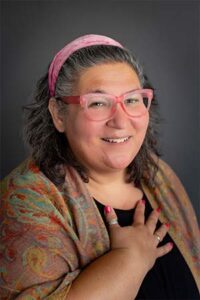 Rabbi Dr. Minna Bromberg is passionate about writing, teaching, and change-making at the nexus of Judaism and body liberation. She founded Fat Torah to shatter the idolatry of weight stigma and harness the profound resources of Jewish tradition to build a world that embraces all bodies. Minna has a PhD in sociology (Northwestern University, 2005) and rabbinic ordination (Hebrew College, 2010). She lives in Jerusalem with her family. Learn more about her work at minnabromberg.com or through her book Every Body Beloved: a Jewish embrace of fatness (Wayne State University Press, 2025).
 Jordan Namerow is a writer, strategic communications professional, and facilitator. With nearly 20 years of experience, she is passionate about helping teams and leaders deepen their impact at the nexus of storytelling and social change. A graduate of Wellesley College and Columbia University, Jordan is the Board President of Mayyim Hayyim and serves as a program consultant and grant writer for Hebrew College. Her debut children’s book Like the Sea and the Sky: A Mysterious Mollusk and Its Magical Blue Ink (Brandylane, 2023) celebrates sea creatures, spirituality, and imagination.
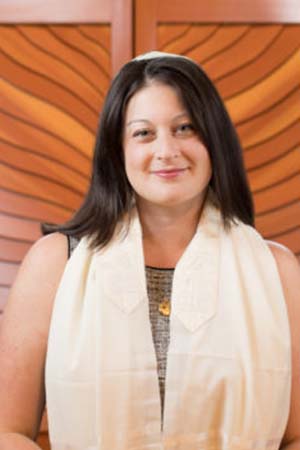 Rabbi Jessica Lowenthal `19 (Host) is the spiritual leader and Education Director at Temple Beth Shalom in Melrose, MA. She was ordained in 2019 at Hebrew College. Before attending rabbinical school, Rabbi Jessica was Assistant Regional Director at the Anti-Defamation League in Boston, working with partners like MIRA (Massachusetts Immigrant and Refugee Advocacy Coalition) and MassEquality. She holds an MBA in non-profit management and MA in Jewish Leadership from the Hornstein program at Brandeis University and a BA from George Washington University in Religion and Judaic Studies.
A special thank you for this episode’s musical contributions:
 Intro by: Rabbi Jackson Mercer `23
Jackson is the Base Rabbi for Boston. Collaboration and creativity are at the core of his desire to cultivate meaningful Jewish experiences. Through his work, Jackson built singing prayer communities across the country in California, New York, and Boston. He also founded and built a Judaica brand, Hiddur Mitzvah, with his partner and fellow artist Rachel Jackson and sings with R’ Josh Warshawsky in the Chaverai Nevarech Band.
Esa Einai (Psalm 121:1)
Music by Jackson Mercer
Guitar and Melody by Jackson Mercer
Harmonies by Cantor Rosalie Will, Ilana Sandberg, Rabbi Micah Shapiro, Rabbi Josh Warshawsky, Noah Diamondstein, Ryan Leszner, Eliana Light.
Turning SongWritten and performed by Rabbi Minna Bromberg from the album At the Edge of the Unknown.
Full Episode Transcript:

Jessica: Welcome to Speaking Torah. I’m your host, Rabbi Jessica Lowenthal, spiritual leader of Temple Beth Shalom in Melrose, Massachusetts, and 2019 graduate of Hebrew College.
In this podcast, Jewish leaders from around the world, Hebrew College faculty, alumni, and students discuss how Torah can help us navigate the most pressing issues of our time. Together, we explore the ways Torah can help us approach the world with creativity, healing, and hope.
In this season of the podcast, we are highlighting new Jewish literature.
In our first episode this season, we are excited to share a conversation between Rabbi Minna Bromberg, author of the new book, Every Body Beloved, and her friend and colleague, Jordan Namerow.
Minna, who resides in Jerusalem, is the founder of Fat Torah, an organization that works to shatter the idolatry of weight stigma and harness the profound resources of Jewish tradition and text to build a world that embraces all bodies. Minna is also a musician with 5 acclaimed albums.
Jordan is a writer and communications professional who is passionate about helping leaders deepen their impact at the nexus of storytelling and social change. You can learn more about Minna and Jordan at hebrewcollege.edu/speaking-torah. And now, let’s listen together.
Jordan: Minna, it’s such a joy to be in conversation with you about your book, Every Body Beloved. Mazal Tov. What an achievement. I hope you are feeling such a sense of pride in birthing this book. And I was recalling that the last time I was in Israel, which was before October 7th, you and I met in a park in Jerusalem. I can’t remember which park, but it was near your home, and you were just in the nascent stage of developing this manuscript. And now here we are in 2025. The world has changed in seismic ways, and you have this gorgeous Torah to offer us.
So I thought I would begin just by asking you to describe a moment or maybe a few moments when it became clear that you needed to write Every Body Beloved. How did this come to be?
Minna: So I had started thinking about bringing my fat activism together into my rabbinate. So I’ve been involved in the world of fat activism and fat acceptance, which is a movement that I stepped into as it was already going for a couple of decades in the US. I found it in the 1990s as a teenager. But I’d become kind of quiet about my own need to advocate for accepting fat people as we are, and it hadn’t really come into my rabbinate in big ways. I had written a blog post here or there, but it hadn’t really been a large part of the way that I was teaching Torah. And then I started realizing, probably in 2018, 2019, that there were these ways that because of my own evolving relationship with my body and because of the work that I had done really, to be willing to be in my own marginalized body in public, that I really felt like I was sort of holding back, and it was something that I wasn’t offering to people who could really use it. Especially, I think at first it came up for me because I was working with rabbinical students here in Jerusalem and just realizing that for a lot of certainly progressive rabbinical students who come or other students who come to learn in Jerusalem, that it can be tricky to figure out, especially if they have any kind of marginalized identity, kind of how to be ourselves in public. And so I was already kind of percolating these ideas about sort of what I could do to kind of pass on what I had learned over the 30 years of my own learning to be myself in public in a large body.
And then I had this real catalyst moment, which was a Hanukkah party at my daughter’s gan, my daughter’s preschool, when she was 3 years old. So this was just before Hanukkah of 2019. And there we were with all these kids, maybe 60 families. Everyone was getting ready for singing and dancing. And again, I’m someone who lives in a large body that I use the word fat to describe because to me it’s the most accurate and morally neutral way that I can describe it. And of course, using the word fat is also a way of, as so many other marginalized groups, including Jews, have done, reclaiming a word that’s been used to degrade us. So I’m someone who’s usually very comfortable dancing in public and being myself in my big body in public, but I was also 39 weeks pregnant at the time and not feeling so comfortable dancing around. And then my daughter was saying, “No, Ima, you have to jump. You have to jump.” And I was like, “Oh, honey, I will not be jumping today.” And I realized that really, what was happening for me in that moment was something that thankfully is a relatively rare occurrence for me these days, which is that I was really uncomfortable with myself and who I was and how I was presenting in the world.
And so I had this whole dialogue going on internally of like, “Why am I uncomfortable? I hope everyone here knows I’m pregnant and that’s why I’m not dancing.” And then this other voice saying, “You know, that’s kind of an ableist thing to say to yourself. Shouldn’t any body be able to show up in any space and move however it can or wants to move?” And I’ve had sort of this storm of this inner dialogue going on. And then we stopped to eat sufganiyot, these fried Hanukkah pastries, and there we are munching away, and I was very happy to have a break from wondering whether I was being judged for my dancing or not. And then the young man who was leading the music got back on his microphone and said, “Okay, let’s all get back to dancing unless you’ve gotten too fat from those Sufganiyot.” And I was like, oh, right, the reason that I have this internal dialogue around judgment of my body and fears of other people judging my body is because we live in a culture where people are constantly judging fat people’s bodies.
And I was appalled that he would say this in front of little kids who are already starting to make judgments about their own bodies and other people’s bodies and about foods as good or bad and really attaching moral value both to eating and to bodies. And I also realized that I had been keeping something to myself that I really felt like I needed to share, namely that for me, in terms of my approach to fatness and fat bodies, Hanukkah is a celebration of fatness. Like, how did he, how did this guy not know that was actually what we were there to do was to celebrate fat as a symbol of our people’s endurance in the face of hardship and that’s why we were eating fried foods.
And so that combination of both being appalled and hurt, because of course it’s always painful when someone says something negative about fat bodies in my presence, but also that sense that I actually had something to teach on this that came from my relationship with Torah and my relationship with Jewish tradition. That was the catalyst and I sometimes say that this book and my son, who was born a week later during Hanukkah, sort of are twins in some way that they were both kind of born in that moment. And so then I spent the next a little over 5 years really working on the book and wondering about whether this needed to be actually part of a larger organization or movement that I needed to be putting my energy into and kind of coming back to really focusing on writing the book.
And actually, so we met in a park in the summer of 2022, which I remember because of the various obstacles to this work, including pandemic and lockdown, and then my husband had some health problems. And then summer 2022, I broke my ankle. And so we met in the park because that was as far as I could get in my wheelchair to come and see you. I think it might have been my first outing out of the house when I was actually allowed to put weight on my ankle again. And then of course, the war started, and I had been searching for a publisher. And I actually got a publisher the week after the war started. And so it was sort, so the last two years have really been in addition to wartime parenting and just all of the other challenges of living here during this time, it’s been both challenging but also wonderful to have something to focus on like a book that I genuinely feel is important to share with the world.
Jordan: Your book begins with a kavanah you wrote called “You Beloved,” which feels like an homage to every person who lives in a body, has a body, has struggled with a body. It’s just beautiful. And I’m wondering if you’ll read it for us.
Minna: Yeah. There’s this concept in not only in Jewish mysticism, but certainly in Jewish mysticism that there’s sort of a level of things where the phrase is hamevin yavin, like the people who already get it will get it and that people who don’t get it. And I feel like one thing that I’m very curious about with this book is that for me, there’s also a lot of Jewish mysticism and Jewish mystic tradition in this book. And I wanted it to be subtle and available and not sort of wrapped up in a lot of technical mystical concepts. And this offering that opens the book, absolutely for me is about a mystical theology of fatness and beyond that, a mystical theology of bodies and what it means to be in a human body.
“You, beloved. You, beloved, are every body. Your voice in our every breath, your light, the sparkle in our eyes. Your sweetness in our own kisses, your saltiness, our tears. A touch of our hands, the brush of your wings. Not a single cell devoid of you, not a single fold unholy. Every single limb, or lack thereof, another of your contours. Ample, abundant, ever is your image imprinted. Your oneness reflected in our all, in the body that is ill or aching, in the body derided and despised, in the body persevering and rejoicing, in the body, sometimes broken, always whole, always you, beloved, in every body. Every body beloved.”
Jordan: Beautiful. Amazing. Part of what I love so much about your book is how expansive it is in terms of its style and genre. It’s unconventional size and form. It’s like this delightful size that I keep walking around the neighborhood holding it and people are like, oh, look at this. And in the pages, I found so much richness in terms of spiritual nourishment, activism, Torah, memoir. I’d love to hear a little bit about your writing process and how sort of your work as a fat activist and sort of leaning into the expansiveness of your life gets expressed through the pages.
Minna: Yeah. So first I’ll say something about the actual physical form of the book, which is that it was exciting to finally be at the stage of taking all of these words that could come into the world in so many formats and, you know, really thinking about what it means to create this physical object of a book. And the book is not very long in terms of how many words it was. And I realized that if it was printed in a conventional rectangular format, that it would be a book that was quite thin. And I didn’t want my book about embracing fatness to be thin. And so I suggested, could we print it in a smaller format so that it would be chunky? And so it’s actually like a chunky square and I love it.
And it also reminds me, the previous creative work that I’ve done involved putting out CDs. And it’s actually, I didn’t realize this until it was actually in my hands, but it’s basically like the book is sort of the same area as like a CD case. And so it feels like sort of an addition to my albums that I’ve put out is this is sort of a new album in some ways. And then also, I think one of the most gorgeous features of the book is its cover, which I had a hand in only in that I connected the publisher with the artist whose original artwork is on the cover, a wonderful artist named Kat Max. And so that also felt like a wonderful process of lifting up someone who works in the visual medium and media of embracing fatness. And I was glad to be able to make that connection as well. And then the folks who actually designed it did an amazing job. And so that’s how the physical form happened.
My writing process, when I think about sort of the connection between my writing process and all of the lovely features that you’re talking about, how I write is with a lot of very messy, what I call spew drafts, and really just making a mess on the page and lots of words and a lot of angst about how I’m going to turn all of these disparate thoughts into something coherent. So I’m definitely one of those writers who sort of goes from, like an outline for me is one of the last stages of writing. And this comes also, when I was in the academic world as a sociologist, my research also, you know, you can do sociology research or any research really coming from very tight theory and then sort of looking out for data to see how it supports or fails to support your theory or you can kind of go out and be in the data and figure out what kind of theory you can grow from that. And that’s much more my was certainly my style as sociologist and also as a writer is sort of like, you know, how can I sort of generate this data of my own thoughts and feelings, and then from that see what I can pull together into something more coherent.
I think the combination of activism and memoir and Torah feels very natural to me. It’s also how I teach. I think people who have heard me give Divrei Torah, give sermons in synagogue, will sort of recognize that combination of traditional text and my own story and what the spiritual or activist point or spiritual activist point that I’m trying to make by bringing these together is. I think in terms of sort of my larger project as a rabbi, I think is very much about how do we bring our whole selves to Torah and to tradition. And so this feels very consonant with that.
Jordan: In your book, you have these letters that you’ve written. One is to a child who drew a picture of you to hurt your daughter’s feelings. That’s one. Another is to the people at Yom Kippur services who would not move to let me through. Another was to the rabbi whose congregants were upset about gaining weight. I love these letters because I think they are the conversations that are happening in many of these ideas and frustrations and questions you pose in these letters. I have seen play out in different contexts and I have been mostly an observer and I have not said anything. And so in some ways that’s there’s a consciousness raising that you’re bringing to the Jewish communal ecosystem that’s so important. One of the letters you include in the book is called to my doctor who was proud of me for not having gestational diabetes. Would you read that to us?
Minna: Yeah, I would love to. “To my doctor who was proud of me for not having gestational diabetes. I was reminded of you today when my kickboxing teacher told me that she was proud of me and hoped I felt proud of myself. I’ve been learning with her for the last several months and until now it had been all boxing and no kicking, but today she decided that I was ready to learn a front kick. It was challenging to get the form right but it felt really good. My punches and kicks don’t look like hers, but I trust her enough to believe her when she says that I’m doing something right. I trusted you too. I put my pregnancy, my baby, my body in your hands and you were one of the best doctors I’ve ever had. You spend a lot of time with your patients. This was a challenge during the hours of waiting in the hallway, watching my day slip away, while you gave other people your undivided attention. But once it was me in the room with you, all was forgiven. My trust in you was built by your calm manner, your willingness to explain things to me, and your clarity that the many choices to be made in medical treatment during pregnancy were ultimately mine to make. You wanted me to be screened early for gestational diabetes because my age and my size were risk factors. I didn’t want to do the test you were sending me for. It’s nauseating and time consuming and it’s usually only done once folks fail an initial, less nauseating and time consuming screening. But I tried to pick my battles and this did not seem worth arguing about.
When the test showed that I did not have gestational diabetes, you seemed almost startled. “Wow, I’m so proud of you,” you exclaimed, and then you just kept gushing. “I can tell that you’re really making such an effort.” But I wasn’t making any kind of effort. I was continuing as I had before my pregnancy, to try to eat whatever I wanted to eat and to move however I felt like moving. You never asked about the nature of my effort, and with your every compliment, I could feel my individuality fading away a bit more behind layers and layers of expectations, assumptions, and judgments.
I know you need to see me and each of your patients as cases that can be categorized, plotted on graphs of chances of the many different things that can go wrong, large or small. Meanwhile, my humanity becomes hazy under all these generalizations. Some of them, I understand, are necessary for doing your job, but all of them can also be damaging to a patient’s personhood. What matters most about me as a singular human has nothing to do with my body’s reaction to drinking a sugary drink or any actions or inactions on my part that could supposedly have caused my body to react in one way or another. Mostly what I learned from your crowing on my behalf was that its opposite is almost surely true. You believe that your fat patients who do have gestational diabetes are categorically to blame for how their bodies handle sugar. You assume that they must not be trying hard enough. You made me frightened of your future decrees, should my body ever yield test results that you were not so proud of.
When my kickboxing teacher says that she’s proud of me, she’s peeling away the veils of assumption and expectation. She’s assessing me based on whatever intention she and I have set together and the visible effort that I put into moving toward that goal, whether I actually reach it this time or not. When she’s proud of me, she brings more and more of my unique spark into the world. When you praised me for not having gestational diabetes, for being an anomaly in your sea of prejudgments, you obscured that spark.”
Jordan: I’m curious, have you ever sent these letters to people? Are these, these were for you?
Minna: They’re letters that I wrote for the book, for the purpose of the book. Some of them had existed in blog post form or something, but not many. And I think what’s fascinating about it is that, I think for many people, but certainly for fat folks, there’s all of these questions around self-advocacy and what it means to advocate for ourselves. This comes up especially for fat people around medical settings and how to advocate for competent care. And I think there’s often an emphasis on, you should sort of build your skills of self-advocacy. And I tend to shy away from giving that advice, partly because the problem is that we shouldn’t have to advocate for ourselves. And it’s also not always clear, especially in something like a medical setting, or I think certainly in a student teacher setting or a rabbi clergy congregant setting, it’s not always clear if you’re not in the position of power that self-advocacy is actually going to result in better treatment.
So in some ways these letters are like, what I would have said if I felt like I could speak up and also, what I realized I should have said two weeks later when I was still thinking about this, which I think happens for a lot of us in conversation. So there’s that, and the only people who I shared about the letters before the book came out, because there’s also this whole question when you’re writing a book that’s sharing true stories of your own life, do you share that with the people who you’re writing about or not? And so one thing I’ll say about that is that at some point in the book’s evolution, I had a circle of readers who were reading and giving me feedback. And there was a question about a story that I had told about my father and an interaction that I had with my father. This is all in a Google Doc. So one of the readers comments like, is your father still alive? And are you going to talk to him about this before the book comes out?
And before I had a chance to answer, another of the readers wrote, well, I think Anne Lamott said something like, if you don’t want people to write bad things about you, you shouldn’t be an asshole, which is not exactly what she said, but pretty close. Sorry, I don’t know if we’re allowed to use that kind of language on this podcast. And so it was this fascinating question of like, I’m sharing my own story, which is mine to share, but what does it mean when I’m sharing about others? So there were two people that I was in touch with before the book came out. One was my college boyfriend, who I write a letter to him in the last letter of the book is to him. And I certainly wanted him to know before he picked up a copy of the book that I had written this whole thing about him. And the other was the mother of the kid that you were talking about. So in brief, this kid in my daughter’s class, I think they were in second grade at the time, drew a picture of a fat person and underneath it wrote my kid’s name and this is your mom. This is what your mom looks like and gave it to her. And my, when my daughter reported on it, she said he did it to make fun of me. And it turned out to be a more complicated story than that, but people will have to read the book to find out what the picture actually was.
Jordan: You were ordained at Hebrew College in 2010. And you write in the book about your experience in rabbinical school at Hebrew College. Are there moments that stand out as particularly formative in shaping your work to address weight stigma and anti-fat bias in the Jewish community? Are there tools, teachings, texts in the Hebrew College ethos that have really helped you flourish in your work?
Minna: I’m glad you asked that because I think this whole idea of bringing our whole selves to the text and permission to have Torah be something that we bring to activism absolutely comes from learning at Hebrew College. And so I was in the third cohort of the Rabbinical school and that means that it was still a time when we didn’t know if anyone was going to get a job. We didn’t know sort of what this was going to turn into. And I have this really strong memory of, I think it was Jonah Steinberg actually who taught at Hebrew College at the time, taught Talmud there, who talked about what kind of immersion with and relationship with the text does it take in order to have a sense of this tradition and this lineage really as our own and as something that we have permission to work with and to make our own. And so absolutely sort of the depth of connection with text also felt like something that did feel like it gave me permission to bring this integration into my own rabbinate.
Jordan: Minna, could you tell us a bit about how you sort of marry Torah with activism?
Minna: Yeah, so I think this is such an interesting question because on the one hand, there’s a strong sense in Jewish tradition, the phrase that’s used is that we don’t want Torah to be like a spade to dig with, right? That you don’t want it to just sort of just be a tool for your own preconceived efforts. And on the other hand, we want Torah to be alive in our work and in our lives. And I think that tension comes out in all kinds of ways, but certainly around activism. And I think one piece that helps with this is that because I also, and certainly Hebrew College gave me this sense of the Torah is having 70 faces, is how it’s sometimes phrased, that even if I’m making a very strong claim saying, well, Jewish tradition says this about this particular way of looking at things, I never feel like I’m being sort of doctrinal about it, right? So the fact that someone else has some other explanation of what that means doesn’t contradict what I’m saying. And that it helps me say what I want to say without apology, I would say.
And so, for example, there’s one piece that I talk about in the book around this whole concept of whether pursuing health is a mitzvah, is an obligation, a religious obligation. And there’s fascinating stuff in Jewish text and Jewish tradition around this concept of Shmirat HaNefesh, which means taking care of ourselves. And I really found though that in sort of like the part of the Jewish world that uses the concept of Shmirat HaNefesh or shmirat haguf, taking care of the body, that it’s often wedded to diet culture and wedded to what I would describe as health-sm, right? This sense that health is a personal responsibility, that health is something that’s attainable if we behave correctly. And so it was important to me to say that actually, it’s pretty clear that health is not an achievement. And most of the reason that’s important to me to say is because if health is an achievement, then sickness is a failure. And I absolutely don’t believe that sickness is a failure. And so therefore it sort of, in a more logical way, it must be that it’s not the case that being healthy is something that we achieve. And so it really had me sort of digging into the text around, well, what does it mean then? What is Shmirat HaNefesh? And what does it mean to say that we are obligated to take care of ourselves?
And it really, actually in conversation with my hevruta, with my study partner, who’s been my study partner since the second year of rabbinical school, Rabbi Daniel Klein, who’s now the Dean of the Rabbinical School. So he and I actually studied all these texts that we had never seen before actually on Shmirat HaNefesh and really that process of learning together really helped me come to this larger sense of, okay, I do actually think that it’s a mitzvah and obligation to pursue health, like to try to take care of ourselves. And I also feel like it’s clear that needs to include physical health, mental health, spiritual health, and that we are allowed to make choices about which of those we want to be pursuing, especially when they’re intention with one another. Right? So I know that it is bad for my mental and spiritual health to pursue intentional weight loss, and I have chosen to prioritize my mental and spiritual health. It also helps that I don’t actually think it would help my physical health. Even if it would, even if pursuing intentional weight loss was something that I felt sure would enhance my physical health, the fact that it’s so damaging to my mental and spiritual health is something that I feel supported by the tradition in giving weight to, shall we say.
Jordan: I’m so glad you talked about the distinctions between Shmirat HaNefesh and Shmirat HaGuf because that was actually some of the most interesting Torah learning for me in reading this book, because those were concepts I was not fully familiar with. So I’m so glad you enlightened me. I want to ask a question about language. You write about the importance of naming ourselves in relationship with God and in relationship with each other and in Jewish tradition. And you also share why naming is equally important for the humanity of fat people and for the pursuit of body liberation. So I’d love for you to just share a reflection about the importance of names and language in your own journey and how that can be instructive for us as Jews.
Minna: Yeah, I think there’s so much around naming, obviously that’s also about identity. And one thing that’s always been important to me, again, coming from my roots as a sociologist, that really for me, identity and identifying ourselves as a particular kind of something is in large part about wanting to be known honestly and wanting to be known more fully. And it’s also about not wanting to be alone, right? So I think often, especially when we’re using a label for ourselves that’s a shared label with other people, that’s often about not wanting to be alone and wanting to feel like what we are experiencing as a personal struggle or a personal celebration is actually something that we can share with others who have a similar personal struggle or celebration. And I think certainly just the word fat is sort of the main example of that. Again, I came into a movement that was already in existence, in an organized way in the US, since the late 1960s around fat acceptance. And part of the aim there was, what does it mean to reclaim this word fat that is so often used as a slur as an accurate and morally neutral way of describing a particular type of body?
And I feel like absolutely, the way it connects for me with Jewish tradition is both around the fact that the word Jew has also been reclaimed from being a slur as a way that we now self-identify, but also in terms of some of the, you know, the idea that God speaks the world into being and that God says words that describe the world and that’s how the world comes to be, and that part of being partners with God, which is also an old idea that what it means to be human is to be a partner with God in the work of creation, that also means that it’s on us to speak into being the world that we want to live in. So that’s definitely true for me around using the word fat to describe myself. I will say that I think the world of fat activism is in a shifting place around the language that we use to describe discrimination against fat people.
And I tend to take a relatively non-orthodox approach to that. So I use the word fatphobia even though there are folks who are concerned about whether that’s a good word to use or not. I use the term anti-fatness even though that’s less familiar to people. I use weight stigma. I sort of use a lot of different terms. Again, because I think that they have different nuances, but also because I like variety and don’t feel doctrinally attached to any of those words in the same way that I want my Judaism to be multiple and pluralistic. I also want my approach to fatness to be expansive.
Jordan: Yeah, I feel like in some ways when I read your book, the whole tone and tenor and feeling was around moving from a place of feeling stuck or constricted to a place of expansiveness. And certainly in a time where there’s so much constriction and there’s so much stifling and censorship and stuckness. I’m wondering what can you sort of offer in terms of how we physically and spiritually take up space in the world to kind of inhabit ourselves and inhabit our fullness of being in a time when it’s really hard to be a human. It’s really hard to be alive.
Minna: Yeah, it is really hard to be alive. And I think that what I come back to is something that really came into my fat activism from my meditation training, which is just around what it means to be willing to be with reality as it is. And the bravery involved in willing to be with reality as it is, willing to be with our bodies as they are, willing to be with the world around us as it is, as a starting point, and as something to come back to. And as something that can, as a practice that can really train us. And this is from the Buddhists who trained me. I received a teaching that Pema Chodron, I didn’t get it from her, but she talks about it a lot as well. This Tibetan Buddhist practice that is sometimes in English called sending and taking or taking and sending. And the basic idea is that we’re sitting in a willingness to take on something that’s painful that someone else is experiencing or that we ourselves are experiencing and to offer lightness and spaciousness in its place. And when I was taught this practice, I was taught that it was a compassion building practice. And I thought, oh, great. Like I’m building my compassion by learning this practice of, and I went to my own meditation teacher and I said, I just learned this compassion building practice. And he, who was of the same lineage, said that’s not a compassion building practice. That’s a fearlessness practice.
And that was so powerful to me, right? That we think of compassion and our ability to care for ourselves and our loved ones and the world and how much what that actually involves is being willing to be with what’s painful. And I think that certainly in terms of fat activism specifically, but I think also more broadly that also, I think, sort of helps me see a way out of the constriction of, we have to talk about this problem in this one way, and any variation on how you talk about this problem means that you’re not in our camp and there’s not a place for you here, and what it means to actually be with what’s painful in the problem before we start talking about what we suspect or are very sure the solutions to that problem are. And that there’s so much more commonality and so much more room for connection around what’s painful to us than there is around what we think we ought to do about it.
Jordan: Minna, tell us, where can one buy this gorgeous book?
Minna: Oh, thanks for asking. So yes, people can get the book really anywhere they like to buy books online. But my favorite place to send people to buy the book is to go to fattorah.org or minnabromberg.com and click on the thing that pops up saying to get the book, because when you do that, 10% of the proceeds go to support the work of Fat Torah, which is working to smash the idolatry of weight stigma and build a world that embraces all bodies.
Jessica: Thank you for joining us for this episode of Speaking Torah. We want to thank Emily Hoadley for our logo and Hebrew College rabbinical graduate and composer Rabbi Jackson Mercer for our theme music, Esa Einai.
To learn more about Hebrew College, please visit hebrewcollege.edu/podcast. And remember to subscribe, like, and rate Speaking Torah wherever you listen to podcasts. You can also learn more about Fat Torah and Minna’s book at fattorah.org.
We’ll leave you this week with Turning Song, written and sung by Minna from her album, At the Edge of the Unknown. I’m your host, Rabbi Jessica Lowenthal. Thank you for joining us on Speaking Torah.
Enjoy the Show?
- Don’t miss an episode, follow the podcast on Spotify, Apple Podcasts, or RSS.
- Leave us a review in Apple Podcasts.