

Rabbinical Class of 2026/5786
Dear Beloved Family, Friends, and Community,
As we approach our ordination, we are reflecting on the transformative time we’ve spent at Hebrew College. Hebrew College is where we have:
- Been nurtured by extraordinary teachers and mentors
- Held in a diverse and pluralistic environment
- Learned what is means to be in lifelong relationship to Torah
- Celebrated our greatest joys and mourned losses in community
- Been empowered to integrate our own voices with the voices of the tradition
And we have been supported unconditionally by you: our family, friends, and community members.
Inspired by our experience, we are committed to paying it forward. In celebration of our ordination, we are hoping to raise $20,000 in scholarship funds to benefit others’ rabbinical studies at Hebrew College. This is our way of ensuring future students can learn in the same nurturing environment that has been pivotal to our growth as emerging Jewish leaders.
Rabbinic leadership is essential in our contemporary moment. Given the rising cost of living and economic uncertainty, it is more and more challenging for passionate students of Torah to access deep Torah learning, even in the context of Rabbinical school. Through scholarships, we are able to dedicate more of our time to deep learning that allows us to nurture the creative spirituality that will underpin our rabbinic work.
We invite you to join us in this endeavor by making a gift to the Hebrew College Class of 2026 Scholarship Fund in honor of the Class of 2026 or an individual ordainee. We ask that gifts be made by June 30. Every gift, no matter what size, makes an impact in making it possible for students to attend Hebrew College.
For those who prefer to donate by check, please address it to the Development Office, Hebrew College, 1860 Washington St, Newton, MA 02466, with “HCRS Class of 2026 Gift” in the memo field.
Thank you for your continued support and blessings.
Shalom U’vracha (peace and blessing),
The Class of 2026/5786
Pictured above l-r (front row) Lisë Stern, Sarah Rovin, Sara Klugman, Anna Wolfe, Abi Oshins. (middle) Risa Dunbar, Talia Young, Max Davis, Julia Spiegel, Jayce Koester. (back) Sam Tygiel, Alex Goldfarb, Carrie Watkins, Josh Greenberg, David Magazine Malamud. Not pictured: Nicole Golomb.
Meet the Ordainees
Max Davis
Risa Dunbar
Alex Goldfarb
Nicole Golomb
Josh Greenberg
Sara Klugman
Jayce Koester
David Magazine Malamud
Abigail Oshins
Sarah Rovin
Julia Spiegel
Lisë Stern
Samuel Tygiel
Carrie Watkins
Anna Wolfe
Talia Young
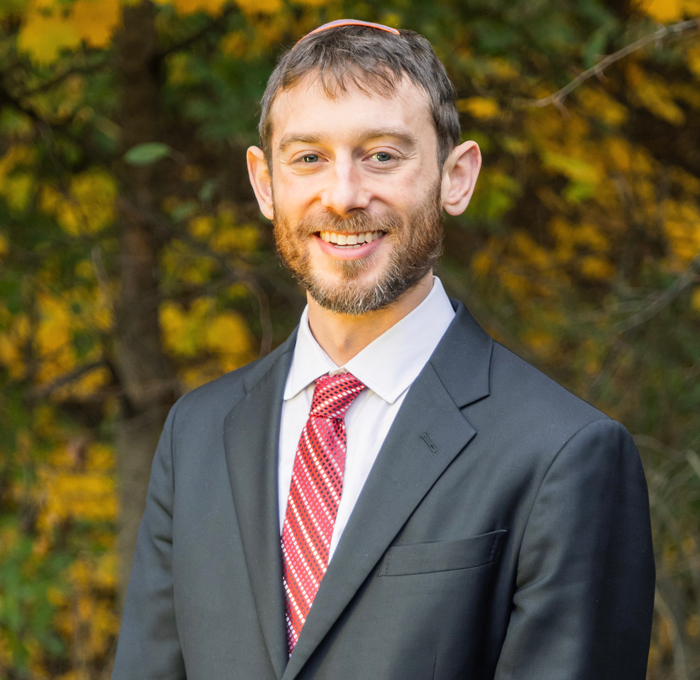
Max Davis
כִּי הַנִּגּוּן הוּא רַק מִין גִּלּוּי הַנֶּפֶשׁ וְהַרְגָּשׁוֹתֶיהָ, וּמִתְגַּלֶּה בְּדִבּוּר שֶׁמְּדַבֵּר הָאִישׁ אֶל חֲבֵרוֹ אֶת מַחְשְׁבוֹתָיו וְהַרְגָּשׁוֹתָיו שֶׁל צַעַר וְשֶׁל שִׂמְחָה וְעוֹד יוֹתֵר בְּקוֹלוֹ… לָכֵן הַנִּגּוּן שֶׁהוּא קוֹלוֹת שְׂמֵחִים אוֹ מְרִירִים מְעוֹרֵר אֶת הָרְגָשׁוֹת הָאָדָם, שֶׁבָּהֶם נִיצוֹצֵי וְאֶבְרֵי הַנֶּפֶשׁ מִתְגַּלִּים
A melody is a revelation of the soul and its feelings. The soul reveals itself in words spoken by a person to their fellow, expressing thoughts and feelings of pain or joy, and, even more than that, in their voice… A tune, which is the sound of joy or bitterness, rouses a person’s feelings, and within these feelings the sparks and wings of the soul are revealed. — Benei Machshavah Tovah (Children of Positive Mindfulness), Kalonymous Kalman Shapira
The Piaseczner Rebbe, Kalonymous Kalman Shapiro, Rabbi of the Warsaw Ghetto was renowned for his transformative pedagogy. He shared with his students frameworks and meditative visualization exercises, helping them utilize imagination to inspire greater action. He offered them paths to understand themselves and overturn reality through mindful embodiment of Torah. His life and teachings serve as an enduring model for moving souls.
Growing up, my parents and teachers showed me paths to greater meaning through learning, ritual, and community. Eventually, my yearning to immerse deeper into Jewish knowledge and practice flowered into a desire to help guide others on their journeys.
I came to Hebrew College seeking teachers, peers, and Torah that would move my mind, body, and soul. I found a community that has taught me to stop, look, listen, and articulate specific questions and answers. I encountered sources in our tradition that ignited my soul, and the space to learn how to swim on the path to greater revelation.
Music has been a vital spiritual resource throughout my life. In my first week at Hebrew College, I felt my soul roused by the lush musicality of the prayer life. I yearned to access the tools to help others hear the truth of their souls. I learned how to experiment with rhythms, melodies, instruments, movement, silence, and breath. I learned that prayer, song, and study are love.
Hebrew College has opened my heart and helped me live my life in the divine rhythm, so that every space, text, and song is a meeting ground for souls. My work in life is to spread that blessing as widely as possible.
I am eternally grateful to everyone who has guided me on my journey, especially, my parents, Steven and Shari Davis for the eternal blessings of life and song, my Papa Al Hartzman for your questions and sense of humor, and my beloved Shira Lehmann for being my melody.
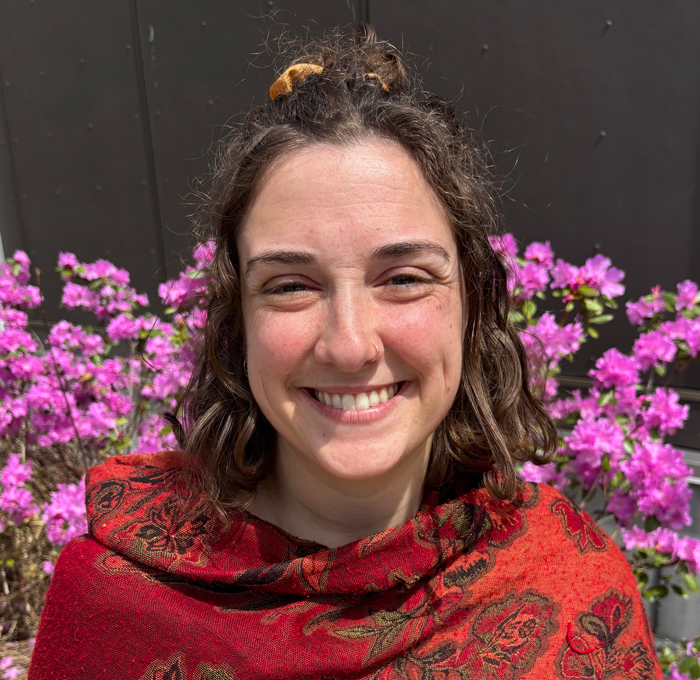
Risa Dunbar
ואם–לא קרוב אחיך אליך ולא ידעתו ואספתו אל תוך ביתך והיה עמך עד דרש אחיך אתו והשבות
לו
אשר כל אחד מבנ׳׳י יש לו אות בתורה ומשם הוא חיותו ושורש נשמתו… היינו האות שהי׳ לו בתורה ועי׳׳ז והי׳ כל מוצאי יהרגני…וז׳׳ש עד דרוש אחיך אות׳׳ו והשבות לו
And if your fellow not be near to you, or you do not know them, you are to bring [their lost possession] into your home; it is to be with you until your fellow seeks it [ad d’rosh achicha ohto] and you shall return it to them. (Parshat Ki Teizei, Deuteronomy 22:2)
The Tiferet Shlomo (Rabbi Shlomo HaKohen Rabinowicz) says that each of the People of Israel has a soul-animating letter (oht) in the Torah, and if we lose that letter (our vitality) it is our fellow’s duty to protect it until we seek it from them.
The path of Torah is one of seeking, finding, losing, and finding. It is also a path of relationship, where each of us (each of us a letter), is needed to create and sustain its story. The power to discover and voice our Torah is within us, but it is precious and, at times, precarious. When we get lost in anguish, fear, despair, or loneliness, we need one another to care for our lifeforce. We do that for each other until we can seek our way back to ourselves. My work as a Rabbi is to be a presence on this sacred path of loss, pursuit, discovery, and renewal, supporting our people in the collective holding and (re)discovering the holy vitality of Torah (ourselves, our letter) that already, uniquely, belongs to us.
These six years have been a transformative journey. Looking back, I see how much I grieved – personal and communal heartbreaks, uprooted homes — but also what I found: a deeper, intuitive intimacy with our tradition’s voices, a devoted relational pedagogy, transformative faith and companionship. At Hebrew College I have discovered people and teachings that will serve as lanterns, whose glow will guide me and help me to feel the presence of The Eternal beyond this time.
In becoming a rabbi, I offer abundant gratitude to so many. To my parents, who have always taken my questions seriously. To my grandmother Esther, without whose support I would not be here today. To my great-grandmother Ruth z”l. To Jeremy, Dietmar, and Danielle for your boundless kindness. To my dearest friends, for your transformative love. To my students. And finally, to my teachers and mentors. Thank you for trusting me with this tradition. You have guided me toward seeing the world anew, held me in holy relationship, and led me on a path toward blessing.
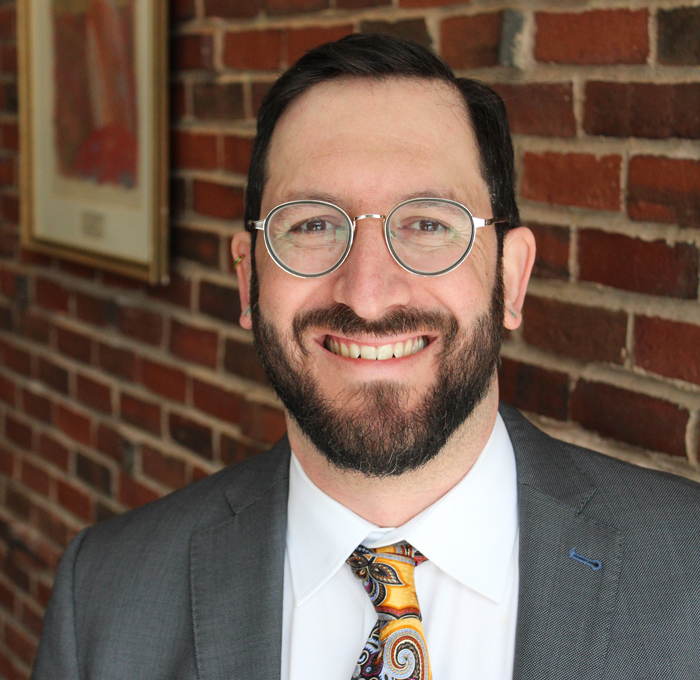
Alex Goldfarb
אָמַר רַבִּי: אֵין אָדָם לוֹמֵד תּוֹרָה אֶלָּא מִמָּקוֹם שֶׁלִּבּוֹ חָפֵץ, שֶׁנֶּאֱמַר
.״כִּי אִם בְּתוֹרַת ה׳ חֶפְצוֹ״
.עבודה זרה י״ט –
Rabbi Yehuda HaNasi said: A person only learns Torah from the place of their heart’s desire, as it says: “Rather, this one delights in G!d’s Torah.” (Psalm 1:2) -b. Avodah Zara 19a
When asked how things are going with rabbinical school, one of my standard responses has been, “They let me learn Torah every day!” While I certainly enjoy saying this for its cheekiness, it is also the most earnest response I have.
On my best days, I feel the resonance of how Torah study in hevruta partnership is a model for being in right relationship with all of Hashem’s Creation. On my less good days, I feel the yearning and loneliness that arises from the experience of alienation.
The discussion that follows Rabbi Yehuda HaNasi’s statement suggests that perhaps learning “from the place of their heart’s desire” means one should feel empowered to study the particular genre of Torah that attracts them – to each their own.
Much of my learning, in fits and starts, has been attempting to better understand my own heart, and how to recognize the heart-yearnings my teachers, students, friends, loved ones, and strangers share on a moment-by-moment basis. The struggle to understand and connect with a text, and the struggle to understand and connect with those around us does not only center the genre of experience we might consider most desirable.
“Like sheaves of corn Love gathers you unto themself.
She threshes you to make you naked.
He sifts you to free you from your husks.
They grind you to whiteness.
She kneads you until you are pliant;
And then he assigns you to his sacred fire, that you may become sacred bread for G!d’s sacred feast.
All these things shall Love do unto you that you may know the secrets of your heart, and in that knowledge become a fragment of Life’s heart.”
– Khalil Gibran, The Prophet: “On Love”
We cannot control our heart’s desire, and sometimes those desires will lead us to places of difficulty and sorrow before turning to joyful delight, and back again. Learning to truly listen, to respond non-judgementally to the hearts in and around us, is core to our sacred service of learning and teaching Torah.
There is always a second half to the verse. Rava teaches that by learning according to the heart’s delight, the Torah becomes ours. “וּבְתוֹרָתוֹ יֶהְגֶּה יוֹמָם וָלָיְלָה” And upon their Torah – the Torah which is theirs – they meditate day and night. May it be G?d’s will that my rabbinate lifts up our hearts’ delight in Torah.
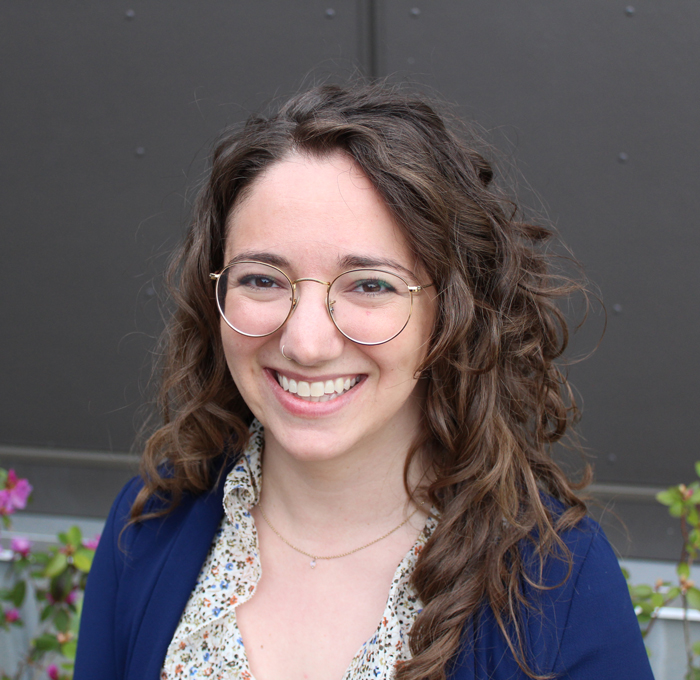
Nicole Golomb
ר״ט אומר אף הקב״ה לא השרה שכינתו על ישראל עד שעשו מלאכה שנאמר (שמות כ״ה:ח׳) ועשו לי מקדש ושכנתי בתוכם
אבות דרבי נתן י”א
Rabbi Tarfon said: Even the Holy Blessed One didn’t cause the Divine Presence to rest over Israel until they engaged in creative work, as it is said: “And make for Me a sanctuary, and I will dwell among them” (Exodus 25:8).
Avot d’Rabbi Natan 11
As I stand at the precipice of ordination, looking forward into the unknown and back at the road that brought me here, one thing remains clear: truth emerges in the place where hard work and creativity meet. Throughout my time in rabbinical school, art–be it embroidery, painting, scribal arts, or creative writing–have been both my escape and the tools I use to facilitate encounters with the Divine. With the backdrop of the global pandemic, the war in Israel-Palestine, and rising fascism in our country, it felt even more important to be creating and contributing.
Through this process, I discovered again and again that engaging in creative work allowed me to connect more deeply to others, to our tradition, and to God. As the Torah teaches us from the beginning, creation itself is divine work. I have also learned that creation is part of the holy work of a rabbi: relationships, textual interpretations, and ritual moments each require creative work in order to blossom and grow.
There are so many people whose support I have relied on to get me to this point. I want to extend my deepest gratitude to my parents, who never for a moment faltered in their support when I broke the news to them that I wanted to return to school for an additional six years to become a rabbi, and to my friends, whose words of encouragement and questions have deepened my own relationship with Judaism.
I am additionally grateful for my cohort and my teachers, who have lifted me up when life brought me down and pushed me to think and feel more deeply.
Finally, I am eternally grateful to my partner Sam, who encourages me to be the best version of myself every day, sets an example for how to truly live by one’s values, and has enough confidence in me to carry me through the moments when it is hard to find it in myself.
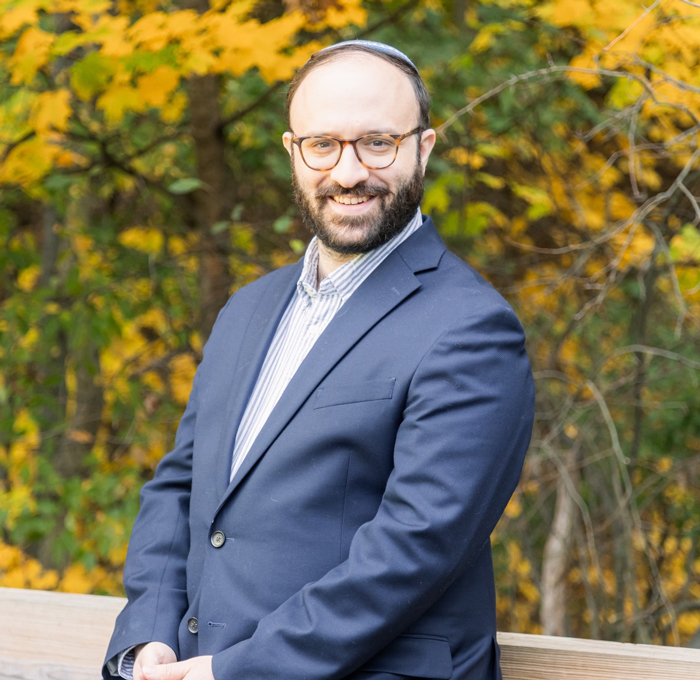
Josh Greenberg
Stood Rabi Yehoshua on his feet and he said: “It is not in heaven!” (Deuteronomy 30:12) What does it mean: “It is not in heaven?” Rabi Yirmiah says: “That already it was given the Torah on Mount Sinai, we do not regard the divine voice, that already it was written on Mount Sinai in the Torah: “After many to incline.” [Many years later] Rabi Natan encountered (found) Elijah, he said to him: What did the Holy One Blessed Be He do during this time? He (Elijah) said to him: Hashem laughed and he said, “My children have prevailed over me! My children have prevailed over me!” (Bava Metzia 59b)
The above text resolves a sugya about whether a clay oven is kosher. Rabbi Yehoshua insists that the opinion of a divine voice does not supersede the opinions of humans engaged in a Talmudic argument about this oven on Earth. God ultimately affirms that the contrarian human opinions in this matter override the opinion of the Divine voice.
My immediate reaction after studying this debate: “The Sages have more power than God?” New to halakha and observance, I was shaken to my core. Could I adhere to a system that seemed socially constructed and not in accordance with the will of the Divine?
The rabbis in my Jerusalem yeshiva introduced me to the theology of Rabbi David Hartman and his book, A Living Covenant. I was struck by a phrase on page nine: “[each generation allows the word of God to be] heard ever anew as one brings today’s historical context into the process of covenantal renewal.” It occurred to me that I was also able to stand at Sinai by integrating my own unique perspectives into my learning, making divinely inspired halakhic texts come alive with contemporary relevance. Since then, I have approached Torah, halakha, and Talmud with openness—attentively listening to the insights of my hevrutot, consulting contemporary scholarship, and engaging with the supplemental materials provided by my teachers in the Beit Midrash.
As a rabbi, I hope to cultivate Jewish spaces where all Jews feel empowered to stand at Sinai; to bring their own experiences, questions, and conceptions of morality into conversation with the tradition. I now see divergent opinions in halakhic texts as essential to the vitality of an evolving Jewish civilization. Now, when I study the oven of Akhnai, I do not experience a crisis of faith. Each time I revisit the sugya, I reaffirm that divine truth may emerge through the same exegetical and interpretative processes that God bestowed upon Rabbi Yehoshua.
Thank you for all your Torah, kindness, guidance, and advice, especially Rabbi Joel Levy, Rabbi Zvi Hirschfield, and Rabbi Michael Shire.
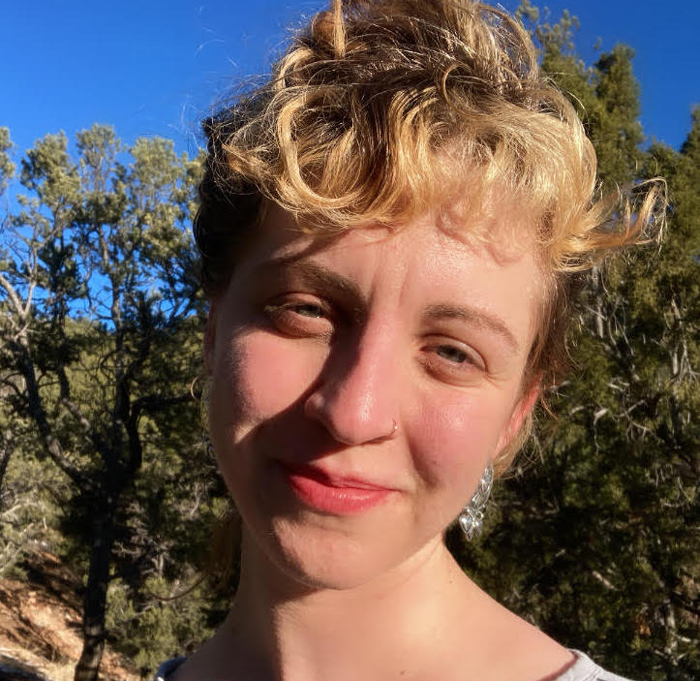
Sara Klugman
ויחשוב שהוא תולעת ושארי בריות קטנות הם חשובים כמו חבירים בעולם שכולם נבראים ואין להם יכולת רק מה שנתן להם הבורא יתברך ודבר זה יהי’ תמיד במחשבתו
“On the contrary, consider yourself, the worm and other small creatures, as equals in the world. We all are created beings and have no abilities except those given to us by our Creator, blessed be Their name. This matter should always be in your thoughts…”
-Baal Shem Tov, Tzava’at Harivash
Years ago, I saw a piece of art about young Haredi boys learning Torah, through writing the Hebrew letters in honey and licking the page. I am still trying to lick the page.
My Judaism is one of struggle and devikut (cleaving to the Holy.) The honey hasn’t always been easy to find. In these years cleaving, my heart has softened to the ways that the sacred finds her way — like Water through Rock. I’ve stumbled into endless geographies of how we find Home in this world.
As a student, I have found avodat hashem (work for g-d) in many realms: at hospital beds, in close communion with Torah, in learning from and standing with Palestinian communities resisting occupation, in Buddhist retreat, in deep political friendship, in a dancing body, in service to intergenerational community, in years of shabbos and kashrus practice that leaves a paw print on my heart.
It is difficult to stay human. I came into rabbinical school committed to ritual change. I emerge humble, wanting to carry the lineage in the most respectful way. I want to be a monk, a lover, a devotee.
As a rabbi, I pray to be open-palmed in my service. To ground in lineage, be open to change, and to strive to treat my ancestors and all of the creatures who share this earth, with reverence, compassion and humility.
I want to thank my ancestors, whose living made the way for my own – thank you for your encouragement. I want to thank my parents for bringing me into the world, for foregrounding an inclination towards mystery and an adoration of the natural world – thank you for your loving devotion. Thank you to my teachers from childhood through today who teach me reverent curiosity. Thank you to Marc and Helen for holding me with ceaseless permission, for helping me see otherwise with expansive love. Thank you to my chosen family: my siblings, my partner, my loved ones. You have opened worlds of permission and joy, I am committed to you at my core. Thank you to those I met briefly and to those who broke my heart.
I am blessed to know I am just beginning. I pray I continue to feel this way.
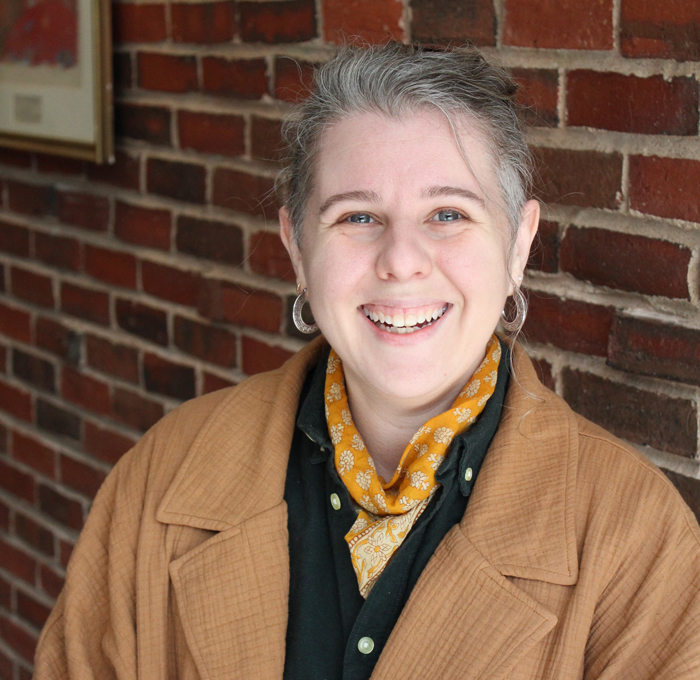
Jayce Koester
Exodus 8:18:
נָבֹל תִּבֹּל גַּם־אַתָּה גַּם־הָעָם הַזֶּה אֲשֶׁר עִמָּךְ כִּֽי־כָבֵד מִמְּךָ הַדָּבָר לֹא־תוּכַל עֲשֹׂהוּ לְבַדֶּךָ׃
“You, and this community that is with you, will surely be worn out because this thing is too heavy for you, and you are not able to do it by yourself.”
My rabbinical school experience began and is ending in Minneapolis. It is bookended by the Uprising following George Floyd’s murder, and a federal invasion of ICE and CBP agents. Alongside my learning in the beit midrash I have learned from my neighbors whose relentless chesed, loving-kindness, and gevurah, strength, have shown me G!d’s presence in our fractured and imperfect world.
These six years of learning have required me to navigate a world on fire, but never alone. Rabbinical school demanded I pay attention to our many tangled and connected roots. Chevrutah requires unlearning individualism. The spiraling daf of gemara teaches that the only way to make meaning is in inter-generational relationship. We cannot mourn without a minyan, or celebrate without witnesses. Our Jewish story is inseparable from those who came before us, and G!d willing, those who come after us.
While our modern world is obsessed with single heroes and lone survivors my Judaism reminds me nobody is truly alone. Our interconnection thrums like a pulse that I can hear whenever I am quiet enough to listen. Rabbinical school helped me learn how to pray, how to listen better.
I understand the role of a rabbi as a tender of our tangled roots and pathways. May I empower others to feel their own sense of interdependence, and help create paths into our shared and sacred tradition. I do not take this obligation on alone, and I will not fulfill it alone. I will do it only in the company of friends, family, chevrutot, ancestors, teachers, students, and community.
Every day I am reminded by my friends, family, and community that we only change and grow alongside each other. Thank you for helping me learn how to accept my vulnerability, be patient, not take things so seriously, and believe that transformation is possible. Thank you to my classmates and fellow students who have literally fed and housed me, taught me to pray, and shaped who I am as a Jew. I am grateful for my many teachers who opened Torah to me, particularly Rabbi Jordan Schuster who taught me not to be ashamed when my hands shake.
It is unthinkable and impossible that I could become a rabbi without the support of my spouse, partner, and beloved Kaj. Words cannot express how much I love you, how good your challah is, or how thankful I am for your companionship on this journey.
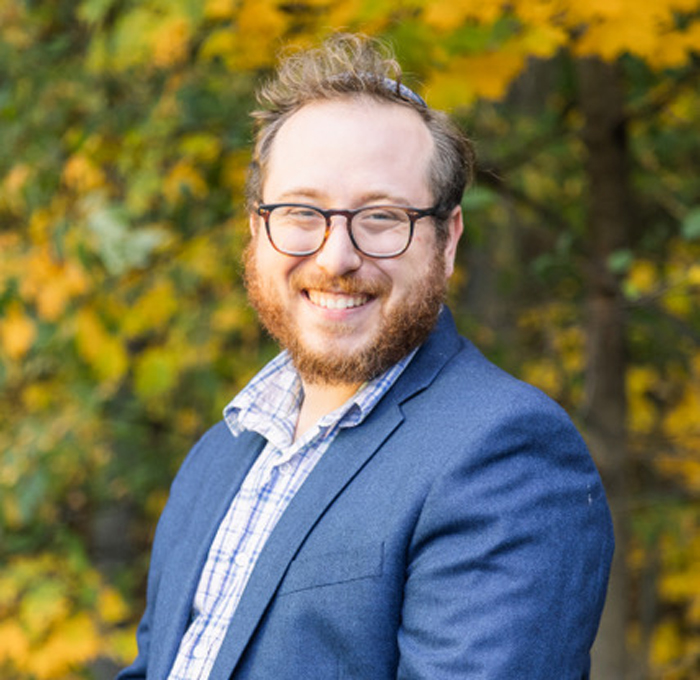
David Magazine Malamud
וְדַע, שֶׁהָאָדָם צָרִיךְ לַעֲבֹר עַל גֶּשֶׁר צַר מְאֹד מְאֹד, וְהַכְּלָל וְהָעִקָּר – שֶׁלֹּא יִתְפַּחֵד כְּלָל
Know that a person must cross a very, very narrow bridge. The general rule is: Do not be afraid at all!
(Likutei Moharan 48:2)
My road through rabbinical school has been narrow and at times I have felt like I am on a tightrope. I have balanced work, school, family, and friends. I have navigated profound loss and celebrated the greatest joys. This has been a time of great change and transformation, personally, spiritually, and professionally. I took on new internships, became a father, and built an amazing community of friends and family.
In this time, I have discovered that my purpose as a rabbi is to accompany others and build community. I entered rabbinical school with a goal to deepen my connection with Judaism and use it for good. I am leaving with a vision to build bridges between disparate communities. I entered with a very narrow view of Judaism and how to best practice it. I am leaving with an expansive view of Judaism and a profound commitment to pluralism: religious, intellectual, and political.
I feel privileged to be ordained with this amazing group of friends, classmates, and colleagues. Many of them have been my dear chevrutas, brought me meals in times of need, and played with my children.
I am grateful for my first friends in Boston, the “grumpy frumies.” So many of you have travelled on this narrow bridge of rabbinical school and inspired me to follow in your steps. You continue to be my mentors, role models, editors, chevrutas, and friends. I want to thank our friends Rabbi Matthew Goldberg `23 and Elana Goldberg, Rabbi Moshe Webber `23 and Ariana Webber, and Rabbi Micah Friedman `23 and Rabbi Talia Laster `22. And my rabbi Lea Anderson, may her righteous memory be a blessing, I would not be here without you. Rebecca and I miss you so dearly and are so grateful that you were one of our deepest friends in Boston.
I am grateful to my family, my parents Mark and Susan, and my in-laws William and Shoshana, who guided me and supported me through my time in school. And Rebecca, none of this would be possible without you. You were with me on that bridge, on every step of the journey. Your love has sustained me. Ben and Ari, you have become the light of my life. I am so grateful to continue to learn Torah from you and watch you grow up.
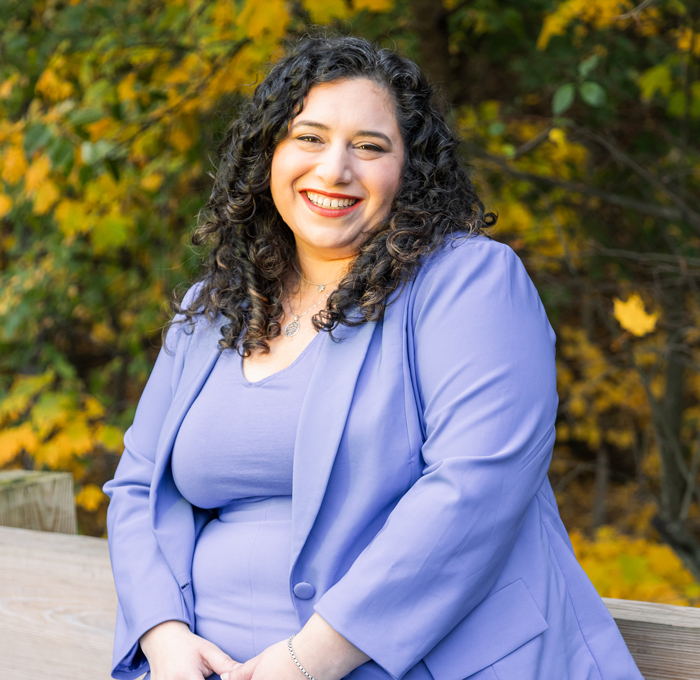
Abigail Oshins
בָּעֵ֣ת הַהִ֗וא הִבְדִּ֤יל יְהֹוָה֙ אֶת־שֵׁ֣בֶט הַלֵּוִ֔י לָשֵׂ֖את אֶת־אֲר֣וֹן בְּרִית־יְהֹוָ֑ה לַעֲמֹד֩ לִפְנֵ֨י יְהֹוָ֤ה לְשָֽׁרְתוֹ֙ וּלְבָרֵ֣ךְ בִּשְׁמ֔וֹ עַ֖ד הַיּ֥וֹם הַזֶּֽה׃
At that time יה set apart the tribe of Levi (Accompaniers) to carry the Ark of יה’s Covenant, to stand in attendance upon יה, and to bless in God’s name, as is still the case (Deuteronomy 10:8).
Levi means “one who accompanies.” The Levites were destined to accompany both God and the Israelite people. In the desert, the Levites escorted God’s temporary dwelling place from camp to camp. In the land of Israel they did not receive tribal lands; instead they were instructed to live amongst the other tribes, caring for the spiritual needs of all Israelites. The Levites, though separate, were meant to be integrated into the lives of all the Children of Israel. They accompanied Israelites through spiritually heightened moments of their life; whether seeking forgiveness through a sin offering, or putting together the first fruits of their harvest to give thanks to God, the Levites were a consistent guiding presence. That is the calling of my rabbinate—beyond teacher, pastor, or storyteller–to become an accompanier.
Throughout my time in school, I have yearned for more skills, more knowledge, and more practice. What has become clear is that I did it in service of learning to walk alongside those I am fortunate to call my congregants and students. Growing into the role of rabbi, I have learned that accompanying takes many forms, requiring the accompanier to really listen to the person beside them. Sometimes a person needs an open heart, a shoulder to cry on. Sometimes a well timed joke, or a provocative question.
I accompany while teaching a child their first letter in Hebrew and then helping with their d’var torah for their b’mitzvah. I accompany by holding a congregant’s hand as they sit in the hospital and receive a devastating diagnosis. Each time I spend Shabbat with the same community, go from a funeral intake to a first grade class, and craft a wedding ceremony for a couple I engage in the sacred act of accompaniment. I accompany as I ask about one person’s community theater production and another’s ailing aunt.
Accompanying means showing up in moments of the mundane, for that is what allows a rabbi to show up effectively in those of tragedy, celebration, and ritual. Sometimes we have the honor of accompanying someone for years, and others only a short while. It is not the length of time that matters, but it is the depth of the relationship, and the willingness to hold their reality alongside one’s own. There is no blessing so great, nor as humbling, than to walk beside those you serve.
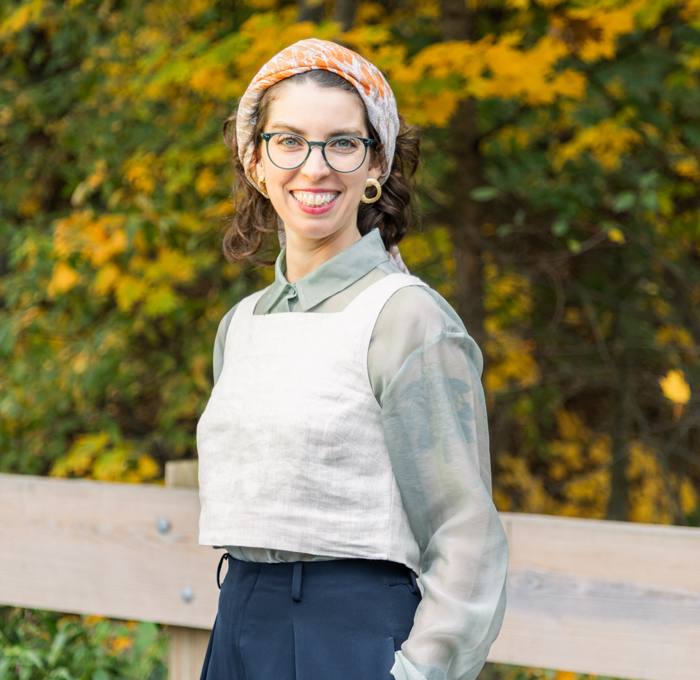
Sarah Rovin
אֲמַר לֵיהּ: בֹּא וְאַרְאֶךָּ דּוּגְמָתָן בָּעוֹלָם הַזֶּה. נְפַק אַחְוִי לֵיהּ כְּמֵיהִין וּפִטְרִיּוֹת
He said, come and I will show you an example (of the world to come) in this world. He went out and showed him truffles and mushrooms. (Shabbat 30b)
In a discussion about the World to Come in the Talmud, Rabban Gamliel’s student scoffs at him and says “there is nothing new under the sun”. His response: to experiencing the divine wonder of mushrooms, which sprout overnight and seemingly out of nowhere. Pedagogy and theology are aligned; Torah and teaching are embodied. I learn when I experience things with all of my senses, my heart as well as my mind. How amazing to experience something as fantastical as a forest full of mushrooms after a big storm! I can only imagine Rabban Gamliel, well respected and serious Torah scholar, head of the Yeshiva (house of learning), bringing a student outside, to say, “Look here! Can you believe it? A mushroom! Surely this is a sign of the wonder of the Holy Blessed One!”
My work as a rabbi is to guide and accompany. Like Rabban Gamliel, I want to walk with people at the moments of discovery, to support and cultivate a Judaism that is full, that is intellectually and spiritually deep as well as playful. Over six years of study in the Beit Midrash at Hebrew College, I have immersed myself in the community we co-create through animated discussions with each other and text, learned from thoughtful teachers, and built nourishing friendships that will sustain me as I make the transition to become a rabbi. Torah study and beloved community are like the mycelial network which blanket the forest floor creating mutually beneficial relationships with plants they are connected to. They give and exchange nutrients and with a little water produce fruiting bodies — mushrooms. So too with Torah and beloved chevrutas (learning pairs), exchanging with the texts and each other, emerging from the experience feeling something new in us and in the world. This relationship with our sacred texts in community continually renews our tradition and ourselves.
I am grateful to so many people who supported me through this journey. To my parents, Lynne and Stuart, who gifted me the practice of blessing from an early age. To my chevrutas who pushed me to go deeper and have grown alongside me. To my husband Jake, who has always been my fiercest support, encouraging me to be the best version of myself and to pursue my ever growing passions. To my rabbis and mentors, thank you for cultivating a living text and tradition in me. I’m so grateful to carry your Torah into the world.
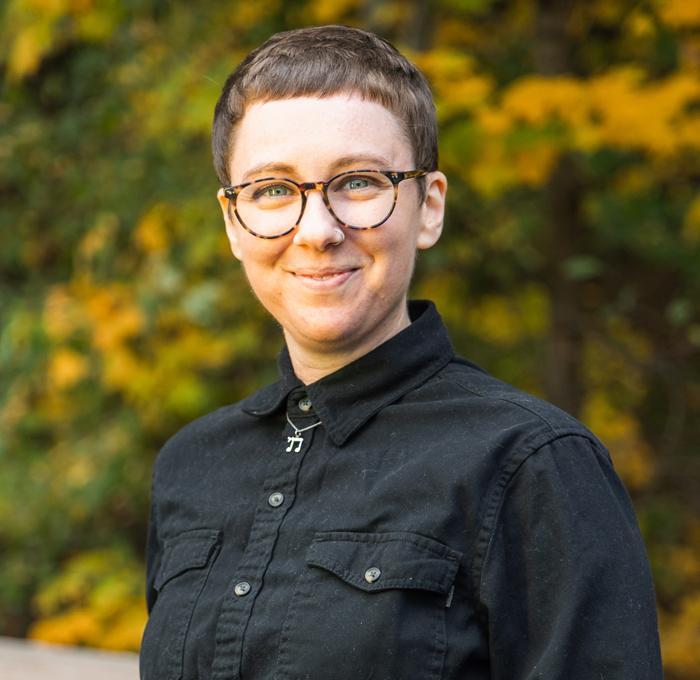
Julia Spiegel
למנות ימינו כן הודע ונבא לבב חכמה
Teach us to make our days count, and so acquire a heart that is wise
Siddur Lev Shalem translation
Psalm 90
What I hear in this verse is this: Help us, G-d, to celebrate the gift of life, because it leads us to wisdom — to a larger perspective. Help us be present so we can be concerned with more than the present, so that we can make the future our responsibility. Teach us to make our days count while also doing our part to make the world better.
I am deeply honored to become a link in the chain of this teaching, to walk alongside and encourage people as they become who they are meant to be, at their own pace, and to be a partner in making the world a better place.
I knew I wanted to go to rabbinical school shortly out of college, but I didn’t enroll for many years. I need more time, a voice within me said.
How do we honor the pace at which each of us walks the path of life? How do we cultivate presence while dreaming big about the future, and holding dear the past? How do we foster our emergence into the person we are meant to be, while not rushing?
One of Judaism’s major gifts is its teaching about time. Through the weekly repetition of the six and one cycle of Shabbat and weekdays; through numerous embodied rituals that invite us into the present while situating us in a lineage; through a cultural and theological emphasis on this life while also yearning for olam haba —Judaism teaches us to at once be present while also looking beyond the current moment. Rabbi Bunim would tell his students: bishvili nivra ha’olam, the world was created for me, should be written and kept in one pocket and anochi afar va’efer, I am but dust and ashes, in the other.
While I stand at this precipice, I am indebted to this tradition, Hebrew College, and many others. I am so grateful to Nehar Shalom and the Jewish Community of Amherst for being absolutely wonderful places to grow, and, sometimes, to take my time. I am grateful for your trust, partnership, and all that you have taught me. In particular Rabbi Leora Abelson, Rabbi Ben Weiner, Roz Weiner (aka the Weiner Family School of Rabbinics); and Gabriella Spitzer. To the faculty of Hebrew College, thank you for being teachers and role models in the deepest sense. To my family and friends, thank you for answering all of the frantic calls over the years, I love you so much.
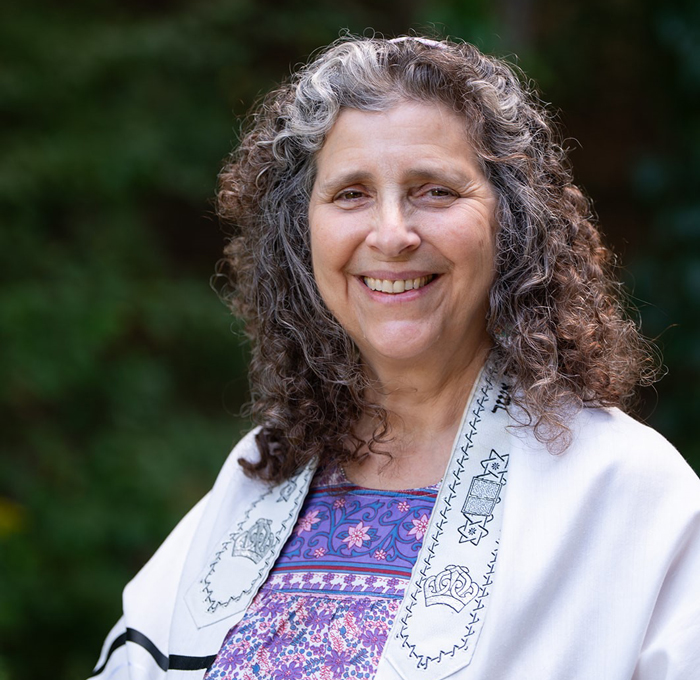
Lisë Stern
לֹ֥א בָר֖וּחַ יי וְאַחַ֤ר הָר֙וּחַ֙ רַ֔עַשׁ לֹ֥א בָרַ֖עַשׁ יי׃ וְאַחַ֤ר הָרַ֙עַשׁ֙ אֵ֔שׁ לֹ֥א בָאֵ֖שׁ יי וְאַחַ֣ר הָאֵ֔שׁ ק֖וֹל דְּמָמָ֥ה דַקָּֽה׃
God was not in the wind; and after the wind, an earthquake; God was not in the earthquake. And after the earthquake, fire; and God was not in the fire; and after the fire, a voice, quiet, small (I Kings: 19:12)
וַתִּשָּׂאֵ֣נִי ר֔וּחַ וָאֶשְׁמַ֣ע אַחֲרַ֔י ק֖וֹל רַ֣עַשׁ גָּד֑וֹל בָּר֥וּךְ כְּבוֹד־יי מִמְּקוֹמֽוֹ׃
And a wind lifted me, and I heard around me the voice of great noise:
Blessed is God’s abundance from its place! (Ezekiel 3:11-12)
The beauty of Torah Hebrew, for me, is its mystery, its depth, its potential for interpretations. Some words occur many times, and can have multiple meanings. Others are rare, or even (a favorite) hapax legomena, words that appear only once, offering room for speculation.
These verses represent different ways of hearing and relating to God. They have in common the word kol, voice or sound. It is through this expression that I most connect with God and community, through written, spoken, chanted, and flowing words of conversation, prayer, song.
In my application to Hebrew College six years ago, I wrote:
I envision a career as a rabbi offering chaplaincy care to people experiencing grief and life challenges, drawing on the knowledge of Jewish texts and traditions to offer comfort, solace, and perhaps inspiration.
That vision has grown as I have, with so much learning: written and oral Torah and Clinical Pastoral Education (CPE), the extracurricular courses I needed for chaplaincy certification.
In the years preceding my application I experienced deep personal losses that had me questioning my relationship with God, by whom I felt betrayed, who I could not understand, who had been a source of comfort but now felt remote.
After much introspection and exploration, including conversations with many rabbis, I realized I did not want to lose God, too, and had to accept that God can be a source of strength but is also there in grief, clarity and confusion, ineffability, inspiration.
A rabbi can be a spiritual leader, a spiritual listener, a spiritual teacher. At Hebrew College, I’ve had the opportunity to lean into all these roles, leading services, teaching classes, offering pastoral care. I have learned to hear my calling.
May we each be receptive to the holiness of thunder and of silence.
With gratitude to my father, J. Michael Stern z”l, and to my mother, Joyce Stern; to my aunt Raya Stern z”l. And to my beloved children, Eitan z”l, Gabriel and Jen, Shoshi and Lindsey, and my sweet grandson Theo. You bring me so much joy and strength.
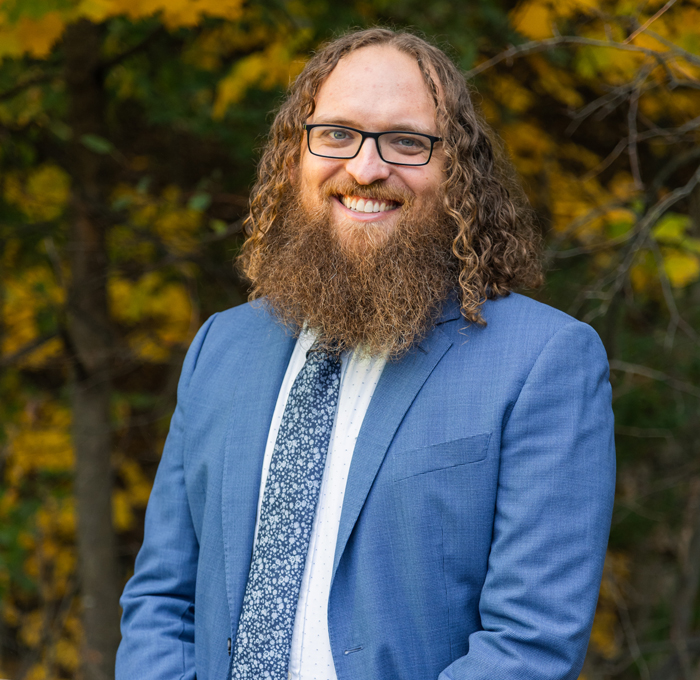
Samuel Tygiel
העולם סוברים שמתפללים לפני הקב”ה ואינו כן כי התפלה הוא עצמות אלקות ממש
“People think they pray to God. But this is not the case. For prayer itself is the essence of God” — Reb Pinchas of Koretz Imrei Pinchas
I grew up a proud atheist in San Francisco, convinced that humanity had outgrown the need for religion or gods. As I reached adulthood, I began to see a world that was built on dehumanization, whether through the exploitation of labour or technological advancements that reduced the human experience to algorithms and monetizable behavior. I questioned the linearity of the “growth” of humankind and became curious about the wisdom of our ancestors who lived through other realities and how they navigated the challenges of their worlds and what that could teach us about how to gracefully navigate ours.
This path led me to rabbinical school and in particular, led me to embrace the power of prayer and develop my relationship with the Divine. I see prayer as the deepest expression of our humanity and as an expression of our inner Divine nature.
Through my time in study and prayer in the Hebrew College Beit Midrash, I came to understand why Reb Pinchas of Koretz claimed that prayer itself is the Divine essence. Through prayer, we gather in community to express our longing for a better world alongside our endless appreciation for the beauty of the world we have. Through song, we practice lifting up and joining our voices together in joy, sorrow, and hope. Each time we step into communal prayer, we participate in the revelation of the substance of God through the voice of the community.
Rabbis strive to uncover and affirm the humanity of everyone with whom we share community. Through helping others surface their stories and standing alongside them in the best and worst moments of their life, we become a channel of re-humanization in a world that so often dehumanizes us.
I feel profound gratitude for those who have helped me find and recover my own humanity over the course of the journey. Thank you to my fianceé, Carly, my great companion in dreaming, learning and fighting for a kinder, gentler future. I am indebted to the teachers who invited me to make a home for myself in Jewish learning, music, and prayer and I promise to pass this gift on to others. I am also so grateful to my many non-Jewish friends, family and mentors who recognized, encouraged and celebrated my embrace of Judaism and my decision to become a rabbi. Judaism doesn’t happen in a vacuum and it has always, and always will benefit enormously from our loving neighbors and fellow travellers.
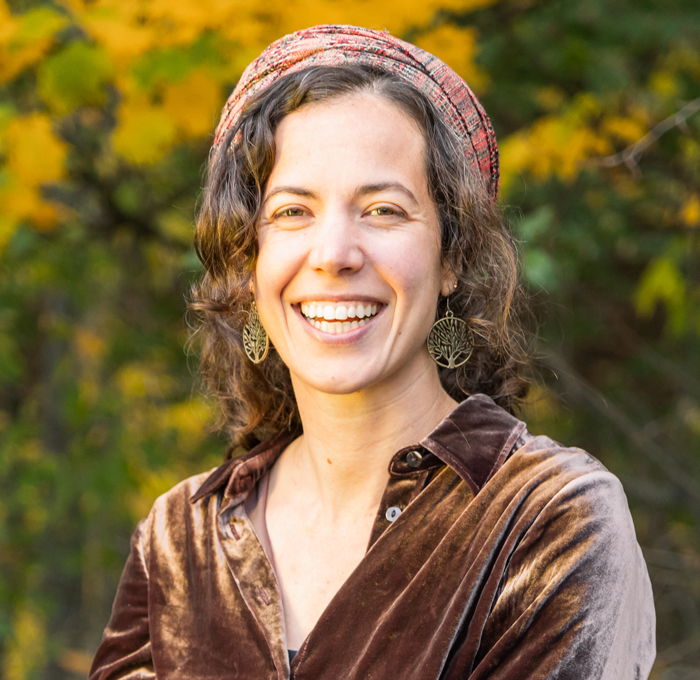
Carrie Watkins
בשעה שהקדימו ישראל נעשה לנשמע יצאה בת קול ואמרה מי גילה רז זה לבני לשון שמלאכי השרת משתמשין בו כו׳
In the moment that the children of Israel said “naaseh (we will listen/understand)!” before “nishmah (we will do)!” a heavenly voice came out and said ‘who revealed this secret to my children? They speak the language of the ministering angels!” (Shabbat 88a).
Six years ago I wrote my application essay to Hebrew College based on these words. Reading back through my application in advance of ordination, I was struck that I might have written the same essay today. After all this, have I changed so little?
And yet, reading the words again, they didn’t feel the same as they did then. The words are more true, somehow, as if I can now inhabit them more fully. When I think back to myself writing, years before, I was grasping towards something, finding phrases just able to capture the upswelling of possibility that compelled me towards rabbinical school.
Reading them today, the words are no longer aspirations, no longer hinting at something I can sense just beyond my grasp. They’re fuller and more steady; they abide.
I see now that this is exactly what I was teaching myself, all those years ago when I wrote the essay. Naaseh v’nishma: these aren’t your words, they’re the words of angels; they came from beyond. You evoked awe by finding a way to say them, back then, before you even really knew what you were saying. Which, of course, is exactly what the words themselves say. First you have to do, naaseh, and then you will really understand what is happening, nishmah.
With gratitude to all the angels along the way who taught me their languages — teachers, friends, family. Everything I have learned and will continue learning comes from you.

Anna Wolfe
כי אל־אשר תלכי אלך ובאשר תליני אלין עמך עמי ואלהיך אלהי
For where you go I will go, where you lie I will lie, your people are my people, and your God is my God.
Ruth 1:16
Ruth’s words begin with a simple promise. To stay close to another person, and to go where they go.
My journey into the rabbinate began in much the same place. Being cared for by others and discovering in myself a desire to care for others in return. Within a nurturing community, I came to see that spiritual life does not begin with abstract ideas about God. It begins with our obligations to one another.
God is most present in moments of human connection. Divinity is in the spark of humanity that emerges when two people are fully present with one another. Hashem is there when people sit together in suffering and when a room erupts in shared laughter. The work of a rabbi is not to fix, but to walk beside people through life’s joys, fears, discoveries, and uncertainties.
Becoming a mother during rabbinical school deepened this understanding for me. In the quiet hours of the night, walking in circles with my son as I tried to help him fall asleep, I felt yirah, a mixture of awe, fear, and responsibility. Caring for another life reveals just how much is at stake when we love someone.
To become a rabbi is to obligate myself to this work of accompaniment. Ram Dass wrote, “We’re all just walking each other home.” I hope to walk alongside the people I serve in their comings and goings, their joy and their grief, helping them find community, belonging, and the sparks of the Divine that emerge when we stay close to one another.
Sam, for six years you have moved homes, worked long hours, carried more than your share at home, and believed in me when I struggled to believe in myself. You have walked beside me every step of this journey. I would not be here without you. Thank you.
And Heschel, thank you for making me a mama.
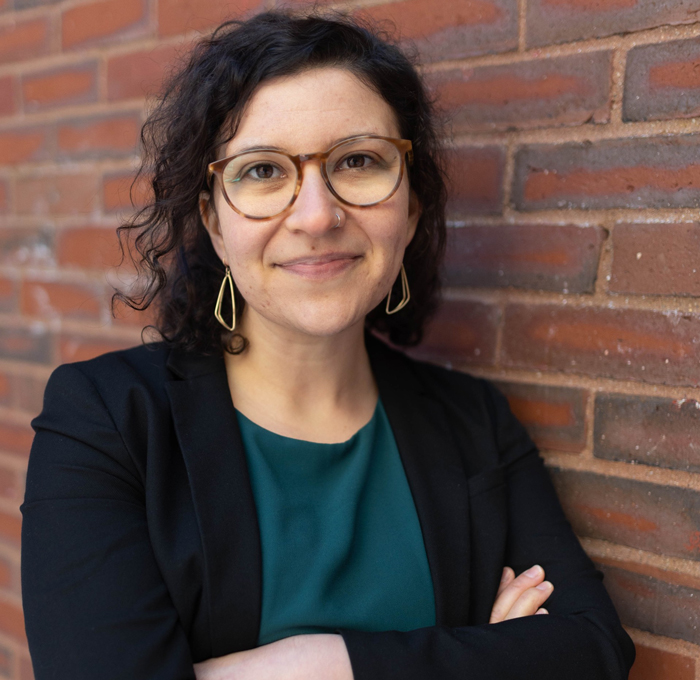
Talia Young
וְתֵן בְּלִבֵּֽנוּ לְהָבִין וּלְהַשְׂכִּיל לִשְׁמֹֽעַ לִלְמֹד וּלְ֒לַמֵּד לִשְׁמֹר וְלַעֲשׂוֹת וּלְקַיֵּם אֶת־כָּל־דִּבְרֵי תַלְמוּד תּוֹרָתֶֽך בְּאַהֲבָה
And grant within our hearts the ability to understand and to discern, to hear, to learn and to teach, to protect and to create, and to enact all the words of the learning of your Torah through love.
In the middle of ahava raba, a prayer about the love that surrounds us, these words ask that our own hearts be open. We pray for the understanding to know how to listen, so that we may learn, so that we may teach, so that we may protect each other and create a new kind of world.
What we create in the world begins in our hearts. When I think about what it means to be a rabbi, this is my deepest prayer: to cultivate an open heart and to know myself well enough to be present with others, so we can be together in joy and sorrow, in the cycling of the weeks and years, where tradition meets this moment. I hope to lead with courage and authenticity.
Hebrew College has taught me to cultivate a spiritual practice. I’m grateful for every moment. How we’ve danced and how my teachers have spoken into the silence after tragedy. How we’ve prayed, beginning our days with words of the sacred. Finding sacredness in dive bars too, where people share art about what it means to be human, and in the light returning in the morning, and marching against ICE, because the whole world is full of God’s presence. Being here, in 5786, in 2026, with ancient words and songs in me, with new words and songs too, under the same sky in which Avraham saw a promise.
I am immensely grateful for the people and communities who have helped me find myself and my place in this tradition. To my teachers and mentors from Hebrew College, CPE and my internships, I learn from who you are. You teach me to find the Torah in grammar, in history, in conversation, in song, in music, in the poetry of ancestral words. To my hevrutas and classmates, what an honor to join this ancient conversation together. To Dayenu, Teen Beit Midrash, Hebrew SeniorLife, Kol Tikvah and Harvard Hillel, thank you for guiding me. To Kol Tikvah and Reyim, thank you for trusting me. To Natasha and Alice, thank you for helping me be myself more fully. To Mom, Dad, Maya, Jake, and my whole web of family and friends, thank you for being with me on this journey and supporting me in so many ways. I love you. You help me be brave & kind & me.
Ordination Document & Awards
Semikhah Document
We the faculty of the Rabbinical School of Hebrew College
give faithful testimony that these students
have been devoted participants in our house of learning
and have completed the required course of study
for rabbinic ordination.
During their years here, they have been eager and diligent
in the study of Torah, in prayer, and in service,
and have studied Jewish thought and Jewish practice,
searching for meaning, revealed and hidden.
The Torah of the Blessed Holy One
is their desire, and they have been steadfast in making that Torah their own.
Amid a circle of listening companions,
they have opened heart and ear to the seventy facets of Torah
to study and to teach, to keep and to fulfill,
to draw the hearts of Israel near
so that each individual might find his, her or their own path in Torah.
Therefore,
They shall each be called Rabbi.
We have ordained them to take upon themselves
the service of the rabbinate.
We attest that they are fit and prepared
to stand before communities
that may rely upon them, as we have in ordaining them,
and may blessings of goodness come upon them.
תעודת סמיכה
אנו מורי ביהמ”ד לרבנים של המכללה העברית
מודיעים נאמנה כי תלמידינו אלו
שחלקם מיושבי בית מדרשנו
סיימו את חוק לימודיהם.
זה כמה שנים שקדו על התורה ועל
העבודה ויגעו בהלכה ובאגדה,
בנגלה ובנסתר, ובהכשרה לעסוק
בצורכי ציבור באמונה.
בתורת ה’ חפצם, ולא זזו
ממנה עד שעשאוה תורתם.
בסוד חברים מקשיבים
עשו אוזנם כאפרכסת וליבם חדרי חדרים
להיפתח לשבעים פניה של תורה,
ללמוד וללמד, לשמור ולעשות,
למען קרב את ליבות עדת ישראל
למצוא כל אחד ואחת את נתיב נשמתם בתורה.
ועל כן
חכם יתקרו ורבי יתקרו
ומילאנו את ידם לשאת את
משרת הרבנות על שכמם.
וראינום נכונים ומוכנים
לעמוד כל אחד ואחת לפני העדה אשר תבחר בם,
וקהלי עדתם עליהם יסמוכו כאשר סמכנו אנו,
ועליהם תבוא ברכת טוב.
כל מן דין סמוכו לנא.
Linda Friedman Memorial Award
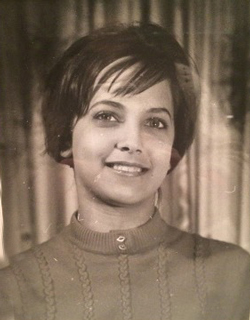 Sixty-three years after Linda Friedman’s death, her brother, Lev `18 and niece, Shoshana `14, along with the rest of the Friedman family are fulfilling the mitzvah of Kevod HaMet, honoring the dead, by reviving Linda’s memory through the Linda Friedman Memorial Award. Linda died tragically of kidney failure at the age of fifteen on February 14, 1961. Due to a lack of support systems for grieving parents and surviving siblings in that era, the Friedman family learned to suppress the pain of their tremendous loss until Linda’s memory was almost entirely repressed.
Linda loved Judaism, and had a strong connection with God, and her family can only imagine that her childhood compassion for others would have translated into an adult passion for justice. Through the Linda Friedman Memorial Award, the Friedman family honors those working for justice with and through the Jewish community. Each year, a third- or fourth-year Hebrew College Rabbinical School student is awarded the Linda Friedman Memorial Award in recognition of social justice work they have recently completed or in which they are taking ongoing leadership. The family is especially interested in honoring work that has an impact on a social justice issue and positively transforms the participants’ spiritual lives and relationship to Judaism.
In the words of her loving family, “Since her photos were hidden for so long, each of you who see her face and witness her spirit help to honor her memory and bring her into the light.”
Becca Heisler (she/her), RS’27 is extremely honored and moved to receive the Linda Friedman Memorial Award this year. A fourth-year rabbinical student at Hebrew College, Becca is also a ritualist, educator, folk herbalist, and wilderness guide. Her work has long centered around building joyful, connected, and transformative Jewish communities, through nature connection, outdoor education, prayer, song, and action. Over the past decade, she has built and tended a spiritual life that is deeply intertwined with her vision of a better world. This work flows out from her core belief in the sanctity of all life, her commitment to Truth, and her daily prayers for gratitude,for renewal, for peace, and for healing. This work has brought her to the streets of Minneapolis, Washington DC, and to New York, and the hills of Massafer Yatta in the West Bank. It has brought her to wild places across California, working in community to facilitate healing and education for people of all ages, in relationship with to the land and in solidarity with indigenous peoples. It has brought her to living rooms, road blocks, basements, synagogues, shabbos tables, court houses, porches, rallies, and dance floors across Ohlone Land (Oakland, CA) and Massachusett & Pawtuckett land (Somerville, MA), two places she is blessed to call home.