

Miller Center Winter Intensives Kickoff Rabbinical School Semester with Pluralism and Interreligious Learning
Last month Hebrew College Rabbinical School kicked off 2025 with the annual January Intensives, a week of interreligious learning programmed and hosted by Hebrew College’s Miller Center for Interreligious Learning & Leadership. This powerful week of exploration, connection, and growth is designed to prepare students for meaningful interreligious engagement in their future careers. First year students participated in a seminar entitled “From Diversity to Pluralism”, while later classes dove deep into interreligious study of a single faith tradition–Islam or Buddhism–with visiting scholars. The intensives were made possible with generous funding from the Dorot Foundation.
First year rabbinical students were joined by divinity and graduate students from other Boston area institutions studying toward the Boston Theological Interreligious Consoritum’s Certificate in Interreligious Leadership. In the pluralism seminar students explored foundational concepts such as intersectionality and dialogue across difference. Readings, discussions and case studies explored ethical values like humility and hospitality, and practical tools for meaningful engagement across religious and cultural boundaries. Guest lecturers included Ellie Pierce, an indpendent filmmaker and member of Harvard University’s Pluralism Project, and Hebrew College Visiting Scholar of Christianity and Religious Leadership Rev. Rob Schenck.
The seminar on Islam, led by Chaplain Omer Bajwa, Director of Muslim Life at Yale University, provided an in-depth exploration of key theological, historical, and devotional aspects of the Islamic tradition. Covering topics such as sacred history, Islamic law, prayer, and spirituality, the course balanced theoretical discussions with practical insights into “lived Islam.” Sessions on Islam in the media and Orientalism encouraged critical reflection, while guest speaker Dr. Celene Ibrahim enriched the experience with a presentation women and gender in the Quran. The week concluded with a site visit to the Islamic Center of Boston in Wayland to further deepened participants’ understanding.
The Buddhism seminar, led by scholars Dr. Judith Simmer-Brown and Dr. Amelia Hall of Naropa University, introduced students to Buddhist philosophy, practice, and history. Covering foundational Buddhist teachings, meditation, ethics, and the distinct traditions of Theravāda, Mahāyāna, and Vajrayāna Buddhism, the course offered both academic depth and experiential learning. Special emphasis was placed on Tibetan Buddhism and its resonance with Jewish spirituality, particularly through interreligious dialogue and the concept of “double-belonging.” Discussions on Buddhism in America, secular mindfulness, and chaplaincy enriched participants’ understanding of contemporary Buddhist practice. The seminar concluded with a visit to the Boston Shambhala Meditation Center in Brookline, allowing attendees to experience Buddhist practice firsthand.
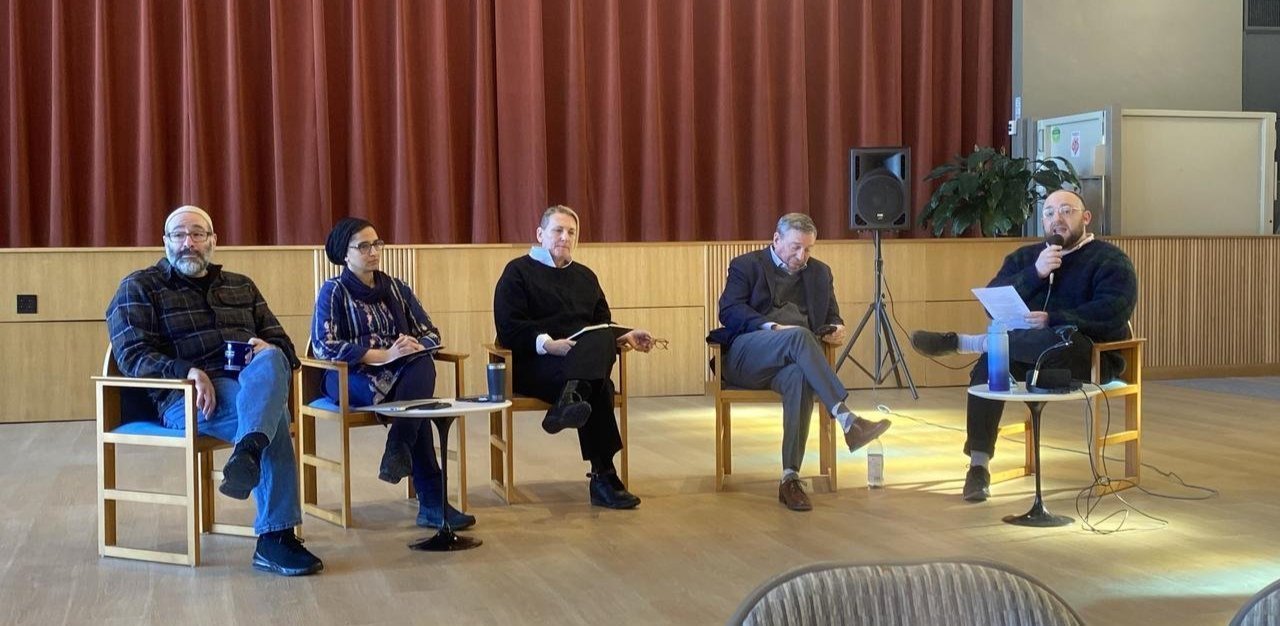
On Wednesday afternoon of the Intensive Week, fifth year rabbinical student and Miller Center Rabbinic Fellow Rafi Ellenson moderated a panel discussion with several of the instructors (and Chaplain Najiba Akbar) on the challenges of interreligious engagement and activism in this time. Panelists reflected on a penetrating letter written in 1966 from the great Catholic writer Thomas Merton to a young activist named James (Jim) Forest, who went on to become a major figure in American civic life. Rabbi Or Rose stated the following about engagement with this historically significant text: “Reading this insightful letter from Merton to Forest reminds us that no one is immune to the complexities of trying to live a good and upright life, particularly in tumultuous times. Nonetheless, we must seek to do our best, allying with compassionate and justice-minded individuals and groups.”
The Winter Intensives provide our future clergy and educators an opportunity to prepare for service in diverse Jewish and interreligious contexts. Whether they will serve in houses of worship, schools, or organizations, they will need the skills, knowledge and networks to lead thoughtfully and effectively. The Miller Center is honored to offer this field-leading suite of interreligious learning for seminary students, where students can learn and live an authentic practice of pluralism and engagement across difference.
We wish to thank the E. Rhodes and Leona B. Carpenter Foundation for their generous support of this important educational undertaking.